
The Senate's blue slip is an informal courtesy dating back over a century, allowing home-state senators to veto or endorse nominees for federal judgeships and U.S. Attorney positions. Originating in the early 20th century, it embodies "senatorial courtesy"—the unwritten norm that the Senate defers to a senator's judgment on local appointees. The first documented use occurred in 1917 under Senate Judiciary Committee Chair Charles Culberson (D-TX), who introduced the literal blue paper form to solicit input from affected senators on President Woodrow Wilson's judicial picks.
This practice formalized a pre-existing custom, ensuring nominees enjoyed bipartisan support from their home states and preventing cronyism or ideological mismatches.
By the 1950s, it became a staple for district court and circuit nominees, with the Judiciary Committee withholding hearings if a blue slip went unreturned or was negative.
Historically, the blue slip promoted collegiality in a less polarized era. It wasn't ironclad—presidents like Franklin D. Roosevelt bypassed it during court-packing threats—but it fostered consultation, not obstruction. Post-1980s, as partisanship intensified, its enforcement waxed and waned. Republicans under Orrin Hatch (1995–2001) ignored negative slips from Democrats, confirming 20 circuit nominees over objections.
Democrats retaliated similarly under Joe Biden, but the norm endured as a check against executive overreach, emphasizing local legitimacy over national agendas.
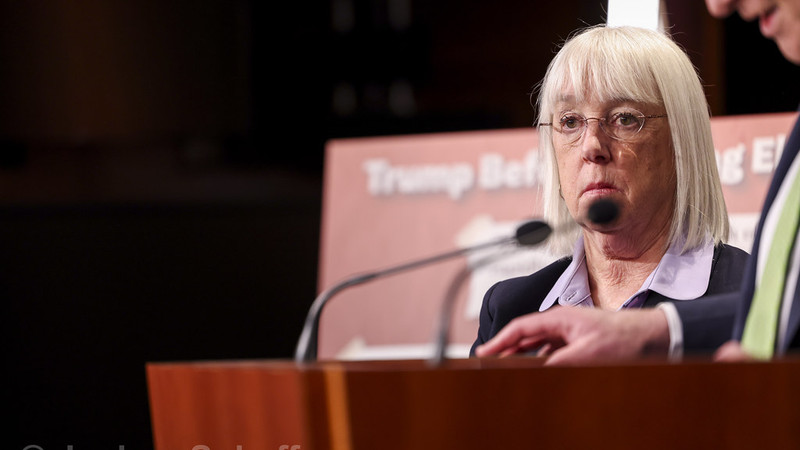
Today, however, the blue slip is weaponized for raw politics, exemplified by Sen. Patty Murray's (D-WA) blockade of Pete Serrano's Serrano's nomination as U.S. Attorney for Washington's Eastern District. Nominated by President Trump in July 2025 and sworn in as acting U.S. Attorney on August 11, Serrano—a former Pasco mayor, prosecutor, and staunch conservative—has earned praise for combating fentanyl trafficking and violent crime in rural, Republican-leaning eastern Washington.
Yet Murray, citing his "out-of-step" views on issues like abortion and guns, refuses to return a positive blue slip or has submitted a negative one, stalling his permanent confirmation. Pete’s job as the interim US Attorney for Eastern Washington expired December 9, giving her a win.
This isn't consultation; it's veto by fiat, leaving the district without stable leadership amid rising caseloads. Washington Republicans decry it as "weaponization," arguing Murray prioritizes coastal ideology over eastern Washington's needs.
Senate Majority Leader John Thune (R-SD) would be right to abolish this relic. Its original spirit—bipartisan vetting for qualified locals—has devolved into a partisan kill switch, enabling minority senators to thwart majority mandates. Democrats blocked 231 Trump nominees via blue slips; now, it's reciprocity's turn.
Retaining it invites endless gridlock, as seen in Murray's abuse: Serrano's record is exemplary, yet ideology trumps merit. He also likely knows best her offenses to the rule of law giving the appearce of weilding it as a sword and shield. Eliminating blue slips would expedite confirmations, restore Senate efficiency, and honor the electorate's 2024 verdict for Republican control. Remember the idea of checks and balances? Thune, a procedural pragmatist, should seize this: update the tradition or bury it, ensuring justice isn't held hostage to senatorial spite. In a divided nation, the Senate must prioritize function over folklore.
Editorial comments expressed in this column are the sole opinion of the writer.
