

The Republican National Committee's failure in Virginia's April redistricting referendum represents one of the most consequential strategic blunders in recent party history—a self-inflicted wound that surrendered up to four congressional seats to Democrats and exposed the devastating priorities of GOP consultants more interested in protecting incumbents than winning elections.
When Virginia voters narrowly approved a Democrat-drawn mid-decade congressional gerrymander on April 21, 2026, the outcome wasn't simply the result of superior Democratic organizing. Rather, it was the catastrophic consequence of RNC leadership diverting critical resources away from a winnable referendum toward a lavish, unnecessary spending spree to protect Texas Senator John Cornyn from his conservative primary challenger Ken Paxton.
The numbers tell a damning story. While the Virginia "No" campaign struggled to fund basic voter outreach, RNC-aligned operatives orchestrated over $70 million in pro-Cornyn spending during the Texas primary—an astronomical sum dwarfing Paxton's mere $4.4 million. This financial disparity was made possible by a consulting apparatus that prioritized Cornyn's comfortable re-election over a referendum that literally determined congressional control.
The conflict of interest runs deeper. FP1 Strategies, the firm that managed the losing Virginia campaign, was founded by Chris LaCivita—President Trump's former campaign manager who simultaneously served as senior consultant for the pro-Cornyn super PAC. This arrangement created a perverse incentive structure where one operative directed resources to two campaigns, with the predictable result that money flowed to Texas while Virginia volunteers were informed no funds remained for door-knocking operations.
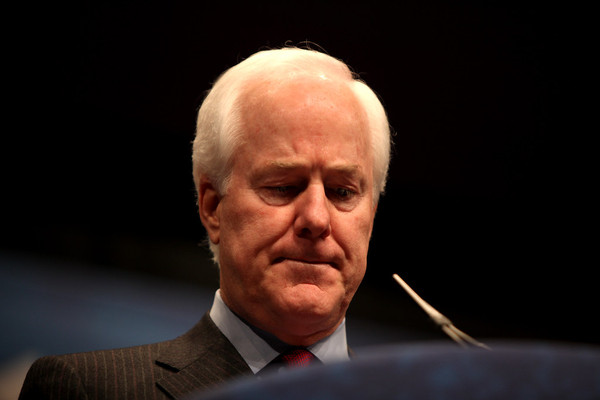
The Virginia referendum wasn't a long-shot effort requiring Herculean resources. It was a narrowly decided contest where timely Republican investment could have tipped the scales. Yet while Democrats poured nearly $100 million into the fight, the RNS [sic] establishment effectively sat on its hands, allowing a party-line redraw to pass that transforms Virginia's congressional delegation from competitive to reliably Democratic.
This wasn't mere incompetence—it was a calculated allocation of resources based on consultant-class allegiances rather than strategic necessity. Cornyn, a four-term incumbent in deep-red Texas, faced a primary challenge from an attorney general with significant baggage. The $70 million-plus lavished on his protection wasn't defensive spending; it was an extravagance made possible by donor networks and political debts that prioritized protecting the establishment over expanding the battlefield.
The consequences extend far beyond Virginia. Those four additional Democratic seats could determine control of the House of Representatives in 2026. By the time Republicans realize the magnitude of this error, the maps will be drawn and the damage permanent.
The lesson is clear: The current RNC leadership has demonstrated it values comfortable incumbency over competitive contests, consultant contracts over volunteer organizing, and insider protection over electoral victory. When a party apparatus can find $70 million for a safe incumbent but cannot fund a referendum that determines congressional majorities, it has ceased functioning as a vehicle for conservative governance and become a patronage machine for the consultant class.
Virginia wasn't lost because Republicans lacked ideas or popular support—it was lost because Republican leadership chose to protect John Cornyn from primary voters rather than protect Virginia's congressional maps from Democratic gerrymandering. That choice will haunt the party for years to come.
Editorial comments expressed in this column are the sole opinion of the writer
