In a provocative Substack essay, Jeffrey Balash of ZeusThink, "The $175 Billion Exam Most Boards Will Fail" by Jeffrey Balash (ZeusThink) frames the February 2026 Supreme Court ruling invalidating President Trump's IEEPA-based tariffs as more than a financial windfall—it's a litmus test for corporate governance. The Court's decision potentially unlocks over $175 billion in tariff refunds to American corporations, which Balash describes as "the largest refund in history" corporate America has received. Yet he contends the true examination isn't securing these funds, but how boards choose to deploy them.
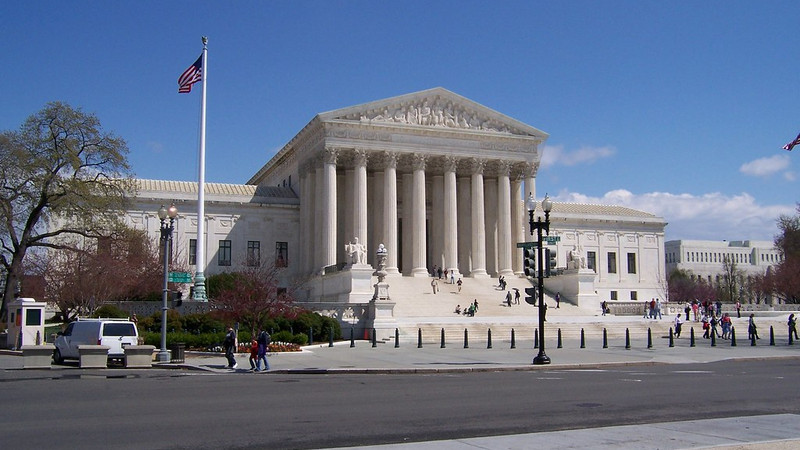
The Supreme Court's 6-3 ruling in Learning Resources, Inc. v. Trump struck down tariffs imposed under the International Emergency Economic Powers Act, rendering them unconstitutional. The Penn Wharton Budget Model estimates refunds could reach $175 billion—which, to put in perspective, exceeds the combined fiscal 2025 spending of the Departments of Transportation and Justice. Companies that paid these duties since April 2025 now face a complex claims process with U.S. Customs and Border Protection to recover their money.
Balash argues that most corporate boards will fail this "exam" because they'll treat the refunds as found money rather than strategic capital. He suggests three likely failure modes:
1. Passive distribution—simply returning cash to shareholders via buybacks or dividends without strategic consideration
2. Defensive hoarding—sitting on the capital out of uncertainty about future trade policy
3. Reactive spending—deploying funds to fix problems caused by the tariffs rather than investing in future growth
2. Defensive hoarding—sitting on the capital out of uncertainty about future trade policy
3. Reactive spending—deploying funds to fix problems caused by the tariffs rather than investing in future growth
The true "A+ answer," Balash implies, involves boards using this capital to fundamentally recalibrate their operations—onshoring critical supply chains, investing in automation to reduce future tariff exposure, or acquiring distressed competitors who suffered more acutely during the trade war.
The article serves as both warning and challenge to directors. The $175 billion represents unplanned capital that arrived not through operational excellence but judicial intervention. Boards that treat this as ordinary course-of-business cash miss an opportunity to demonstrate strategic foresight. The author suggests companies should view this as "tuition reimbursement" for a harsh education in supply chain geopolitics—and invest accordingly.
Balash advocates for a proactive approach: establishing special board committees to evaluate refund deployment, conducting "post-tariff stress tests" on supply chains, and communicating transparently with investors about transformation rather than normalization. The companies that pass this exam, he concludes, won't be those with the largest refunds, but those with the clearest vision for becoming resilient against future economic nationalism.
The essay ultimately positions the Supreme Court's ruling not as a conclusion but as an inflection point. With $175 billion in play and trade policy uncertainty persisting, Balash argues that boards have one chance to prove they learned the lessons of the past two years—or confirm shareholder fears that governance remains fundamentally reactive rather than strategic.
Editorial comments expressed in this column are the sole opinion of the writer