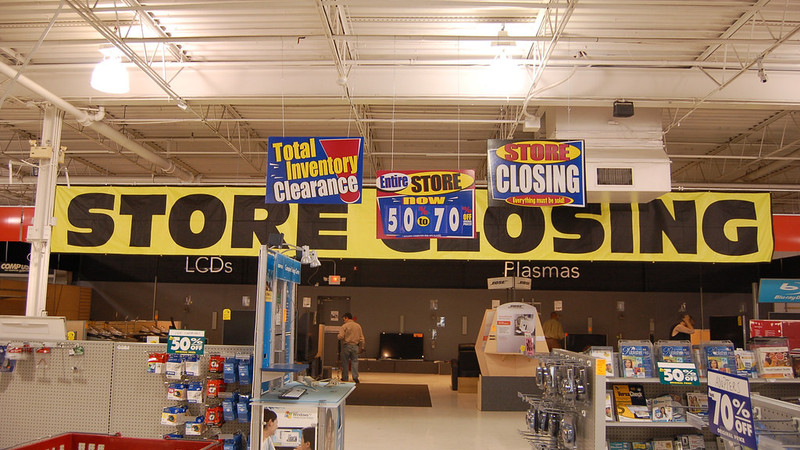
On a crisp March morning in 2026, workers at three California grocery stores received devastating news: their stores were closing, and 171 of them would soon be out of work. These weren't just any closures—they represented the beginning of Kroger's promised culling of 60 locations nationwide, a strategic retreat from markets where the nation's second-largest supermarket chain simply couldn't compete.
The timing couldn't be worse for the affected workers and communities. These closures arrive just months after the Federal Trade Commission successfully blocked what would have been the largest supermarket merger in American history—a $24.6 billion union between Kroger and Albertsons that promised to create a genuine competitor to retail behemoths Walmart and Amazon.
When Kroger and Albertsons announced their intent to combine in October 2022, the companies framed the deal as a survival necessity. With Walmart commanding an overwhelming 23.6% of the U.S. grocery market and Amazon steadily expanding its food footprint through Whole Foods and Amazon Fresh, traditional supermarkets faced an existential threat. A combined Kroger-Albertsons entity would have controlled roughly 15.6% of the market—still far behind Walmart but with enough scale to negotiate better supplier deals, invest in e-commerce capabilities, and maintain competitive pricing.
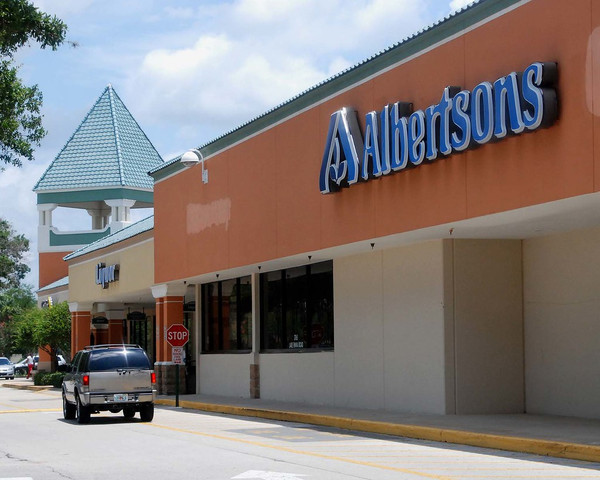
The Federal Trade Commission, however, saw a different picture. In February 2024, the FTC sued to block the merger, arguing that reducing competition between Kroger and Albertsons—the second and fourth-largest supermarket chains—would harm consumers through higher prices, reduced quality, and fewer shopping options. In December 2024, federal and state courts agreed, delivering rulings that effectively killed the deal.
The FTC's argument had merit in theory: fewer competitors typically means less price competition. But what the regulators missed—or chose to ignore—was the competitive reality beyond traditional supermarkets. While they blocked consolidation among grocery chains, Walmart and Amazon continued their grocery expansion virtually unchecked. The government analysis treated big-box retailers and grocery chains as separate entities in some contexts while lumping them together in others, creating a regulatory paradox that ultimately hurt the very companies trying to stay competitive.
Without the merger's promised synergies and scale, both Kroger and Albertsons found themselves exposed. The companies had spent months preparing for integration, diverting resources from competitive initiatives. When the deal collapsed, they were caught flat-footed in an increasingly brutal market.
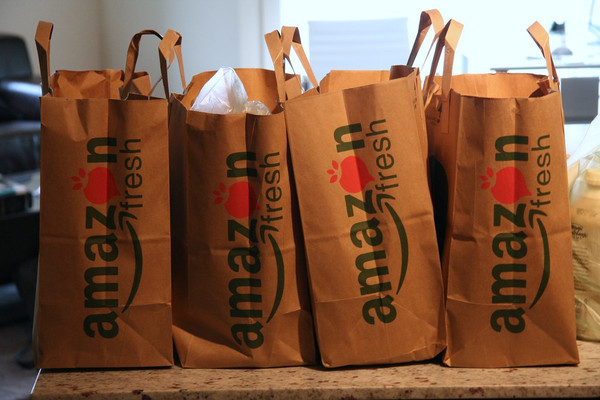
Now, the consequences are materializing in communities across America. Kroger's announcement of 60 store closures—part of what the company calls a plan for "modest financial benefit"—has already affected locations in California, Texas, Colorado, Georgia, Illinois, and nearly a dozen other states. The California closures alone have eliminated 171 jobs and left communities searching for alternatives.
These aren't high-end suburban locations that can easily absorb a store loss. Many of the affected areas, particularly those served by Kroger's Food 4 Less and Foods Co. banners in California, serve low-income neighborhoods where grocery options were already limited. These communities now face the prospect of becoming "food deserts"—areas where residents lack access to affordable, nutritious food within a reasonable distance.
According to the U.S. Department of Agriculture, approximately 17.1 million Americans already live in low-income, low-access census tracts, meaning they reside more than one mile (or 20 miles in rural areas) from a supermarket. When major grocery chains retreat from these areas, they don't just eliminate jobs—they remove access to fresh produce, affordable staples, and community gathering spaces.
In Sacramento, where Kroger's Foods Co. banner is closing a location, residents face a future where their grocery options may be limited to convenience stores and dollar stores—retailers that typically charge higher prices for less nutritious food. A dozen eggs that cost $3 at a supermarket might cost $6 or more at a corner bodega. For families already spending 30% of their income on food, such price differences are devastating.
The irony of the regulatory intervention is that it has arguably accelerated the very concentration of market power that antitrust laws seek to prevent. With traditional supermarkets weakened by blocked consolidation and forced into retreat, Walmart and Amazon have only strengthened their positions.
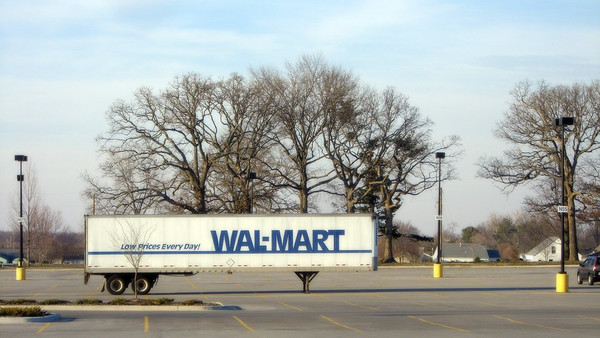
Walmart continues to leverage its unmatched supply chain and pricing power, while Amazon pushes forward with its technology-enabled grocery concepts. Neither faces the regulatory scrutiny that ensnared Kroger and Albertsons, despite their far greater market influence.
The Kroger-Albertsons saga raises profound questions about American competition policy. When regulators blocked a merger designed to help traditional grocers compete with retail giants, did they protect competition or inadvertently destroy it? The 60 store closures, 171 layoffs in California alone, and the desertion of vulnerable communities suggest the latter.
For the workers losing their jobs and the families losing their neighborhood grocery stores, the theoretical benefits of blocking the merger mean little. They face an immediate, tangible loss of livelihood and food access—all while watching Walmart and Amazon expand unchecked.
The lesson here may be that antitrust enforcement that ignores the realities of modern competition can backfire spectacularly. In trying to preserve competition between Kroger and Albertsons thirty years ago, regulators may have guaranteed that neither can compete with the retail titans of today.
As Kroger's pullout from California continues and more closures loom across the nation, policymakers must confront a difficult question: When does protecting competition actually eliminate it? For the 171 California workers now unemployed and the countless families facing longer trips for groceries, that question has already been answered.
Excerpt from: ☕️ INEXPERTLY ☙ Thursday, April 16, 2026 ☙ C&C NEWS 🦠
“I don’t know who needs to hear this, but hoovering $30M out of New York City’s citizens through taxes to build a $2M grocery store does not actually reduce unaffordability. Instead, it just multiplies municipal unaffordability, transferring the burden from one expense category —core baskets of fruit and bread— into a different category of expense: taxes.”
“And even if you buy the “wealth distribution” angle, of making “rich people” subsidize neighborhood bodegas, wouldn’t it still be more efficient to just directly pay established grocers to lower their prices on the core basket? (Some economists would argue that driving rich people off eventually hurts the poor, but never mind. That argument is, apparently, too complicated.)”
“Sadly, the answer is that efficient, direct payments to grocers would eliminate all the opportunities to reward donors and favored constituents with unsupervised government grants and contracts. Which is one of the main reasons why communism never works. Combining politics with business creates a patronage economy, an invisible transaction tax on every single purchase. It twists markets into political pretzels, through what economists call “rent-seeking behavior”— a clumsy term meaning everybody stops trying to reduce costs through competing for business, and starts trying to climb aboard the grift train.”
“Let’s make it even simpler for Portland readers. Mamdani’s $30M grocery store includes costs as follows: $2M for the grocery store itself, plus $28M for friends and family. Even if it works, and actually sells price-stabilized Cheetos below market rates, then other grocery stores will close, since they can’t compete. Which is how you get Soviet-style Cheeto lines.”
Jeff Childers
“And even if you buy the “wealth distribution” angle, of making “rich people” subsidize neighborhood bodegas, wouldn’t it still be more efficient to just directly pay established grocers to lower their prices on the core basket? (Some economists would argue that driving rich people off eventually hurts the poor, but never mind. That argument is, apparently, too complicated.)”
“Sadly, the answer is that efficient, direct payments to grocers would eliminate all the opportunities to reward donors and favored constituents with unsupervised government grants and contracts. Which is one of the main reasons why communism never works. Combining politics with business creates a patronage economy, an invisible transaction tax on every single purchase. It twists markets into political pretzels, through what economists call “rent-seeking behavior”— a clumsy term meaning everybody stops trying to reduce costs through competing for business, and starts trying to climb aboard the grift train.”
“Let’s make it even simpler for Portland readers. Mamdani’s $30M grocery store includes costs as follows: $2M for the grocery store itself, plus $28M for friends and family. Even if it works, and actually sells price-stabilized Cheetos below market rates, then other grocery stores will close, since they can’t compete. Which is how you get Soviet-style Cheeto lines.”
Jeff Childers
Editorial comments expressed in this column are the sole opinion of the writer