
'Politics is downstream from culture.' -Andrew Breitbart
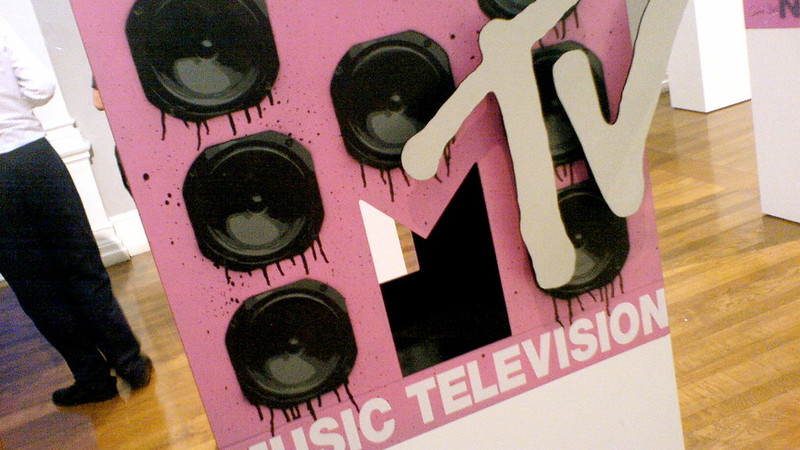
The culture wars that defined American society in the 1980s and 1990s were battles over values, morality, and the soul of popular entertainment. Sparked by rapid social changes in the 1960s and 1970s—civil rights movements, feminism, and sexual liberation—these conflicts intensified as media platforms amplified provocative content that challenged traditional norms. Conservative critics decried the erosion of family values, while progressives championed free expression and diversity. Shows like Married... with Children and The Simpsons on the fledgling Fox network epitomized this clash, packaging irreverent humor as adult fare that inevitably seeped into youth culture. Music awards on MTV and CMT further fueled the fire, celebrating genres that often-glorified rebellion, hedonism, and individualism. Yet, by 2025, signs point to an improvement in these wars. The cancellations of the MTV Movie & TV Awards, MTV itself after 44 years and CMT Music Awards this year symbolizes a retreat from hyper-polarized spectacle.Meanwhile, the explosive rise of Christian contemporary music (CCM) among young people signals a generational rejection of the "loose morals" that dominated the last five decades. These developments reflect a broader de-escalation, where cultural combat gives way to introspection and moral renewal.
To understand the improvement, we must first revisit the incendiary role of television in the 1980s and 1990s. MTV (Music Television) first aired on August 1, 1981 after months of hype asking people to ‘demand MTV’ on your cable, launching just after midnight with The Buggles' "Video Killed the Radio Star" as its first music video. I ironic as TikTok how now killed the music TV star.
Cable TV emerged in 1948 in the U.S. as Community Antenna Television (CATV) to bring signals to remote areas, but it truly grew with new programming and deregulation in the 1970s and 80s, becoming mainstream by the 1990s with CNN launching 24 hour news on June 1, 1980. The Comedy Channel, launched by Time Warner (HBO's parent company) on November 15, 1989. It took until 1996 for MSNBC and Fox News to arrive as alternative cable news sources.
The Fox Broadcasting Company launched in 1986 as a scrappy challenger to the "Big Three" networks (ABC, CBS, NBC), which had long adhered to family-friendly standards under the influence of the Federal Communications Commission and advertiser caution.
Fox's strategy was bold: target younger demographics with edgier programming that pushed boundaries on sex, violence, and satire. Married... with Children, premiering in 1987, was the network's first prime-time hit. The show centered on the dysfunctional Bundy family—Al, a misogynistic shoe salesman; Peggy, his lazy wife; and their promiscuous children, Kelly and Bud. It reveled in crude jokes about infidelity, objectification, and familial disdain, earning it the label of "anti-family" from critics. Conservative groups like the American Family Association boycotted sponsors, arguing it undermined traditional marriage and parental authority. The Jerry Springer Show was still 5 years away.
Yet, Fox marketed itself as adult entertainment, airing “Married…” on Sunday nights when families gathered around the TV. Inevitably, children discovered it, absorbing its lowbrow humor and cynical worldview. Ratings soared, with the show running for 11 seasons and becoming a cultural touchstone for Generation X.
Hot on its heels came The Simpsons in 1989, originating as shorts on The Tracey Ullman Show. This animated series took satire to new heights, portraying the Simpson family—Homer, the bumbling patriarch; Marge, the long-suffering homemaker; and kids Bart, Lisa, and Maggie—as a mirror to American suburbia. Bart's rebellious antics ("Eat my shorts!") and the show's irreverent takes on religion, politics, and education sparked outrage. President George H.W. Bush famously lamented in 1992 that Americans needed to be "more like the Waltons and less like the Simpsons," highlighting how the show symbolized the culture wars' front lines.
Like ‘Married... with Children’, it was pitched as adult-oriented but captivated kids through its cartoon format, leading to merchandise booms and schoolyard imitations. Fox's rise was meteoric; by the early 1990s, it had established itself as a fourth major network, thanks to these shows' appeal to urban, youthful audiences disillusioned with sanitized TV.
However, this success hid a darker impact: it normalized "low morality" under the guise of entertainment, contributing to perceptions of societal decay. Divorce rates climbed, teen pregnancy debates raged, and conservatives blamed media for eroding Judeo-Christian values.
Yet, Fox's fall—or at least the decline of its boundary-pushing era—offers early evidence of culture wars' moderation. By the late 1990s, as ‘Married... with Children’ ended in 1997 and The Simpsons matured into a more self-reflective institution (still airing but less controversial), Fox shifted toward broader appeal. The network's edginess waned amid advertiser pullbacks and FCC fines for indecency, like those levied on Howard Stern's radio show, which Fox briefly syndicated.
Today, Fox Broadcasting focuses on sports, reality TV, and animated revivals, while its parent company, Fox Corporation, pivots to news via Fox News, which ironically champions conservative values against the very liberal Hollywood it once emulated. The original provocative spark that burst onto the scene has dimmed, replaced by fragmented streaming where niche audiences self-segregate, reducing blanket cultural clashes. This evolution suggests that the extreme moral provocations of the 80s and 90s have lost their monopoly, allowing for a more pluralistic media landscape less intent on shocking the masses.
Building on this, the 2025 cancellations of the MTV Movie & TV Awards and CMT Music Awards mark a pivotal turn, indicating that the platforms once central to culture wars are losing relevance.
MTV, launched in 1981, was the epicenter of 1980s youth culture, broadcasting music videos that promoted sexual liberation, materialism even in fashion, and anti-establishment attitudes. Icons like Madonna and Michael Jackson used its Video Music Awards (VMAs) to push envelopes—Madonna's 1984 "Like a Virgin" performance drew ire for its simulated sensuality. By the 1990s, MTV expanded to reality shows like The Real World, normalizing diverse sexualities and lifestyles, which conservatives saw as indoctrination. The MTV Movie & TV Awards, starting in 1992, celebrated films and series with fan-voted categories that often highlighted edgy content, from raunchy comedies to boundary-breaking dramas. Similarly, CMT (Country Music Television), acquired by MTV's parent in 2000, brought country music into the fray. While country traditionally evoked patriotism and family, 1990s stars like Garth Brooks and Shania Twain infused it with pop sensuality, leading to awards shows that blended rural conservatism with urban flair, exacerbating rural-urban divides in the culture wars.
The decision by Paramount Global to pause these awards in 2025, amid its merger with Skydance Media, is more than corporate belt-tightening—it's symptomatic of a cultural shift.
With streaming giants like Netflix and TikTok fragmenting audiences, traditional awards shows struggle for viewership. The MTV Movie & TV Awards, already skipped in 2024 due to writers' strikes and low ratings, won't return in 2025, signaling fatigue with glitzy events that once amplified moral debates.
CMT's cancellation halts a platform that, in recent years, navigated controversies like Jason Aldean's "Try That in a Small Town," which stirred racial and political tensions in the midst of George Floyd hysteria. These ends suggest that the culture wars' battlegrounds are shrinking; without these annual spectacles, there's less opportunity for performative outrage. Today's media ecosystem prioritizes personalized content over mass broadcasts, diluting the unified fronts that defined 80s/90s clashes. Historians note that while culture wars originated in the 1960s, their peak intensity in the 1990s—think Pat Buchanan's 1992 "cultural war" speech—has given way to more nuanced dialogues, with issues like LGBTQ+ rights achieving broader acceptance.
The cancellations reflect this: society is moving beyond the need for such polarizing rituals.
The strongest proof of improvement, however, lies in the meteoric rise of Christian contemporary music, which demonstrates young people's rejection of the loose morals pervasive since the 1970s. CCM, blending pop, rock, and worship elements, has surged in popularity, growing 30% in the U.S. and over 30% globally in the past year alone.
Streaming data from platforms like Spotify shows CCM as one of the fastest-growing genres, outpacing many secular counterparts amid a slowdown in overall new music consumption.
Crucially, this boom is driven by millennials and Gen Z, who now comprise 45% of CCM's audience—up from 39% in 2021.
Artists like Forrest Frank, Brandon Lake, and Elevation Worship are crossing into mainstream charts, with songs emphasizing faith, redemption, and community over hedonism. Christian electronic dance music (CEDM) making way for Tool and Nine Inch Nails.
This shift counters the moral laxity of past decades, where rock 'n' roll, hip-hop, and pop glorified sex, drugs, and individualism—from Elvis's hips in the 1950s to Britney Spears's provocations in the 1990s. Young listeners today, facing mental health crises, economic uncertainty, and social media isolation, are drawn to CCM's uplifting messages. Forrest Frank's viral hits blend hip-hop with gospel, appealing to Gen Z's desire for authenticity without excess and less Taylor Swift breakup songs about bad decisions.
Lake's worship anthems top Billboard's Christian charts, fostering a sense of purpose amid cultural fragmentation. Streaming has grown over 60% in five years, with Gen Z leading the charge, indicating a deliberate turn from the "loose morals" of hookup culture and materialism.
Critics who dismiss CCM as repetitive overlook its cultural significance: it's a grassroots rebuke to the excesses amplified by MTV and Fox in earlier eras post-Vietnam antiwar protest songs.
As churches incorporate modern worship and influencers promote faith-based content, young people are rebuilding moral frameworks, reducing the vitriol of past wars.
The culture wars of the 1980s and 1990s, fueled by Fox's provocative launches and music awards' spectacles, are indeed improving. The end of MTV, the MTV Movie & TV Awards and CMT Music Awards in 2025 diminishes platforms for moral grandstanding, while CCM's rise proves youth are embracing virtue over vice, bible over boob tube. This isn't a victory for one side but a softening of divides, as media diversifies and generations seek healing. Society may yet find common ground, proving that in tumult, renewal happens.
Editorial comments expressed in this column are the sole opinion of the writer.
