
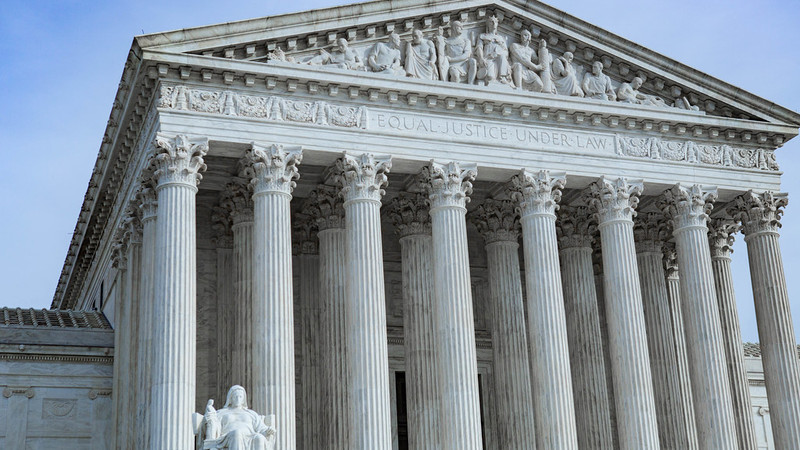
The Supreme Court case Trump v. Slaughter is as a pivotal moment that could dismantle over a century of unchecked growth in the administrative state. The case stems from President Donald Trump's attempt to remove Federal Trade Commission (FTC) Commissioner Rebecca Kelly Slaughter without cause, challenging longstanding statutory protections that limit presidential removal power to specific grounds like inefficiency or malfeasance.
At the heart of the dispute is the 1935 precedent Humphrey's Executor v. United States, which upheld "for-cause" removal restrictions for heads of independent agencies like the FTC. This decision allowed Congress to insulate certain bureaucrats from at-will firing, creating what critics call an unaccountable "fourth branch" of government. Over decades, the administrative state has expanded dramatically: Congress delegates legislative authority to agencies, which then interpret laws, issue regulations (quasi-legislative), and enforce them through administrative courts (quasi-judicial).
Seila Law LLC v. Consumer Financial Protection Bureau (591 U.S. 197, decided June 29, 2020) is a landmark Supreme Court case that significantly chipped away at the foundations of independent agencies, making it a direct precursor to the ongoing Trump v. Slaughter case challenging removal protections for Federal Trade Commission (FTC) commissioners.
These unelected officials wield immense power with little direct accountability to elected leaders or voters.The author contrasts this with the Founders' vision, citing Alexander Hamilton and James Madison in the Federalist Papers. They argued for vesting executive power in a single, elected president to ensure accountability—power must flow from the people through elections, not accumulate in permanent bureaucracies.During oral arguments on Monday (December 8, 2025), Justice Neil Gorsuch captured the constitutional concern succinctly: “There is no such thing in our constitutional order as a fourth branch of government that’s quasi-judicial and quasi-legislative.”
Gorsuch's remark underscores the view that independent agencies undermine separation of powers by blending functions while evading presidential oversight.
Affirming broad presidential removal authority would restore democratic control. If the Court overrules or significantly limits Humphrey's Executor, it could curb bureaucratic overreach, making agencies more responsive to elected officials. Elections would regain meaning, as presidents could align executive actions with voter mandates rather than inheriting entrenched, opposing bureaucracies.
Conversely, upholding insulation would entrench a system where "experts" rule permanently, rendering voting superficial. This leads to policy inertia, unaccountable decisions in critical areas like economy, health, and foreign affairs, and the erosion of self-government. A bureaucracy-dominated government is not a republic but an oligarchy of administrators.
Trump v. Slaughter is a profound choice: reaffirm the Constitution's structure, where expertise advises but voters ultimately rule through revocable authority, or allow bureaucratic permanence to overshadow the revolutionary principle of popular sovereignty.
In essence, the case is the first opportunity in decades to reverse a century-long drift toward unaccountable governance, potentially revitalizing constitutional democracy by reasserting presidential accountability over the executive branch.
Editorial comments expressed in this column are the sole opinion of the writer.
