
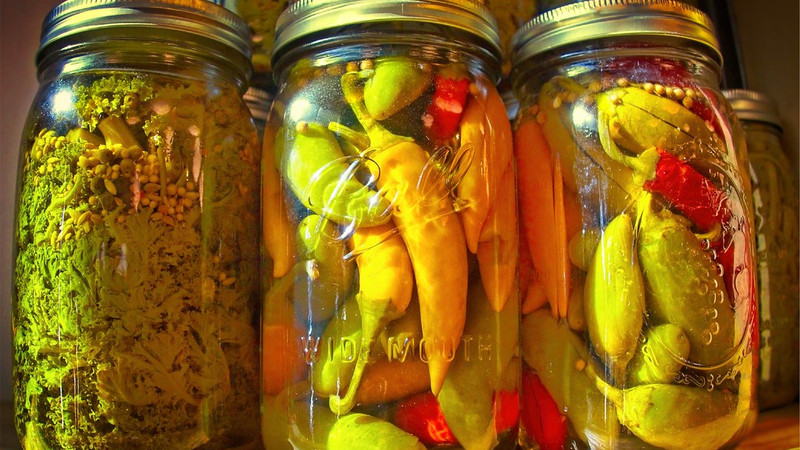
Why One Dill Pickle Might Teach Us More Than We Think
They're not there because I'm obsessed with pickles. They're simply one of those foods that's always found a place in our home. If someone had told me thirty years ago that I'd someday write a newspaper column about them, I probably would have laughed.
Yet after spending more than three decades helping people improve their health and performance, I've come to believe the humble pickle has an important lesson to teach us.
Not about pickles.
About people.
One of my favorite moments as a coach is receiving a simple text message that says, "Coach...it worked."
Occasionally, that message is about something unexpected.
A pickle.
When someone tells me they're battling an intense craving for sweets, I sometimes ask them to try a little experiment. Drink a large glass of water. Eat a dill pickle. Then wait ten minutes before deciding whether they still want dessert.
The response is almost always the same.
"A pickle?"
Yes. A pickle.
Sometimes, ten minutes later, the craving has completely disappeared.
That raises an interesting question.
Why?
The answer has very little to do with willpower.
Over the years, I've learned that one of the biggest mistakes we make is assuming every craving deserves an immediate response. We feel hungry, so we eat. We feel stressed, so we snack. We hit an afternoon slump, so we reach for sugar or another cup of coffee.
We've become remarkably quick at reacting.
Not nearly as good at listening.
The body whispers long before it screams.
A craving isn't always asking for candy. Sometimes it's asking for water after a busy day. Sometimes it's asking for protein. Sometimes it's asking for a little sodium after spending time in the summer heat. Sometimes it's simply asking us to slow down long enough to notice what's really going on.
That brief pause creates something our fast-paced culture doesn't encourage very often.
Curiosity.
And curiosity is often far more powerful than willpower.
Modern science is beginning to explain why this little experiment can be so effective.
The vinegar in a pickle contains acetic acid, which appears to slow the emptying of the stomach and helps create a steadier blood sugar response. The intensely sour flavor can also interrupt the brain's expectation of something sweet, giving the craving an opportunity to pass instead of gaining momentum.
Then there's the salt.
Many people don't realize that mild dehydration or low sodium can sometimes disguise themselves as hunger. It's one reason a glass of water and a salty pickle occasionally solve what a cookie never could.
The more I study nutrition, the more convinced I become that food is about far more than calories. Every bite we eat sends signals throughout the body, influencing hormones, metabolism, energy, and even the way we think and feel.
Our bodies are constantly listening.
The remarkable part is that they faithfully adapt to the messages we repeat.
Perhaps that's why the words of the Apostle Paul have taken on new meaning for me over the years:
"Do not be conformed to this world, but be transformed by the renewing of your mind." — Romans 12:2
Transformation rarely begins with dramatic change.More often, it begins with awareness.
With paying attention.
With asking a better question before reacting.
The next time you find yourself standing in front of the pantry convinced you need something sweet, try a different approach.
Drink a glass of water.
Grab a dill pickle.
Wait ten minutes.
Then ask yourself, "What is my body really trying to tell me?"
You might still enjoy dessert—and there's nothing wrong with that. But you'll be making a thoughtful choice instead of an automatic one.
Sometimes the smallest habits have the greatest lessons to teach.
Sometimes, they're hiding in the back of the refrigerator.

I'd love to have you on the journey.
