
In March 2026, the Texas Department of Public Safety requested emergency approval to buy a phone-surveillance package from Israel-based Cognyte. Purchase records and user manuals later surfaced by Forbes show the state paid exactly $4,487,500 — the vendor's largest U.S. deal on record. The heart of the deal: four Chevrolet Tahoe police vehicles converted into mobile cell-site simulators, a category of equipment long known by the brand name "Stingray."
How the technology works. FalcoNet impersonates a legitimate cell tower, forcing every nearby phone to silently connect across 2G, 3G, 4G and 5G networks simultaneously. Once connected, the system distinguishes individual handsets and uses radio signals to narrow a phone's location. Cognyte's specifications claim it can process thousands of devices per minute and be deployed in about three minutes. Crucially, no phone opts in: everyone within range — suspect, witness, or bystander — is swept up. Vendor materials indicate the gear captures identifying data (IMSI/IMEI numbers) and location, not the content of calls or texts.
Where the money went. The trucks were the cheap part. The Tahoes, built on GM's Police Pursuit Vehicle platform with upgraded alternators to feed the electronics, run roughly $150,000 apiece. The bulk funded Cognyte hardware: four FalcoNet core systems at $2.85 million; four "Delta 5G" perpetual licenses at $280,000; a portable FalcoNet Backpack Core V2 at $355,500; a Cognyte Compact PA Ranger at $105,000; an unlicensed backpack system at $70,000; and a flexible antenna kit at $27,000. The same hardware can be concealed in a vehicle, worn on foot, or attached to aircraft, including helicopters.
Transparency questions. DPS sought the purchase under emergency procedures, and state documents say the trucks are needed "for immediate law enforcement use" by the Criminal Investigations Division. But tech-outlet reporting suggests the hardware may have been pre-funded in the state budget, which undercuts the emergency rationale. The state has published no policy on when troopers may deploy the system, whether warrants are sought, or how long collected data is retained. The gear is already in use in Florida; Maryland reportedly bought a similar $1 million system.
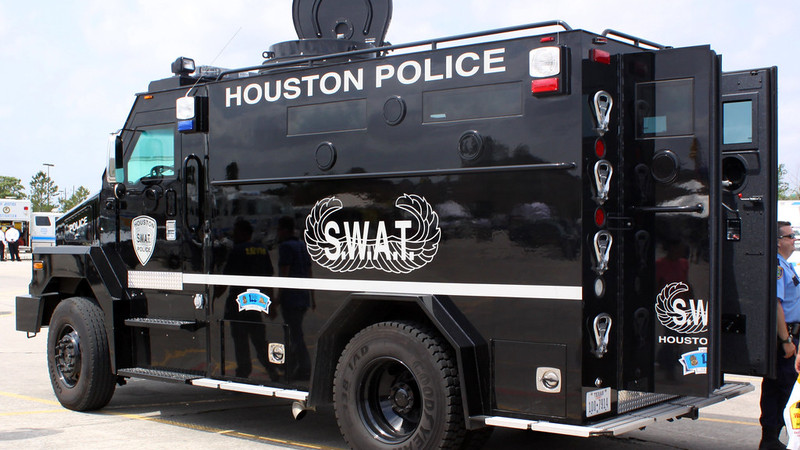
The bigger picture: Houston. The purchase fits a documented, statewide surveillance expansion. BBC reporting described Houston's web of thousands of automated license-plate readers — at least 3,800 in Harris County alone — plus gunshot-detection sensors and hundreds of DPS drones, with drone flights planned over World Cup matches next summer. Interconnected, these systems can reconstruct a person's movements and associations without their knowledge.
The unresolved legal question. Civil-liberties groups call cell-site simulators dragnet surveillance and note the Justice Department has required warrants for federal use since 2015. No equivalent rule binds state troopers in Texas, and courts have yet to settle the question. Until the state publishes usage policies, warrant practices and retention rules, Texans will drive past these trucks with no way to know whether their phones are being catalogued — and no way to stop it. For now, the trucks are rolling.
Sources: Forbes; Fort Worth Star-Telegram; The Drive; BBC reporting on Houston surveillance.
