
Despite USC's proud tradition as "Quarterback U," the Trojans had a surprising drought when it came to Super Bowl quarterbacks. For decades, numerous highly touted USC signal-callers came agonizingly close but ultimately fell short of professional football's ultimate stage.
Carson Palmer, USC's 2002 Heisman Trophy winner, came closest when he led the Arizona Cardinals to the 2015 NFC Championship Game. His impressive season with 4,671 passing yards and 35 touchdowns ended in disappointment as the Cardinals fell 49-15 to the Panthers.
Mark Sanchez, facing a series of charges after he was arrested in Indianapolis last year, achieved remarkable playoff success early in his career, leading the New York Jets to consecutive AFC Championship Games in his first two seasons (2009-2010). Notably, he became just the second quarterback in NFL history to reach the conference championship in his first two seasons alongside Ben Roethlisberger. Despite these achievements, Sanchez never reached the Super Bowl.
Other Trojans like Matt Leinart and more recent star Caleb Williams showed promise at the NFL level but couldn't make the final push to football's biggest game.
While USC quarterbacks struggled to reach the Super Bowl, other Trojans thrived on the Big Stage. Three former USC players have earned Super Bowl MVP honors:
- Lynn Swann (WR, Steelers) - Super Bowl X (1976)
- Marcus Allen (RB, Raiders) - Super Bowl XVIII (1984)
- Malcolm Smith (LB, Seahawks) - Super Bowl XLVIII (2014)
Frank Gifford (August 16, 1930 – August 9, 2015) stands as one of USC's most remarkable football stories. After attending Bakersfield College to improve his grades, Gifford became an All-American at USC in 1951, leading the Trojans in total offense, rushing yards, and scoring. Drafted 11th overall by the New York Giants in 1952, Gifford's versatility allowed him to excel at multiple positions—halfback, flanker, and even defensive back. He earned league MVP honors in 1956 while leading the Giants to the NFL Championship over the Bears (47-7). Although a severe injury in 1960 nearly ended his career, Gifford returned to play in Super Bowl I (1967) for the Giants against the Packers, becoming one of the first USC players to appear in the Super Bowl. Though his Giants lost, Gifford's induction into the Hall of Fame at halftime of that inaugural Super Bowl cemented his legacy as a Trojan pioneer at football's highest level.
Todd Marinovich represents one of college football's most fascinating—and cautionary—tales. The product of scientific training methods engineered by his father Marv (a former USC captain), Marinovich was essentially bred to be a perfect quarterback. At USC in 1990, he delivered spectacular results, setting Pac-10 freshman records with 2,484 passing yards and 16 touchdowns. Drafted 24th overall by the Los Angeles Raiders in 1991, Marinovich showed NFL promise with a strong rookie campaign. However, his career rapidly unraveled due to personal struggles and substance abuse issues, resulting in just two NFL seasons. He never appeared in the playoffs with the Raiders, marking a stark contrast to his potential trajectory.
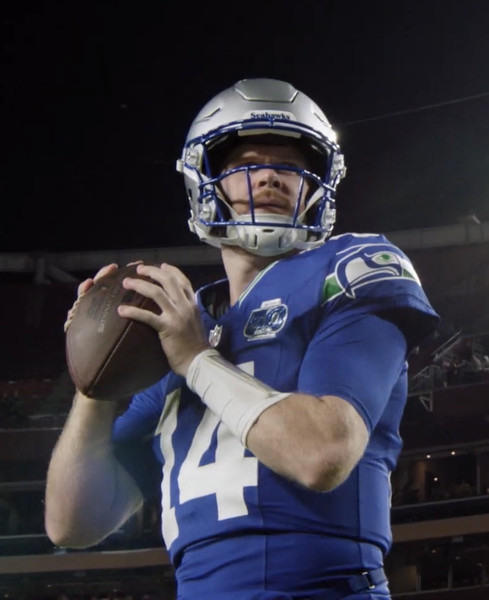
Enter Sam Darnold, the unlikely hero of this narrative. After an up-and-down start to his NFL career with the Jets and Panthers, Darnold found new life with the Seattle Seahawks in the 2025 season. His journey culminated in a 31-27 victory over the Rams in the NFC Championship Game, where he threw for 346 yards and three touchdowns.
With this victory, Darnold will become the first USC quarterback to start a Super Bowl when the Seahawks face the New England Patriots in Super Bowl LX. This achievement is particularly remarkable considering USC has produced more NFL quarterbacks (26) than any other school, yet none had previously started in the Super Bowl.
As Darnold prepares to make history, he carries with him the legacy of all Trojan quarterbacks who came before him—finally breaking through one of college football's most surprising statistical anomalies.
The University of Southern California has an extraordinary legacy in the Super Bowl, with Trojans appearing in all but eight of the 59 Super Bowls through Super Bowl LIX. With 64 players having appeared on Super Bowl-winning teams (the most of any college), USC's impact on professional football's biggest stage is unmatched.
Complete List of USC Trojans in Super Bowls by Era
1960s
Super Bowl I (1967)
- Willie Wood (Green Bay Packers) - Champions
- Pete Beathard (Kansas City Chiefs)
- Mike Garrett (Kansas City Chiefs)
- Willie Wood (Green Bay Packers) - Champions
- Ben Wilson (Green Bay Packers) - Champions
- Rod Sherman (Oakland Raiders)
- Bob Svihus (Oakland Raiders)
- Mike Garrett (Kansas City Chiefs) - Champions
- Jim Vellone (Minnesota Vikings)
- Ron Yary (Minnesota Vikings)
- Ray May (Baltimore Colts) - Champions
Super Bowl IX (1975)
- Lynn Swann (Pittsburgh Steelers) - Champions
- Frank Gifford (New York Giants)
- Lynn Swann (Pittsburgh Steelers) - Champions (MVP)
- Croy Burkett (Dallas Cowboys)
- 9 USC alumni played in this Super Bowl (record for most Trojans in one game)
- David Humm (Oakland Raiders)
- Malcolm Moore (Oakland Raiders)
- Mike Reinfeldt (Oakland Raiders)
- Al Caswell (Minnesota Vikings)
- Bob Klein (Minnesota Vikings)
- Lynn Swann (Pittsburgh Steelers) - Champions
- Tony Dorsett (Dallas Cowboys) (transferred to USC from University of Pittsburgh)
Super Bowl XV (1981)
- Mike Garrett (Los Angeles Raiders) - Champions
- Rolf Benirschke (San Diego Chargers)
- Ronnie Lott (San Francisco 49ers) - Champions
- Charle Young (San Francisco 49ers) - Champions
- Anthony Munoz (Cincinnati Bengals)
- Marcus Allen (Los Angeles Raiders) - Champions (MVP)
- Clarence Davis (Los Angeles Raiders) - Champions
- Mike Davis (Los Angeles Raiders) - Champions
- Lyle Alzado (Los Angeles Raiders) - Champions
- Ronnie Lott (San Francisco 49ers) - Champions
- Dwight Hicks (San Francisco 49ers) - Champions
- Guy McIntyre (San Francisco 49ers) - Champions
- Ronnie Lott (San Francisco 49ers) - Champions
- Randy Cross (San Francisco 49ers) - Champions
- Ronnie Lott (San Francisco 49ers) - Champions
- Tom Rathman (San Francisco 49ers) - Champions
Super Bowl XXVII (1993)
- Leonard Russell (Buffalo Bills)
- David Williams (Buffalo Bills)
- Cedric Figaro (Dallas Cowboys) - Champions
- Ken Norton Jr. (Dallas Cowboys) - Champions
- Ken Norton Jr. (Dallas Cowboys) - Champions
- Mark Rypien (Washington)
- Ken Norton Jr. (San Francisco 49ers) - Champions
- Bart Oates (San Diego Chargers)
- Larry Brown (Dallas Cowboys) - Champions
Super Bowl XXXI (1997)
- Troy Aikman (Green Bay Packers)
- Curry Burns (New England Patriots) - Champions
- Darrell Russell (Oakland Raiders)
- Chris Claiborne (Denver Broncos) - Champions
- Darrell Russell (St. Louis Rams) - Champions
- Keyshawn Johnson (New York Giants) - Champions
- Sebastian Janikowski (Oakland Raiders)
- Junior Seau (New England Patriots) - Champions
- Willie McGinest (New England Patriots) - Champions
- Junior Seau (Oakland Raiders)
- Corey Dillon (New England Patriots) - Champions
- Corey Dillon (New England Patriots) - Champions
- Willie McGinest (New England Patriots) - Champions
- Corey Dillon (New England Patriots) - Champions
- Willie McGinest (New England Patriots) - Champions
Super Bowl XL (2006)
- Troy Polamalu (Pittsburgh Steelers) - Champions
- Troy Polamalu (Pittsburgh Steelers) - Champions
- Reggie Bush (New Orleans Saints) - Champions
- Sedrick Ellis (New Orleans Saints) - Champions
- Clay Matthews III (Green Bay Packers) - Champions
- Troy Polamalu (Pittsburgh Steelers)
- Malcolm Smith (Seattle Seahawks) - Champions (MVP)
- Allen Bradford (Seattle Seahawks) - Champions
- Mike Morgan (Seattle Seahawks) - Champions
- Clay Matthews III (Green Bay Packers)
- Robey-Coleman (New England Patriots) - Champions
- Thomas Davis (Carolina Panthers)
- Kenny Stillwell (Denver Broncos) - Champions
- Malcolm Butler (New England Patriots) - Champions
- Duron Harmon (New England Patriots) - Champions
- Nelson Agholor (Philadelphia Eagles) - Champions
- Zach Ertz (Philadelphia Eagles) - Champions
- Rob Gronkowski (New England Patriots) - Champions
Super Bowl LV (2021)
- Cameron Jordan (Kansas City Chiefs)
- Aaron Donald (Los Angeles Rams) - Champions
- Taylor Rapp (Los Angeles Rams) - Champions
- JuJu Smith-Schuster (Los Angeles Rams) - Champions
- Matt Gay (Los Angeles Rams) - Champions
- Joseph Ngata (Cincinnati Bengals)
- JuJu Smith-Schuster (Kansas City Chiefs) - Champions
- Joshua Palmer (Philadelphia Eagles)
- Sam Hubbard (Kansas City Chiefs) - Champions
- Jay Tufele (San Francisco 49ers)
- Sam Darnold (Seattle Seahawks) - Champions (First USC QB to start a Super Bowl)
- Uchenna Nwosu (Seattle Seahawks) - Champions
- Leonard Williams (Seattle Seahawks) - Champions
- Brandon Pili (Seattle Seahawks) - Champions
While USC players have made their mark on the Super Bowl, several Trojan coaches have also left significant legacies in the NFL:
Pete Carroll stands as one of USC's most successful coaching exports to the NFL. After compiling an impressive 97-19 record with two national championships and six AP Top-4 finishes during his tenure at USC (2001-2009), Carroll returned to the NFL in 2010 as head coach of the Seattle Seahawks. Over 14 seasons with Seattle, he built one of the league's most consistent winners:
- 137-89-1 regular season record (franchise record for most wins)
- 10 playoff appearances in 14 seasons
- 5 NFC West division titles
- 2 Super Bowl appearances (XLVIII, XLIX)
- 1 Super Bowl championship (XLVIII, 43-8 victory over Denver)
- Developer of the legendary "Legion of Boom" defense that led the league in scoring defense for four consecutive seasons
Carroll is one of only three coaches in NFL history to win both a college football national championship and a Super Bowl, joining Barry Switzer and Jimmy Johnson. His coaching philosophy, which emphasized competition and positive culture, influenced a generation of NFL assistants who went on to become head coaches themselves.
John Robinson, who passed away in November 2024 at age 89, enjoyed tremendous success at both the college and professional levels. His NFL tenure came primarily with the Los Angeles Rams (1983-1991), where he compiled a 79-74 regular season record with one division championship:
- Advanced to the NFC Championship Game twice (1985, 1989)
- Became the winningest coach in Rams history at the time (later surpassed by Sean McVay)
- Developed a reputation for building strong relationships with players while maintaining high standards
Robinson's greatest coaching success came at USC, where he posted a phenomenal 104-35-4 record across two separate tenures (1976-1982, 1993-1997), never having a losing season with the Trojans. He coached two Heisman Trophy winners (Charles White and Marcus Allen) and four Rose Bowl victories. His ability to recruit and develop NFL talent helped establish USC as "Running Back U" during his tenure.
- Jeff Fisher (USC player, 1977-1980): Coached the Tennessee Titans to Super Bowl XXXIV, where they fell just one yard short of victory
- Mike Leach (USC assistant, 1987-1989): Developed an innovative offensive philosophy that influenced NFL passing games
- Norv Turner (USC assistant, 1976-1978): Won three Super Bowls as offensive coordinator with the Dallas Cowboys
- Lane Kiffin (USC head coach, 2010-2013): Has served as offensive coordinator for several NFL teams
- Clancy Barone (USC assistant, 1990): Coached in the NFL for over two decades
These coaches represent USC's significant influence on NFL leadership styles, with many implementing elements of the Trojan Way—emphasizing competition, mental toughness, and fundamental excellence—at the professional level. The pipeline from USC to the NFL coaching ranks remains strong to this day, continuing the school's tradition of excellence at both the collegiate and professional levels.
These players and coaches represent a legacy of excellence that spans every era of the Super Bowl, from the championship-winning Packers teams of the 1960s to the modern day champions. USC's remarkable consistency in producing Super Bowl-caliber talent across multiple positions demonstrates why it remains one of the most influential college football programs in NFL history.
These players represent a legacy of excellence that spans every era of the Super Bowl, from the championship-winning Packers teams of the 1960s to the modern day champions. USC's remarkable consistency in producing Super Bowl-caliber talent across multiple positions demonstrates why it remains one of the most influential college football programs in NFL history.The list includes three Super Bowl MVPs (Lynn Swann, Marcus Allen, Malcolm Smith) and numerous Hall of Fame inductees, further cementing USC's reputation as "NFL U" when it comes to supplying talent to professional football's biggest stage.
