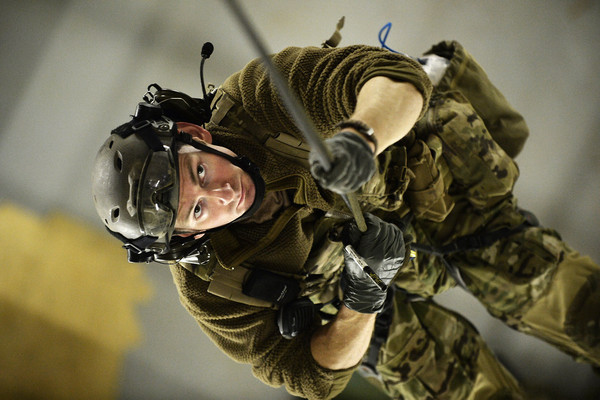
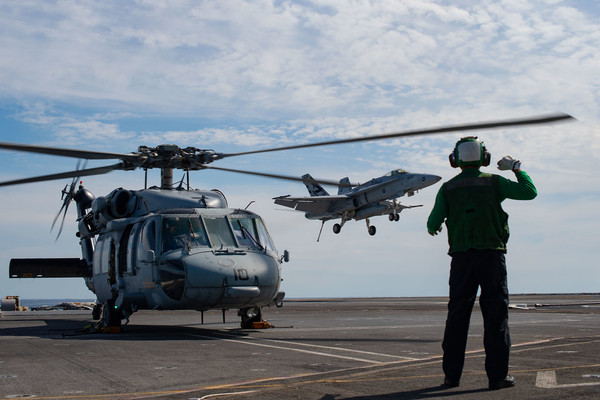
When that fateful call went out that one of America’s F-15 fighter jets had taken enemy fire, and both aviators on board were forced to eject over enemy territory, deep behind enemy lines in Iran, almost immediately the legendary Air-Force Combat Search and Rescue team (CSAR) and Joint Special Operations Command (JSOC) sprang into action. Within a matter of seconds, the Air Force’s elite rescue team started the process of doing what it does best, sniffing out downed pilots like hungry bloodhounds that haven’t eaten for days.
In coordination with ground intelligence provided by the Central Intelligence Agency (CIA), this highly dedicated and incredibly motivated team of sophisticated warriors serving our nation, live and breathe for this precise moment in time and immediately began its task. The opportunity to maneuver through hellish landscapes while dodging enemy fire, simply for the opportunity to retrieve downed pilots or servicemembers that might otherwise be captured or killed; this is how these brave warriors choose to earn their paychecks.
Their preparation and training are an understated masterclass in strategic planning, tenacity, and sheer fortitude and unwavering courage; and nobody does it better than them. Their motto, “These Things We Do, That Others May Live” should tell you everything you need to know about them. From the moment they received the call out, to the moment their rotor blades begin cutting through the air, their message was abundantly clear; we’re coming for you, and we’re not leaving without you.CSAR personnel undergo incredibly rigorous training, lasting nearly two years. This includes parachuting proficiency, advanced diving techniques, innovative survival methods, resistance and escape methods, advanced tracking systems, and full paramedic certification. Their motto underscores the risks and sacrifices these elite teams undertake to rescue downed pilots, isolated troops, or other assets in combat zones, operating in the most hostile environments in ghostly fashion.
These aren’t your run of the mill search teams with flashlights and first aid kits; they are the elite of the elite within America’s Armed Forces. Its primary mission is to study special operations requirements, develop tactics, and conduct high priority missions globally on a moment’s notice. Their worldwide stations are highly classified, and these ethereal specialists can be anywhere within the world within a matter of hours.
From the moment CIA ground intel pinpointed the downed Airmen’s approximate locations every precious second mattered. Rescue plans were devised for each downed aviator; insertion points were mapped out to the millimeter, cover points were created from every angle imaginable, and American air support was synchronized to provide both high and low flying umbrella like protection. What made these missions especially dire was that the aviators were miles apart, each suffering from a variety of injuries sustained during ejection, and subsequent landing as the barbaric IRGC closed in on their locations.
But let’s get one thing straight about this elite team of rescuers; they are straight out of central casting. As their helicopters lifted off, every crew member knew the stakes. They weren’t just tracking their downed pilots; they were showing the world American resilience and that unbreakable bond that’s says we never leave a man behind.
The CSAR team doesn’t just rescue pilots, they embody the doctrine that no mission is too difficult and no environment too hostile. Courage is simply their baseline; a unique skillset that’s engineered for success in scenarios where the odds are stacked against them. They laugh in the face of danger because they know they’ve trained harder, pushed further, and are willing to bleed out for every inch of airspace and every life they recover from enemy hands.During this mission, most of the world held their collective breath and thought these downed pilots were as good as gone, to be used as propaganda tools by the IRGC, and tortured in ways we simply cannot imagine. But as the CSAR crew lifted off in recovery mode, every one of them knew the stakes. Once on the ground and in theatre, the team moved swiftly through the terrain like a pack of wolves on the scent of their prey, with precision, unapologetic hostility and zero room for error.
After a few perilous days, both downed aviators were safely recovered and touched back down on friendly soil. At this point, the entire CSAR team exhaled a breath they’d been holding in for about 72 hours; a mixture of relief, pride, and a well-deserved smug satisfaction that comes with pulling off the impossible under the worst of circumstances. For three days their brethren were hunted and faced certain death if captured, but due to the unbreakable bond that says, “we never leave a man behind,” the two rescued aviators will see their families once again, thanks to the heroics of those fearless CSAR operators who vow to always have their six.
Editorial comments expressed in this column are the sole opinion of the writer
'No Americans get left behind' by Vincent
- by: Vincent Cavaleri
- 2026-04-13
- Source:
heartlandjournal.com

- 04/13/2026
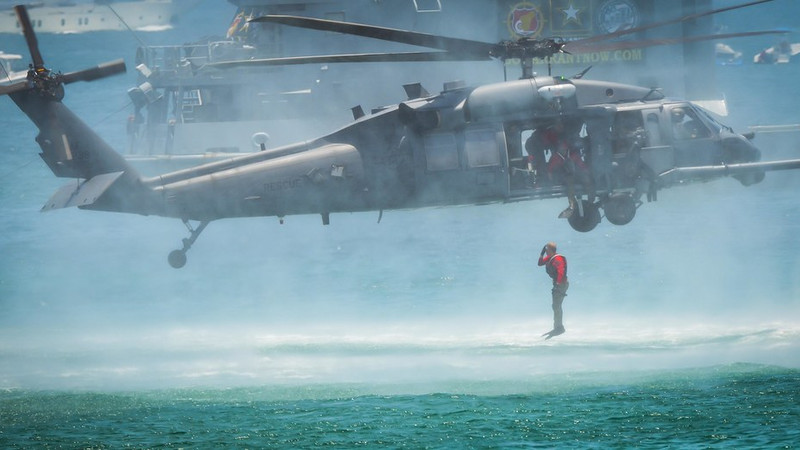
170527-F-CV286-400 by Official U.S. Air Force is licensed under by-nc