Beneath the bustling streets of America's major cities lies a hidden world that most residents and visitors never see. From bustling commercial hubs to forgotten historical passageways, these subterranean networks reveal fascinating stories of urban ingenuity, historical necessity, and modern adaptation.
Seattle Underground, Washington stands as perhaps America's most famous subterranean city. Created after the devastating Great Fire of 1889, Seattle rebuilt by elevating its streets approximately 12 feet above the original ground level. The original sidewalks and storefronts became underground passages, now offering guided tours through this accidental catacomb of forgotten storefronts and architectural remnants.
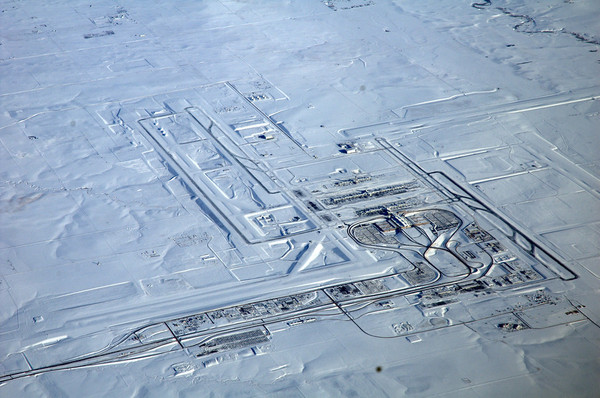
Beneath Denver International Airport (DIA) lies an expansive "underground city" spanning over a million square feet, featuring 7,000-foot tunnels used for luggage transport via automated systems and service vehicle traffic. This functional subterranean area, sometimes patrolled by police, also includes newer, massive tunnels for collecting and recycling deicing fluid.
SubTropolis, Kansas City, Missouri represents the commercial evolution of underground living. Built into a former limestone mine, this sprawling 55-million-square-foot business complex maintains a constant 68-degree temperature year-round. Today, it houses numerous companies storing goods and operating businesses in a subterranean environment that offers both climate control and security.
Underneath Disney World's Magic Kingdom lies the 'Utilidors" (Unitlity Corridos), a massive 9-acre network of tunnels acting as an underground city for cast members. Built at ground level to avoid Florida’s high water table, these tunnels allow staff to move between lands, manage trash via vacuum tubes, access costume storage, and operate cafeterias, keeping all "backstage" logistics hidden from guests above.
Oklahoma City Underground demonstrates postmodern urban planning. Constructed in the 1970s to connect downtown buildings, this tunnel system stretches from the OG&E building to the Myriad Convention Center, offering climate-controlled walkways that protect pedestrians from the city's extreme weather.
Dallas Underground Tunnels, Texas emerged in the early 1970s with a similar purpose: connecting downtown buildings while beating the oppressive Texas heat. Originally featuring shops and restaurants, this network allowed office workers to navigate the city center without stepping outside.
Indianapolis Catacombs present a historical mystery. Located beneath the downtown City Market, these brick-vaulted tunnels served as Tomlinson Hall's basement. Though the original building burned, the underground catacombs remain, offering eerie tours through 19th-century construction.
Portland Shanghai Tunnels, Oregon carry darker historical significance. Legend claims these passages were used for shanghaiing—kidnapping people to serve on ships. Whether strictly factual or embellished, these tunnels beneath Chinatown remain fascinating attractions connecting buildings to the waterfront.
Crystal City Underground, Arlington, Virginia transformed a retail district during the Cold War. This network connects office buildings and shops beneath crystal towers, allowing workers to avoid winter weather and summer humidity entirely.
Las Vegas Drainage Tunnels, Nevada reveal modern adaptation. Originally built for flood control, these tunnels along the Las Vegas Wash have become unintended shelter for the unhoused population, showcasing how underground spaces serve different social purposes than originally intended.
Pittsburgh Tunnels, Pennsylvania extend beyond vehicle traffic. The Cathedral of Learning's Nationality Rooms and various downtown tunnels connect the hilly terrain, while Point State Park hides underground facilities beneath its surface.
Greenbrier Bunker, West Virginia represents governmental subterranean planning. This Cold War-era fallout shelter was built to house Congress in case of nuclear attack. The secret facility remained hidden for decades, only revealed in 1992, demonstrating how seriously America prepared for underground survival.
The Vegas Loop is an underground transportation system built by Elon Musk's The Boring Company in Las Vegas, featuring Tesla vehicles driving in tunnels to transport passengers. Currently operating with over 2 miles of track and 8 stations, it aims for a 68-mile, 104-station network connecting the Convention Center, Strip, and Airport.
In January 2024, an illegal tunnel was discovered beneath the Chabad-Lubavitch World Headquarters at 770 Eastern Parkway in Crown Heights, Brooklyn, leading to a chaotic confrontation between worshippers and the New York City Police Department (NYPD).
The "tunnel" was actually an illegally excavated passageway, estimated at 60 feet long, 8 feet wide, and 5 feet tall, connecting the synagogue to an adjacent, empty apartment building. The tunnel was dug by a group of young men within the Hasidic community, often described as a "splinter sect" or "extremist students" associated with Chabad messianism. Members of this group, who believe that the late Lubavitcher Rebbe Menachem Mendel Schneerson is the Messiah and still alive, built the tunnel to "expand" the synagogue, citing a long-standing desire to grow the crowded sanctuary.
When leadership, which rejects this messianic view, sought to fill in the tunnel, these students staged a protest, leading to a brawl, vandalism, and the eventual arrival of the NYPD on January 8, 2024.
Nine to twelve individuals were initially arrested for actions including criminal mischief and reckless endangerment. By April 2024, several men were facing charges, with some entering plea deals to lesser charges, including probation and restitution for damages.
The illegally constructed tunnel caused structural damage, prompting the Department of Buildings to issue vacate orders for some adjacent buildings, including a former women's mikvah (ritual bath).
The tunnel was officially filled with cement by construction crews shortly after its discovery.
The incident resulted in viral, false, and antisemitic conspiracy theories online, with some users creating AI-generated imagery or falsely associating the space with trafficking or malicious acts.
The building remains a highly revered site in the Chabad-Lubavitch movement, and the leadership has condemned the actions of the group that dug the tunnel.
America’s newest addition is underway. The Boring Company, owned by Elon Musk, is constructing the "Music City Loop" in Nashville, a 25-mile underground transit tunnel connecting Nashville International Airport (BNA) to downtown and West End using Tesla vehicles. The project began tunneling this year with an initial 13-mile, privately funded phase projected to finish by 2027.
Not since the Burj Khalifa in Dubai, United Arab Emirates, completed in 2010 and is the tallest building in the world, standing at a record-breaking 2,717 feet, has the “skyscraper” held our collective imaginations.
These hidden networks, where the sun does not shine, reveal that American cities have always worked in multiple dimensions—accommodating growth, escaping weather, and preparing for uncertain futures beneath their visible skylines.
Editorial comments expressed in this column are the sole opinion of the writer