
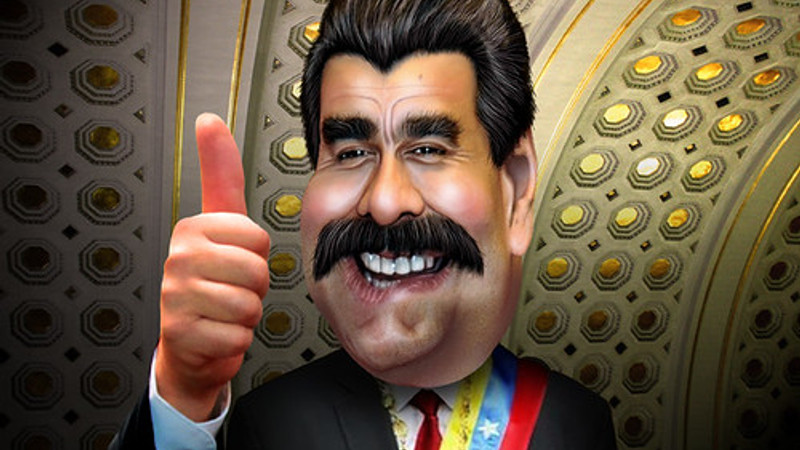
Over two decades covering Latin America's turbulent intersection of politics, oil, and narcotics, the so-called "war on drugs" often masks deeper geopolitical maneuvers. The stunning events of this week—U.S. forces capturing Venezuelan President Nicolás Maduro on January 3, 2026, in a swift operation involving airstrikes and his extradition to face charges in the United States—mark a pivotal chapter in this saga.
To truly grasp Maduro's downfall and Venezuela's chaos, one must delve into the entangled history involving U.S. figures like George H.W. Bush, Dick Cheney, and the Bush brothers—Jeb as Florida's governor and George W. as Texas governor and later president—and their fraught ties to the regime of Hugo Chávez, Maduro's predecessor. This narrative, steeped in the war on drugs, reveals patterns of interventionism that culminated in the policy clashes between Donald Trump and Marco Rubio, paving the way for regime change.
Let's rewind to the roots. Post Reagan and Grenada – Contras in Nicaragua, Thatcher and Falklands 1980’s, the George H.W. Bush's era set the stage for U.S. suspicion toward Latin American leftists. As CIA director in the 1970s, vice president under Reagan, and president from 1989 to 1993, Bush oversaw operations in the region amid the escalating war on drugs, officially inaugurated by Nixon in June 1971. Bush’s administration intensified efforts against Colombian cartels, but Venezuela, under presidents like Carlos Andrés Pérez, was seen as a cooperative ally in stemming cocaine flows northward. However, Bush's family ties to oil—through companies like Zapata Offshore—highlighted the dual U.S. interests in energy and narcotics control. Venezuela's vast reserves, largest in world, made it a strategic partner, yet corruption in its state oil company, PDVSA, already hinted at future narco-infiltration.
Dick Cheney, who served as defense secretary under H.W. Bush and later vice president under George W. Bush, embodied this oil-narcotics nexus. Cheney's Halliburton tenure intertwined with Venezuelan contracts, but his public stance turned hostile toward Chávez after the Venezuelan leader's 1999 rise to power. In a 2007 speech, Cheney lambasted Chávez for undermining democracy—famously gaffing by referring to Venezuela as "Peru"—while accusing him of aligning with anti-U.S. forces.
This rhetoric escalated as Venezuela became a key transit hub for drugs. By the mid-2000s, U.S. officials estimated that 200-300 tons of cocaine passed through Venezuela annually, often with alleged complicity from military officials in the "Cartel of the Suns.”
Enter the Bush brothers, whose state-level roles amplified federal policies. George W. Bush, as Texas governor from 1995 to 2000, grappled with drug influxes across the southern border. Texas ports and highways were pipelines for Venezuelan-sourced narcotics, funneled via Mexican cartels. Bush's "zero tolerance" approach mirrored national efforts, but his governorship coincided with Chávez's early reforms, which included nationalizing oil assets and criticizing U.S. imperialism. When W. became president in 2001, relations soured dramatically. The 2002 coup attempt against Chávez—briefly ousting him before his reinstatement—drew accusations of U.S. involvement, though denied by the administration.
Chávez retaliated by suspending cooperation with the U.S. Drug Enforcement Administration (DEA) in 2005, claiming it spied on his government.
Bush countered by decertifying Venezuela as a drug-fighting partner, citing rampant corruption.
Meanwhile, Jeb Bush's governorship of Florida from 1999 to 2007 placed him at the epicenter of the drug war. Florida's coasts were prime landing spots for speedboats carrying Venezuelan cocaine, contributing to the state's overdose epidemics. Jeb pushed aggressive anti-drug initiatives, including Operation Panama Express, a federal task force targeting Caribbean routes. But his tenure overlapped with Chávez's growing defiance. Venezuela's refusal to extradite suspects and its alliances with Colombia's FARC guerrillas—labeled narco-terrorists by the U.S.—frustrated Florida officials.
Dick Cheney's Halliburton (CEO 1995–2000) had historical ties to Venezuelan oil through subsidiaries like Brown & Root, including alleged bribery for contracts in the late 1990s (pre-Chávez full nationalization). These involved potential payoffs for PDVSA work—Cheney severed ties upon becoming VP in 2001, and investigations focused on Halliburton, not the Cheney or Bushes personally.
Jeb's family legacy added layers: rumors swirled about earlier Bush connections to Latin American figures, though unsubstantiated.
Critically, the Bushes' oil interests clashed with Chávez's "Bolivarian Revolution," which redirected PDVSA profits to social programs while allegedly enabling drug lords.
Under George W. Bush's presidency, U.S.-Venezuela ties hit rock bottom. Chávez famously called Bush "the devil" at the 2006 UN General Assembly, decrying U.S. hegemony.
Bush sharpened criticisms, accusing Chávez of provocations and failing the drug war.
Venezuela's oil exports to the U.S. continued, notoriously to blue states like Massachusetts and also the Bronx in New York City in individual deals, in defiance of the Republican administration, but sanctions loomed. Chavez saying he is leading a socialist "revolution" and has become one Bush's strongest critics in Latin America.
Cheney, as VP, advocated hawkish stances, viewing Chávez as a threat akin to Saddam Hussein. This era solidified Venezuela as a "narco-state" in U.S. eyes, with intelligence reports linking regime officials to trafficking.
Maduro, Chávez's handpicked successor after his 2013 death, inherited this animosity. By then, the war on drugs had evolved into a tool for regime pressure. Enter Donald Trump and Marco Rubio, whose policy divergences underscore the path to this week's upheaval. Trump, during his 2016 campaign, promised an end to endless interventions, criticizing Bush-era wars. Yet his first term (2017-2021) ramped up sanctions on Maduro, recognizing opposition leader Juan Guaidó as interim president in 2019 and indicting Maduro on narcotrafficking charges in 2020. Trump's approach blended isolationism with targeted pressure, focusing on oil embargoes to starve the regime.
Marco Rubio, the Cuban-American senator from Florida since 2011, brought a more interventionist bent to the State Department. Elected during Jeb Bush's post-governorship influence—Jeb endorsed Rubio's 2010 Senate bid—Rubio's heritage fueled his hardline stance against leftist regimes. As chair of the Senate Intelligence Committee, he championed aggressive policies, labeling Maduro a "narco-dictator" and advocating military options if needed. Rubio's differences with Trump emerged starkly: while Trump hesitated on full regime change, Rubio pushed for it, co-authoring bills to arm Venezuelan opposition and tighten sanctions.
The war on terror plays a part too. Qatar and Iran's influences in Venezuela have deepened under Maduro's regime, intertwining with drugs, terrorism, and regional instability, while exacerbating religious persecution domestically.
Qatar's role is primarily economic and diplomatic, providing investments in oil and infrastructure to bypass U.S. sanctions. Though not directly linked to drugs, Qatar has harbored figures accused of terrorism and offered Maduro potential exile amid U.S. pressures.
Its Al Jazeera network has amplified pro-Maduro narratives, indirectly supporting the regime's stability.
Iran's involvement is more insidious, bolstering Maduro through military aid, oil deals, and Hezbollah networks. Iranian-backed Hezbollah operates in Venezuela for drug trafficking, money laundering, and terrorism financing, converging with groups like FARC.
This "narcoterrorism" nexus funnels cocaine through Venezuela, impacting Colombia—where drug production fuels border conflicts—and Mexico, where Sinaloa and other cartels use Venezuelan ports for transit, escalating violence and U.S.-bound flows.
Religiously, Maduro's authoritarianism targets Christians, with hostility toward outreach, repression of church leaders advocating reform, and systemic violations of faith freedoms, potentially worsening post-capture.
Iran's Shia influence may indirectly fuel sectarian tensions, though direct ties are limited.
These alliances have turned Venezuela into a hub for illicit activities, destabilizing neighbors.
In 2019, Rubio urged Trump to invoke the Monroe Doctrine, but Trump demurred, tweeting "all options are on the table" without committing troops.
These tensions resurfaced in Trump's second term, starting 2025. With Rubio as Secretary of State, the duo navigated a fragile alliance.
Trump, eyeing Venezuela's oil amid global shortages, authorized a military buildup in the Caribbean, framing it as anti-drug operations.
Airstrikes on alleged drug vessels escalated in late 2025, echoing Bush-era interdictions but with modern drone tech.
Rubio, the hawk, reportedly advocated for direct action, while Trump initially favored negotiations for oil access. Disagreements peaked over post-Maduro governance: Trump boasted the U.S. would "run" Venezuela to exploit its resources, coining it the “Don-roe Doctrine”, while Rubio emphasized democratic transitions without occupation.
Rubio's Cuban roots and Florida ties—echoing Jeb's drug war focus—prioritized human rights and anti-communism, contrasting Trump's transactionalism.
This policy friction, rooted in the Bush-Cheney legacy of viewing Venezuela through a drugs-and-oil lens, led to the January 3 operation. Codenamed Operation Absolute Resolve for swift extraction, it captured Maduro amid claims of his regime's drug empire costing U.S. lives.
Critics decry it as "naked imperialism," a return to unilateral interventions.
Yet, as Maduro faces trial, Venezuela's future hangs in limbo—opposition fragmented, U.S. influence deepened.
Understanding Maduro requires this historical lens: from H.W. Bush's foundational anti-drug crusades, through Cheney's and the Bushes' confrontations with Chávez, to Trump-Rubio rifts. The war on drugs has long been a pretext for power plays, and this week's regime change proves the cycle endures. As Venezuelans awaken to uncertainty, the ghosts of U.S. policy past loom large.
Editorial comments expressed in this column are the sole opinion of the writer.
The most damning document the U.S. government produced on Maduro before Saturday was the 2020 indictment handed up by a federal grand jury in Manhattan at the request of the first Trump Justice Department. The indictment chronicles how Maduro seized power after rising through the ranks of a drug cartel closely aligned with Colombia's leftist guerrillas and drug traffickers.
You can read that indictment here.
maduro_moros_et_al_superseding_indictment_sdny_redacted_0.pdf
Since at least 1999, the indictment claimed, Maduro and his cohorts "acted as leaders and managers of the Cártel de Los Soles," also known as Cartel of the Suns.
