
In recent months, a significant shift has occurred in the public conversation surrounding marijuana, as influential voices and institutions increasingly acknowledge the potential harms associated with today's high-potency cannabis products and widespread use. I'll examine three prominent social media posts that collectively signal a reevaluation of cannabis's place in American society, challenging years of progressive normalization.
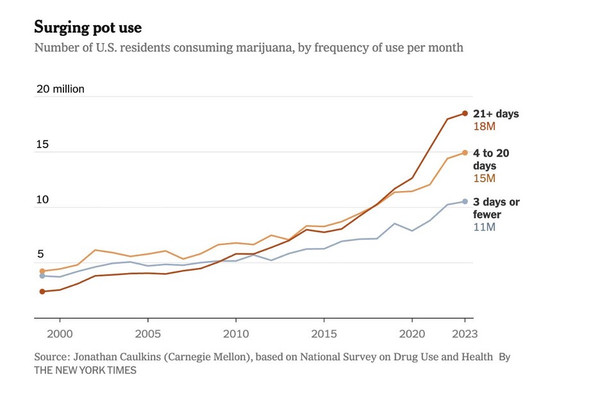
Political commentator Saagar Enjeti (@esaagar) brought attention to a startling statistic that forms the cornerstone of the emerging debate: approximately 18 million Americans now smoke marijuana 21 or more days per month.
This figure, derived from the National Survey on Drug Use and Health, represents a full-blown addiction crisis according to Enjeti, who accompanied his post with a reference to the New York Times editorial board's unexpected intervention on the topic.
Enjeti's post highlights how rapidly the landscape has changed since recreational marijuana legalization began spreading across states in 2012. What was once celebrated as a personal freedom issue has, for many users, become a daily dependency that rivals or exceeds tobacco in frequency of use. This daily use pattern is particularly concerning given the dramatic increase in THC concentrations in modern cannabis products compared to the marijuana of previous decades.
Perhaps most significant in this evolving conversation is the New York Times editorial board's February 2026 piece titled "It’s Time for America to Admit That It Has a Marijuana Problem." The board, which had previously supported legalization, now acknowledges that "the loosening of marijuana policies — especially the decision to legalize pot without adequately regulating it — has led to worse outcomes than many Americans expected."
This represents a remarkable institutional reversal from a publication that just over a decade earlier published a six-part series arguing for the repeal of the federal marijuana ban. The Times now admits that "not all of their arguments in support of decriminalizing marijuana have stood the test of time."
The editorial board points to several concerning trends: the rise in addiction rates, increasing instances of cannabinoid hyperemesis syndrome (which causes severe vomiting and abdominal pain), and more frequent emergency room visits for marijuana-linked paranoia and psychotic disorders. They also note the false perception of marijuana as a "harmless drug" with no addictive properties, pointing out that this Belief has been contradicted by mounting evidence.
The third post, from user IterIntellectus (@IterIntellectus), takes an even more alarming perspective, stating bluntly that "weed makes you retarded" and warning of permanent cognitive effects for heavy users who began before age 18 and continued for a decade or more. While language may be crude, the concern raises legitimate neuroscientific questions about how cannabis exposure during critical periods of brain development might result in lasting changes.
This perspective reflects growing concern in medical circles about adolescent exposure to high-potency cannabis products. Research published in JAMA Network Open and other medical journals has indicated associations between early, frequent cannabis use and subsequent mental health problems in young adulthood. One study found that teens who started using cannabis early and used frequently had a 51% higher chance of seeking care for mental health problems and an 86% higher chance of needing care for physical health issues compared to non-users.
The concern about permanent cognitive effects particularly relates to adolescence, when the brain undergoes significant development and reorganization that continues into the early 20s. The endocannabinoid system, which interacts with THC, plays a crucial role in these neurological processes, and disruption during this critical developmental window may have lasting consequences.
The concerns raised in these posts must be understood in the context of how dramatically cannabis has changed from previous eras. The average THC concentration in marijuana products has risen from approximately 3-4% in the 1990s to 20-30% in many commercial products today, with concentrates reaching 80-90% THC. This pharmacological shift makes direct comparisons to historical cannabis use potentially misleading.
Compounding this change in potency is the variety of consumption methods now available. Vaping, dabbing, and edibles create different patterns of exposure and intoxication compared to traditional smoking. These products often allow for more discreet use and higher dosing, contributing to the patterns of daily consumption highlighted in Enjeti's tweet.
Traffic accident statistics went up after Colorado turned their entire government into a Pot Dispensary. (A 151% spike in impaired driving accidents and a 300% spike in fatalities from same) By then, they were making so much money, CO chose to bury the stats. Over 40% of fatal crash victims had THC levels far above legal limits, showing cannabis use before driving remains widespread. The rate didn’t drop after legalization, suggesting policy changes haven’t altered risky habits. Experts warn that the lack of public awareness around marijuana’s dangers behind the wheel is putting lives at risk.
The collective alarm points to a need for nuanced policy approaches that acknowledge both the failures of prohibition and the limitations of the current commercial legalization paradigm. The Times editorial board suggests several regulatory measures including:
- Limiting THC concentrations in commercially available products
- Restricting marketing practices that appeal to adolescents
- Clear warnings about potential risks, particularly for pregnant women and those with pre-existing mental health conditions
- Crackdowns on unsubstantiated medical claims made by dispensaries
- Potentially creating consumption venue restrictions to reduce public use
- Restricting marketing practices that appeal to adolescents
- Clear warnings about potential risks, particularly for pregnant women and those with pre-existing mental health conditions
- Crackdowns on unsubstantiated medical claims made by dispensaries
- Potentially creating consumption venue restrictions to reduce public use
These suggestions emerge from a recognition that the current "hands-off" approach to regulation in many states has created an environment resembling that of tobacco before public health interventions addressed its harms.
The three posts examined here represent different facets of a growing consensus that America's relationship with cannabis needs reassessment. From the statistical warnings about daily use patterns to institutional acknowledgment of policy failures and concerns about neurological impacts, a more cautious approach is emerging.
This doesn't necessarily imply a return to the criminalization models of the past, but rather a more sophisticated regulatory framework that acknowledges both the potential benefits and harms of cannabis use. As the Times editorial board concluded, "It is time to acknowledge reality and change course" — a sentiment that reflects how quickly the conversation around marijuana has evolved from enthusiastic endorsement to concerned reckoning.
The challenge now lies in developing evidence-based policies that reduce harms while recognizing that cannabis, like alcohol and tobacco, will remain part of American society regardless of its legal status. The posts examined here represent important milestones in shifting the conversation from simple legalization questions to more complex considerations of how to integrate cannabis into society responsibly.
Editorial comments expressed in this column are the sole opinion of the writer