Hollywood has always operated like a grand metronome, swinging from one representational obsession to the next with predictable, almost mechanical precision. For decades, I've watched the cycle repeat: first comes the breakthrough, then the saturation, finally the exhaustion—until audiences inevitably revolt with their wallets, creating space for the next commercially viable group identity to take its place in the spotlight. This isn't storytelling; it's manufactured culture, a public relations campaign disguised as cinema.
The Jewish Cinema Wave: From Breakthrough to Burnout
The template was established in the 1980s. Neil Diamond's *The Jazz Singer* (1980) and the television event *Raid on Entebbe* (1976) initiated what would become a decades-long flood of Jewish-themed content. At first, these films served what seemed like a legitimate purpose—documenting a history that had been underrepresented in American cinema. Spielberg's *Schindler's List* (1993) and Polanski's *The Pianist* (2002) arrived with thunderous Academy approval and critical hosannas.

Hollywood's Jewish renaissance didn't end Jewish representation—it simply normalized it to the point where it no longer guaranteed either critical acclaim or box office success. The audience had been thoroughly instructed, and now they were ready for new instructions.
The Black Cinema Explosion: From Glory to Saturation
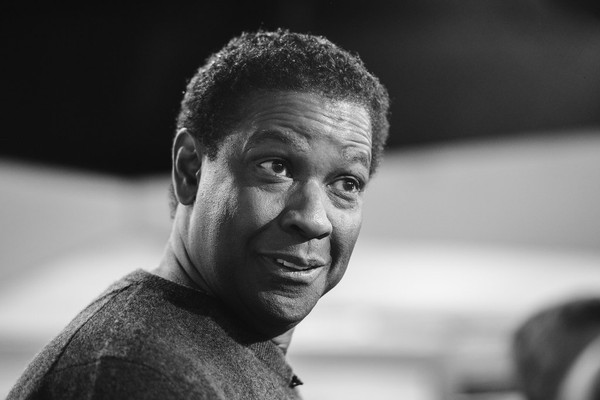
The 1980s and 1990s marked what many call the golden age of Black cinema. Films like 'Colors' (1988), 'Do the Right Thing' (1989), 'Boyz n the Hood' (1991), and 'Glory' (1989) shattered barriers with genuine artistic merit. When Denzel Washington won Best Actor for 'Training Day' (2001) and Halle Berry for 'Monster's Ball' (2001), it felt like breakthrough moments—the culmination of a decade-plus of steadily increasing black representation in quality filmmaking.
These early works possessed authenticity. Spike Lee's 'Do the Right Thing' crackled with authentic Brooklyn energy and political complexity. John Singleton's 'Boyz n the Hood' captured South Central Los Angeles with documentary-like realism. 'Glory' introduced mass audiences to the 54th Massachusetts Infantry Regiment, a Civil War story too long suppressed. These weren't manufactured narratives; they were films that needed to be made.
The result is the same exhaustion that followed the Jewish cinema wave. Black excellence became black obligation. Every awards season needed its designated black narratives. The stories that once felt urgent—exposing systemic racism, celebrating black achievement, documenting the black American experience— calcified into formula. Audiences, regardless of their own race, began to sense they were being instructed rather than entertained.
The Next Waves: LGBTQ and Muslim Representation
Anyone paying attention can see the current pivots. LGBTQ representation, which reached what GLAAD reported as historic highs—nearly 30% of films in 2022—increasingly triggers the same exhaustion signals. The questions that circulated on forums like Reddit regarding "overrepresentation" compared to population statistics (9.1% of prime-time TV characters versus approximately 5.6% of the population) suggest audience awareness that something beyond organic storytelling is at work. The pushback isn't, for most, about opposition to LGBTQ people—it's about the suspicion that characters are LGBTQ for commercial reasons rather than narrative authenticity.
Meanwhile, Muslim representation in Hollywood has undergone its own evolution since 9/11, moving from almost exclusively terrorist-adjacent portrayals to more nuanced depictions. Yet the Pillars Fund study found that among 200 popular films between 2017 and 2019, only about a quarter of Muslim characters were female, with virtually no ensemble lead roles. Hollywood's Muslim wave is still building, following the same trajectory—first the stereotypical, then the compensatory, eventually the exhausted.
The Faith-Based Film Arc: From Blockbusters to Bargain Bins
Few cycles demonstrate this exhaustion principle more clearly than faith-based films. 'Jesus Christ Superstar' (1973) became a cultural phenomenon by reimagining the Passion through 1970s counterculture aesthetics. Mel Gibson's 'The Passion of the Christ' (2004) reinvented the genre entirely, becoming one of the highest-grossing R-rated films in history primarily through mobilization of churchgoing audiences who felt Hollywood had ignored them.

The Christian audience—the same demographic that made 'The Passion' a phenomenon—became exhausted by representation that felt condescending rather than transcendent. They knew when they were being pandered to, and eventually, they stopped buying tickets.
The Craft of Manufactured Culture
The pattern reveals how Hollywood operates. Initial breakthrough films—'Birth of a Nation' (technically innovative despite its horrific message), 'Gone with the Wind' (a mythologized South that dominated the American imagination for generations), 'The Color Purple' (black women's experiences finally centered)—do serve genuine cultural purposes. They open doors. They expose audiences to previously marginalized perspectives.
But then comes the industrial phase. 'Mississippi Burning' (1988), for all its craft, exemplifies the problem: it takes a story about black civil rights workers murdered by racists and makes it about white FBI agents solving the case. It's not black history; it's white savior fantasy dressed in civil rights drag. The black characters are victims or bystanders; the white FBI agents are the heroes. The film tells us how to think about the South—virulently racist, backwards, irredeemable—but does so through white protagonists because that's what studios believe white audiences need.
Similarly, 'A Time to Kill' (1996), based on John Grisham's novel, pushes the formula further. The racist South—embodied by caricatured Klansmen and complacent jurors—becomes a backdrop for Matthew McConaughey's heroic white lawyer to deliver a closing argument so manipulative it borders on sadistic. The film knows audiences want the catharsis of racist punishment, and it manufactures that catharsis through narrative contrivance. Quentin Tarantino’s ‘Django Unchained’, like ‘Inglorious Bastards’ before it, dole out similar Jewish and black revenge fantasy.
This brings us to uncomfortable territory. The Southern Poverty Law Center (SPLC), which has spent decades as Hollywood's primary source for "hate group" expertise, now faces federal indictment for exactly the dynamic that suspicion suggested: allegedly using donor money to fund informants within groups like the Ku Klux Klan—effectively keeping the Klan alive while simultaneously fundraising off its existence. The Justice Department's April 2026 indictment charges the SPLC with wire fraud, false statements, and money laundering related to millions paid to extremist informants between 2014 and 2023.
In the 2002 film adaptation of Tom Clancy's 'The Sum of All Fears', the most controversial change involved the complete replacement of the novel's antagonists: whereas Clancy's book centered on Arab nationalists detonating a nuclear bomb to incite conflict between superpowers, the screenplay transformed the terrorists into a "pan-European neo-Nazi group"—a revision that starkly illustrates Hollywood's discomfort with depicting Islamic terrorism even before September 11th. Despite common misconceptions that the change responded to post-9/11 sensitivity, filming concluded in June 2001, meaning the alteration reflected pre-existing industry anxieties about offending Muslim audiences or reinforcing stereotypes. This switch proved so drastic that Harrison Ford, who had played Jack Ryan in previous Clancy adaptations, reportedly withdrew from the project specifically over disagreements regarding the Islamic terrorism plotline, opening the door for Ben Affleck's casting in what became a franchise reboot. The modification was not lost on Clancy himself, who famously introduced himself in the DVD commentary as "the author of the book that he ignored," spending much of the track sarcastically highlighting the film's departures from his original narrative while complaining about its technical inaccuracies. Critics at the time, including those in the Carolina Journal, decried the change as "political correctness" run amok, arguing that the neo-Nazi substitution created what one reviewer called "an oxymoron" that undermined both geopolitical realism and dramatic coherence—ultimately softening the novel's harder-edged examination of Middle Eastern terrorism to create a more palatable, morally simplistic villainy that audiences would not find culturally uncomfortable. And possibly leading cause of making it Clancy’s third place box office - barely above Paramount’s last place “Patriot Games’ (1992).
The Exhaustion Economy
American audiences are not stupid. They recognize when they're being instructed. They feel the difference between 'Schindler's List' and the Holocaust film-of-the-week that followed it. They can distinguish 'Boyz n the Hood' from the parade of "urban" films that copied its aesthetic without its authenticity. They sense when LGBTQ characters serve the story versus when they serve representation quotas.
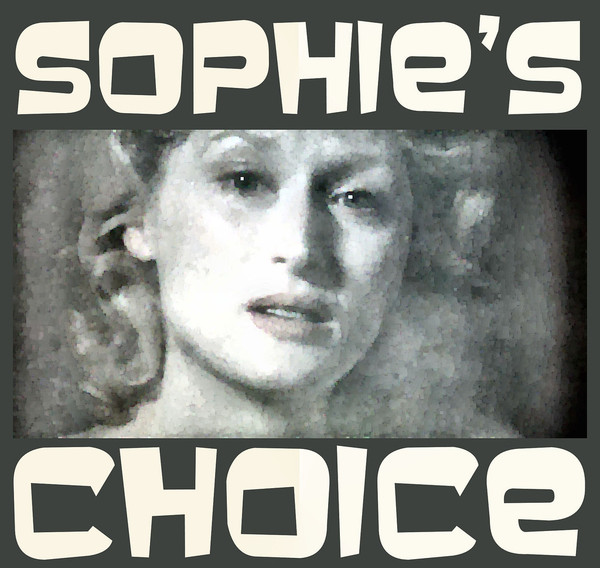
This creates the exhaustion Hollywood never accounts for in its diversity spreadsheets. The audience's emotional wallet is finite. Every "important" film demanding tears, guilt, or performative allyship depletes that account. ‘Sophie’s Choice’ over ‘Shaft in Africa’. Eventually, moviegoers seek escape—not because they reject the represented groups, but because they reject being told how to feel about them.
But for now, the pattern is clear. From Jewish cinema's emotional hegemony to black cinema's award-season saturation, from the Christian film boom to the emerging LGBTQ and Muslim waves, Hollywood treats representation as a resource to be extracted rather than a reality to be honored. And audiences, wallet-fatigued and emotionally depleted, eventually vote with their absence. The seats go empty. The "important" films become tax write-offs. And the cycle begins again, chasing the next demographic, the next emotional algorithm, the next manufactured culture moment.
The exhaustion isn't prejudice—it's the natural human response to being sold something dressed as truth and becoming numb.
Editorial comments expressed in this column are the sole opinion of the writer