
Post-WWII Australia was gripped by fears of underpopulation and invasion, encapsulated in Prime Minister Arthur Fadden's "populate or perish" mantra. The 1901 Immigration Restriction Act enshrined the White Australia Policy, using dictation tests in European languages to exclude non-whites, Asians, and Africans. Immigration surged under the Assisted Passage Scheme, attracting over a million "Ten Pound Poms" from Britain and Europeans from war-torn nations like Italy and the Netherlands between 1947 and the 1960s. Strict quotas favored those of "British stock," with non-Europeans comprising less than 1% of arrivals. This system ensured cultural assimilation but stifled global ties, reflecting a fortress mentality amid Cold War anxieties.
Cracks appeared in the 1960s under Liberal governments. Prime Minister Harold Holt's 1966 decision to end restrictions on Japanese entry signaled a thaw, driven by economic needs and anti-racist international pressures. Labor's Gough Whitlam accelerated dismantling in 1973, formally abolishing the White Australia Policy via the Racial Discrimination Act. This marked a pivot to multiculturalism, articulated by Al Grassby as a "family of the nation." Immigration from Asia, the Middle East, and Africa ballooned; by the 1970s, Vietnamese refugees post-1975 fall of Saigon added 130,000, challenging assimilationist ideals but enriching urban fabrics like Sydney's.
The 1980s Hawke-Keating Labor era deepened liberalization, emphasizing skilled labor to fuel export booms. The 1989 Immigration Act introduced family reunions and humanitarian streams, while economic migration rose 20%. By the 1990s, under Keating and Howard, policies fully embraced globalization. The points-tested skilled migration system, formalized in 1994, awarded visas based on age, English proficiency, qualifications, and job offers—prioritizing human capital over race. Net migration doubled from 70,000 in 1990 to 140,000 by 1996, with Asia supplying 40% of arrivals.
A pivotal loosening came via student visas, rebranded as an export industry in the 1980s. The Education Services for Overseas Students Act (1986) streamlined subclass 573 visas, requiring only course enrollment and financial proof, with pathways to permanent residency via post-study work rights. By 1996, the Temporary Business (Long Stay) visa (subclass 457) allowed sponsored workers, often transitioning from student status. Enrollments exploded: from 50,000 international students in 1990 to 200,000 by 2000’s Education Services for Overseas Students Act, injecting $2 billion annually. Pakistanis, fleeing 1990s instability, formed a key cohort; many entered via student or skilled streams, with family sponsorships following.
This openness enabled Sajid Akram's 1998 arrival from Pakistan, likely on a skilled or student visa, as records indicate he settled in Sydney and obtained a firearms license for six weapons—unthinkable under pre-1973 rules.
His Australian-born son, Naveed, 24, studied at Sydney's al-Murad Institute, a pathway emblematic of 1990s reforms blending education and migration.
Yet, both were radicalized; security flagged them in 2019 for extremist ties, but no wider cell was found, allowing them to evade scrutiny.
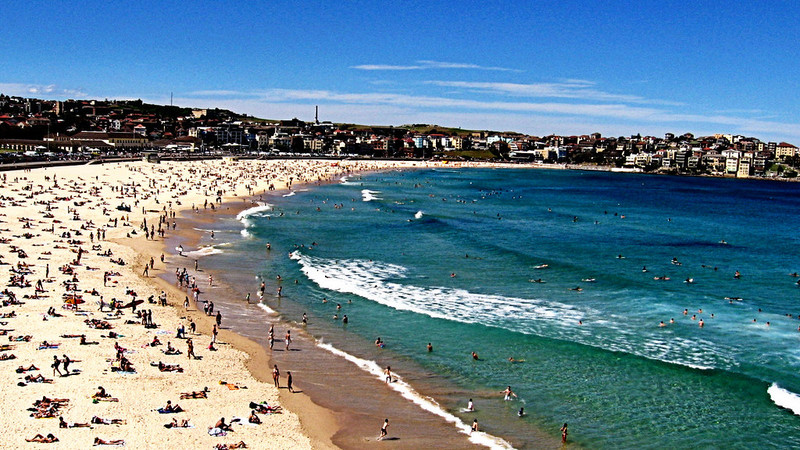
On December 14, during a Hanukkah beachfront gathering—marking the holiday's first night—the Akram duo unleashed hell, firing legally held guns and deploying explosives from their vehicle. They killed 15, including Rabbi Eli Schlanger, 10-year-old Matilda Poltavchenko, and Holocaust survivor Alexander Kleytman, injuring 40 in an antisemitic rampage Prime Minister Anthony Albanese decried as "pure evil."
Sajid died in the police shootout; Naveed, critically wounded, faces charges. A hero shopkeeper, Ahmed El Ahmed, an Australian citizen who immigrated from Syria in 2006 tackled one gunman, saving lives despite wounds.
Experts probe ISIS links, underscoring radicalization in diaspora communities.
The biting irony resonates: Australia barred Djokovic for health protocol defiance, yet policy dilutions from the 1970s onward—prioritizing numbers over vetting—fostered environments where imported ideologies fester. Post-1990s net migration hit 500,000 annually by 2023, straining resources and integration. The Bondi bloodbath, Australia's deadliest shooting since Port Arthur in 1996, prompts gun law vows but sidesteps immigration's role.
Critics argue unchecked student inflows and family chains bypassed assimilation, enabling second-generation extremism like Naveed's. As Isreal’s Netanyahu slammed Australia's Palestinian recognition for emboldening hate, the massacre exposes fractures in a system once unyieldingly protective, now perilously porous— a cautionary tale of good intentions yielding tragic unforeseen ends.
Editorial comments expressed in this column are the sole opinion of the writer.
