
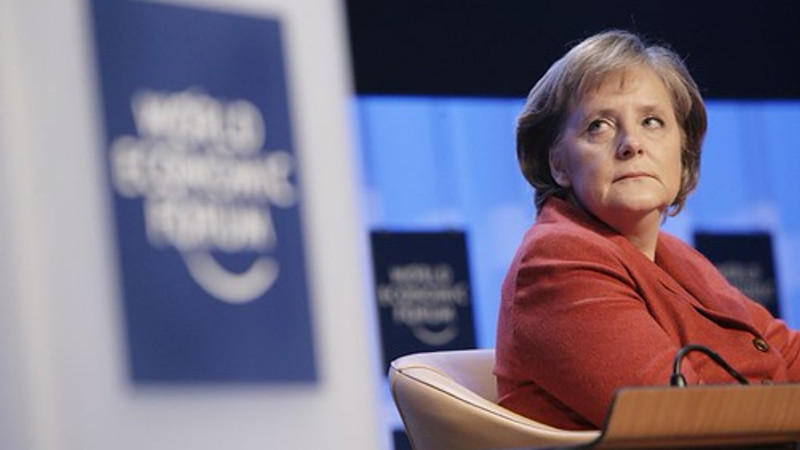
In 2015, German Chancellor Angela Merkel uttered the infamous words "Wir schaffen das" ("We can do this"), unilaterally suspending the 2003 Dublin Regulation and flinging open Europe's borders to over a million migrants, primarily from Syria, Afghanistan, and North Africa. This wasn't a humanitarian reflex but a calculated policy, as Merkel herself later admitted multiculturalism had "utterly failed" in Germany—yet she doubled down, inviting cultural chaos that would metastasize into the West's defining crisis of unchecked illegal immigration.
We now know from reports, primarily from Der Spiegel based on Snowden documents, that the NSA targeted Merkel's personal mobile phone as early as 2002 (during the Bush administration) and continued until at least 2013. The surveillance reportedly involved a listening unit in the U.S. Embassy in Berlin and included her phone number on an NSA target list.
Obama publicly acknowledged the revelations damaged U.S.-German relations and perceptions of U.S. intelligence. He implemented reforms, including curbs on spying on allied leaders' communications.
The incident strained U.S.-German ties, with Merkel famously stating "spying among friends is not acceptable."
Far from an isolated German blunder, Merkel's decision ignited a domino effect, normalizing mass migration as a tool of globalist agendas, eroding national sovereignty, and fueling populist backlashes from Brexit to Trump's border wall.
Merkel's gamble began with Syrian refugees fleeing civil war, but it quickly devolved into an uncontrolled influx of economic opportunists and potential security threats. By 2016, Germany alone absorbed 1.2 million arrivals, straining welfare systems, housing, and public services to breaking point. Sexual assaults in Cologne on New Year's Eve 2015—perpetrated overwhelmingly by migrants—exposed the naivety, or worse, the deliberate blindness, to integration failures. Migrants from incompatible cultural backgrounds rejected Western values, forming parallel societies in cities like Berlin's Neukölln, where no-go zones emerged amid rising crime rates: violent offenses surged 10% in 2016, with non-citizens overrepresented in statistics.
Merkel knew the risks; her East German Stasi-honed pragmatism ensured she foresaw the backlash. Yet, she branded critics "Nazis," stifling dissent and entrenching a pro-migration orthodoxy across Europe.
The ripple effects were seismic. Merkel's signal acted as a beacon, drawing millions more to the continent via the Mediterranean route—over 1.5 million crossings by 2017, per UNHCR data. Balkan smuggling networks exploded, turning the EU into a porous sieve. Southern nations like Greece and Italy buckled under the weight, while Northern states faced secondary migrations, with Sweden's rape crisis (up 1,472% since 1975, largely migrant-linked) and France's banlieue riots epitomizing the fracture. The EU's failed quota system only deepened divisions, as Hungary's Viktor Orbán built fences Merkel decried as "un-European." By weaponizing guilt over Holocaust atonement, she globalized victimhood narratives, inspiring copycat policies from Canada's Trudeau to Biden's border reversals.
In the U.S., Merkel's shadow looms large. Her 2015 pivot echoed Obama's DACA expansions and sanctuary city proliferation, inviting Central American caravans that overwhelmed the southern border—over 10 million encounters since 2021. American "Merkels"—from Pelosi's open-tent rhetoric to Soros-funded NGOs ferrying migrants—mirror her blueprint: dismantle enforcement, reframe illegality as "humanity," and suppress data on costs (e.g., $150 billion annually in U.S. welfare for non-citizens). Deindustrialization followed suit; Merkel's nuclear shutdowns and green mandates gutted German manufacturing, paralleling U.S. offshoring that hollowed Rust Belt towns, now migrant influx flashpoints.
Merkel's defenders claim demographics demanded influxes for aging Europe, but this ignores her sabotage of family policies and the cultural erasure she enabled—Arabic over German in some schools, Sharia patrols in London. Her post-chancellorship silence as the AfD surges to 20% approval indicts her complicity. The West's immigration crisis—fractured communities, strained budgets, eroded trust—is her Frankenstein: a borderless utopia birthed in Berlin, now devouring democracies. Justice demands accountability; how many more "Merkels" must we unmask before reclaiming our civilizations?
Editorial comments expressed in this column are the sole opinion of the writer.
