

A recent investigation shared by Dutch Rojas has revealed alarming trends in Nebraska's Medicaid billing for autism services, highlighting potential systemic vulnerabilities in healthcare oversight. According to the data presented, Nebraska's spending on autism-related billing codes skyrocketed from $4.6 million to $85.6 million over just four years—a staggering increase of approximately 1,761%.
The explosive growth in spending represents not a sudden autism epidemic as might be assumed, but rather what appears to be a significant expansion in billing practices. During this period, the number of individual clinicians billing Medicaid for these services grew dramatically from 389 to over 2,700—a nearly 600% increase in providers participating in this specific billing category.
Of particular concern is the revelation that Nebraska's Medicaid system apparently lacked adequate verification mechanisms to confirm whether the therapy being billed was actually provided to patients. This critical oversight gap creates potential for fraudulent billing practices and represents a substantial drain on taxpayer resources intended to support vulnerable populations.
The credentialing standards highlighted in this investigation raise additional questions about workforce quality. The minimum requirement for billing Medicaid $68 per hour to treat children with autism reportedly requires only a high school diploma and 40 hours of training, suggesting potential quality concerns in service delivery.
This Nebraska case appears to be part of a broader pattern of Medicaid billing irregularities related to autism services across multiple states. Similar findings have emerged from Maine, where federal investigators uncovered approximately $45 million in improper Medicaid payments for autism services.
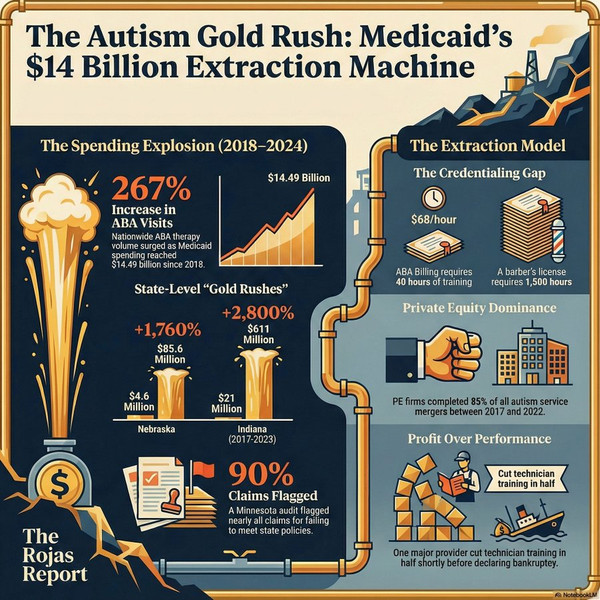
The implications of this investigation extend beyond financial waste to include questions about appropriate oversight mechanisms, credentialing standards, and the balance between increasing access to necessary services while protecting limited healthcare resources from exploitation. Rojas's analysis underscores the need for comprehensive reform in how these specialized services are monitored, delivered, and reimbursed within the Medicaid system.
Also, Indiana’s federal audit sampled 100 months of ABA claims. Every single one contained at least one improper payment. Not 97. All 100. Nap time billed as treatment. Group therapy billed as individual. Unqualified staff. Missing documentation. This is what a gold rush looks like when the gold is Medicaid money and no one is watching the mine.
As states continue to expand Medicaid coverage for developmental disabilities, implementing robust verification systems and establishing appropriate credentialing requirements becomes increasingly critical to ensure that resources reach their intended beneficiaries while maintaining quality standards of care.
