
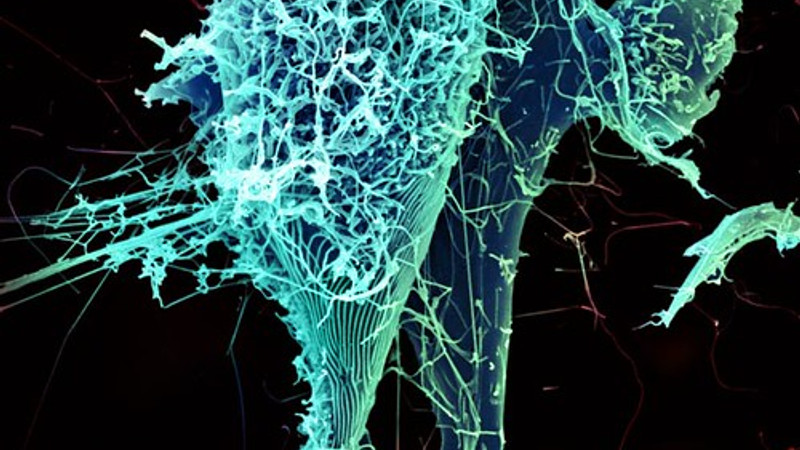
"We just need to mess around" -Bill Gates 2021 annual letter on pandemic planning in reference to the ongoing research of mRNA technology
On January 7, 2026, the Coalition for Epidemic Preparedness Innovations (CEPI)—a global vaccine-development coalition launched at Davos in 2017 with significant backing from the Bill & Melinda Gates Foundation—announced up to $26.7 million in new funding. The money was awarded to a consortium led by the University of Oxford’s Vaccine Group and Pandemic Sciences Institute, working alongside Leipzig University’s Institute for Drug Discovery and Moderna. The objective was to design and test multivalent vaccine candidates against the filovirus family, including Ebola virus, Sudan virus, Bundibugyo virus, Marburg virus, and even unknown future filoviruses.
Exactly four months later, between May 15 and May 17, 2026, health authorities were confronted with something epidemiologists had not seen in over a decade: a major, cross-border outbreak of Ebola disease caused specifically by the Bundibugyo virus in the Democratic Republic of the Congo (DRC) and Uganda. By May 17, the World Health Organization (WHO) had declared the outbreak a Public Health Emergency of International Concern (PHEIC). As of late May, health officials were tracking roughly 500 suspected cases and more than 130 deaths, including an infected American healthcare worker evacuated from the region.
What Is Bundibugyo Virus?
Bundibugyo ebolavirus (BDBV) is one of four known Ebola virus species that cause disease in humans. It belongs to the Filoviridae family, placing it in the same biological category as the better-known Zaire ebolavirus (the strain behind the 2014–2016 West Africa epidemic and the ERVEBO vaccine) and the even deadlier Marburg virus.
The pathogen was first discovered in 2007 during an outbreak in the Bundibugyo district of western Uganda. Genetic analysis later confirmed it was distinct from other Ebola strains. It caused a second confirmed outbreak in 2012 in Isiro, Province Orientale, DRC, resulting in 38 confirmed cases and 13 deaths. Since then, it had remained largely dormant in the global public health consciousness—until May 2026.
Bundibugyo virus disease presents with nonspecific early symptoms—sudden fever, intense headache, fatigue, muscle pain, and sore throat—that mimic severe malaria or influenza. This overlap makes initial clinical diagnosis difficult. The illness can progress to gastrointestinal symptoms, organ dysfunction, and hemorrhagic manifestations. Historical case fatality rates range from approximately 30% to 50%, comparable to or slightly lower than Zaire ebolavirus, but still devastating.
Ebola is primarily transmitted through direct, unprotected contact with the bodily fluids of an infected, symptomatic person or deceased body. Common fluids that carry the virus include blood, saliva, sweat, vomit, feces, urine, breast milk, and semen.

Critically, no licensed vaccines or specific treatments currently exist for Bundibugyo virus disease. The two approved Ebola vaccines—such as Merck’s ERVEBO—protect only against Zaire ebolavirus, not Bundibugyo. Diagnostic complexity adds another layer of risk: standard Ebola tests can miss Bundibugyo, meaning outbreaks can circulate undetected for weeks before laboratory confirmation.
What Did the $26.7 Million Buy?
Contrary to some social media framings, CEPI’s January 2026 grant did not purchase a single, strain-specific “Bundibugyo mRNA shot.” Rather, it funded an ambitious, broadly protective (“multivalent”) vaccine program targeting multiple filoviruses simultaneously.
Here is what the money specifically underwrote, according to CEPI, Oxford, and CIDRAP:
* A dual-platform approach: The Oxford team is leveraging its ChAdOx viral vector technology—the same platform used in its COVID-19 and other investigational vaccines—while Moderna contributes its mRNA platform. Both platforms will be used to test and compare multivalent candidates.
* AI-driven antigen design: Researchers at Leipzig University’s Institute for Drug Discovery are using artificial intelligence to design vaccine components targeting shared, “conserved” features across the filovirus family.
* Bundibugyo as a named target: CEPI’s official announcement explicitly lists Bundibugyo virus among the program’s priority targets, alongside Ebola virus (Zaire), Sudan virus, and Marburg virus. The goal is not merely to stockpile single-strain vaccines but to create an “all-in-one” filovirus vaccine that could protect against known strains and potentially future, as-yet-unidentified family members.
* Preclinical development: As of the January 2026 announcement, the Oxford–Leipzig–Moderna consortium was in the **preclinical** phase. The $26.7 million—co-funded by CEPI and the European Union’s Horizon Europe program—was earmarked for early-stage design, laboratory testing, and candidate screening, not for immediate human trials or stockpiled doses.
CEPI’s active portfolio documents from early 2026 confirm this entry as a “Broadly protective Filovirus vaccine” at the preclinical stage, combining viral vector and mRNA approaches.
The Four-Month Gap
The chronology is verifiable and striking:
* January 7, 2026: CEPI announces the $26.7 million Oxford–Leipzig–Moderna award.
* May 15, 2026: DRC’s Ministry of Health declares an Ebola outbreak in Ituri Province; genomic sequencing at the National Institute for Biomedical Research in Kinshasa confirms the **Bundibugyo strain**. Uganda confirms cross-border cases the same day.
* May 17, 2026: WHO convenes and declares the outbreak a PHEIC.
* May 15, 2026: DRC’s Ministry of Health declares an Ebola outbreak in Ituri Province; genomic sequencing at the National Institute for Biomedical Research in Kinshasa confirms the **Bundibugyo strain**. Uganda confirms cross-border cases the same day.
* May 17, 2026: WHO convenes and declares the outbreak a PHEIC.
This is roughly four months between the funding announcement and the outbreak declaration.
Global health officials, including CEPI itself, have responded to the outbreak by activating emergency scientific and funding coordination teams. Scientific American reported on May 20, 2026, that CEPI was “exploring ways to rapidly advance vaccine candidates” tied to the current crisis. CEPI has long advocated a “prototype pathogen” or “viral family” approach—preparing for entire families of viruses rather than betting on one strain at a time. In this framework, the January funding fits CEPI’s longstanding mission, which since 2017 has prioritized Ebola, Lassa, MERS, Nipah, and other emerging threats.
Context and Nuance
It is important to separate the verified facts from narrative embellishment. The $26.7 million was not a secretive contract for a “Bundibugyo-only” mRNA injection waiting in a freezer. It was a transparently announced research grant for multivalent filovirus vaccines, using two different technological platforms, aimed at a family of viruses that public health agencies have monitored for decades. Bundibugyo was named as one target among several—not the sole focus.
However, the coincidence remains legitimate fodder for scrutiny. The 2026 outbreak marks only the third known emergence of Bundibugyo virus in history, after 2007 and 2012. For CEPI to allocate specific multivalent funding explicitly naming this obscure strain, only for that exact strain to spark the first major international Ebola emergency in years within the same calendar quarter, is a notable alignment of preparedness and probability.
The Bundibugyo virus is a rare, deadly, often sexually transmitted and diagnostically elusive member of the Ebola family with a roughly 30–50% fatality rate and no approved vaccine. CEPI’s $26.7 million grant to Oxford, Leipzig University, and Moderna—announced on January 7, 2026—was designed to create next-generation, broadly protective vaccines against the entire filovirus family, Bundibugyo included, using both viral vector and mRNA technology. Four months later, the world faced its first Bundibugyo outbreak in over a decade. Whether the preclinical program can accelerate into a deployable countermeasure or is leaky like the Marek's disease vaccine remains to be seen, but the timeline underscores both the value and the eerie timing of pandemic preparedness investments.
Editorial comments expressed in this column are the sole opinion of the writer
