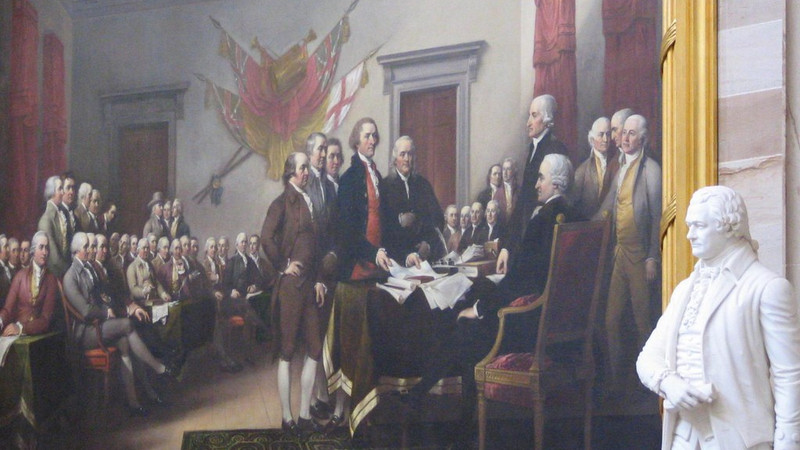
"In framing a government which is to be administered by men over men, the great difficulty lies in this: you must first enable the government to control the governed; and in the next place oblige it to control itself" Federalist Papers No. 51 – James Madison
The distinction between positive and negative rights constitutes one of the most consequential conceptual divides in political philosophy, and least understood today—a divide that illuminates the chasm separating the Founders' constitutional vision from modern legislative trends.
Negative rights, the architecture upon which the American republic was constructed, are essentially immunities: freedoms ‘from’ interference that demand others, including the state, simply abstain from certain actions. They require restraint, not provision. Positive rights, by contrast, are entitlements to specific goods or services—healthcare, education, housing, or adequate income—that necessitate active intervention, resource redistribution, and ongoing state management. Where negative rights protect a sphere of individual sovereignty through the injunction "thou shalt not," positive rights require the affirmative command "thou shalt provide," thereby conscripting the labor and resources of others to satisfy claims upon the body politic.
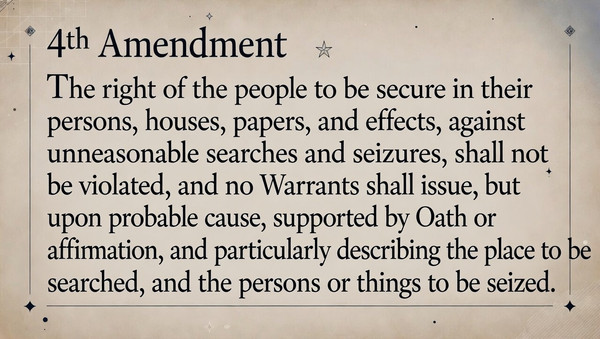
The Founders operated firmly within the Lockean tradition of natural rights, which conceived liberty as the absence of external constraints rather than the presence of delivered benefits. The Declaration of Independence enumerated rights among which are "Life, Liberty and the pursuit of Happiness"—not guarantees of happiness itself, nor the material conditions for its realization, but rather the freedom to pursue it without arbitrary interference. This framework implicitly recognized that legitimate government exists primarily to secure pre-political rights that individuals already possess by nature, not to manufacture new entitlements through legislative fiat. When James Madison and the First Congress drafted the Bill of Rights, they instantiated this negative conception explicitly: the First Amendment proclaims that "Congress shall make no law" respecting religion or speech; the Fourth Amendment guards against "unreasonable searches and seizures"; the Fifth and Fourteenth Amendments secure due process and prohibit the deprivation of property without legal justification. These are defensive shields—constitutional "no trespassing" signs that demarcate boundaries the state must not cross.
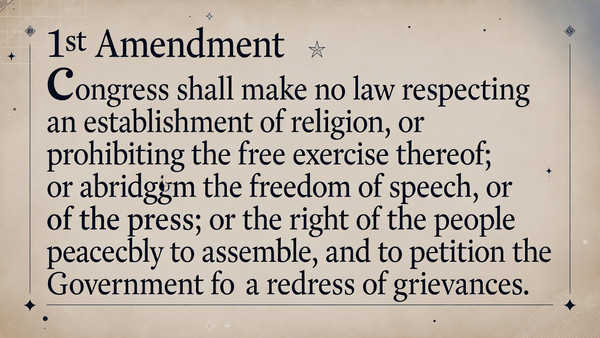
The mechanism of negative rights aligns with the Founders' conception of limited government and the rule of law. They require merely that the state and fellow citizens respect boundaries, a framework compatible with spontaneous order and voluntary association. To secure free speech, the government need only refrain from censorship; to protect religious liberty, it need only abstain from establishing a state church. Such rights impose costs of forbearance rather than extraction, requiring state inaction rather than complex administrative apparatuses. Property rights, perhaps the quintessential negative right, demand merely that others not seize one's possessions—a prohibition enforceable through courts without requiring bureaucratic distribution systems.
Contemporary lawmakers, conversely, increasingly conceptualize rights as claims to substantive outcomes rather than procedural protections, thereby inverting the Founders' framework. Legislative proposals routinely frame healthcare, college education, childcare, and housing not as goods to be earned, purchased, or voluntarily provided, but as entitlements that the state must guarantee. The modern welfare state and progressive legislative agendas treat positive rights as moral imperatives requiring aggressive government intervention—taxation, regulation, and redistribution—to satisfy individual needs. When legislators propose "Medicare for All" or guaranteed basic income, they are asserting positive rights that require medical professionals to provide services, employers to fund programs, and taxpayers to surrender income to finance these guarantees. These rights cannot be secured through mere restraint; they demand action, administration, and the continuous transfer of resources from producers to recipients.
This shift reflects a fundamental philosophical divergence. The Founders viewed rights as inherent limitations on governmental power—protections against tyranny that preserved the individual's sovereign domain. Modern positive rights, however, necessitate the expansion of governmental power to fulfill promised benefits. They transform the state from a neutral arbiter protecting boundaries into an active distributor of resources, necessarily involving decisions about allocation, priority, and scarcity that negative rights avoid. When the government guarantees healthcare as a right, it must subsequently determine what care, under what conditions, at what cost, and with what rationing mechanisms—decisions that inherently restrict other liberties, particularly economic freedom and property rights, which the Founders considered foundational.
Moreover, positive rights generate irreconcilable tensions with negative rights because they require compulsion. While negative rights coexist harmoniously—my right to free speech does not diminish yours—positive rights impose affirmative duties that inevitably burden others. The "right" to education requires teachers to labor, administrators to manage, and taxpayers to fund; the "right" to housing demands construction, maintenance, and material extraction. When such claims conflict with the negative right to property or freedom of contract, modern lawmakers increasingly prioritize the positive claim, effectively subordinating the Founders' architecture of liberty to contemporary demands for material security.
The Founders' vision assumed that responsible citizenship meant exercising liberty within a framework of personal accountability and voluntary community, not extracting guarantees from the state. They understood that converting aspirations into enforceable rights transforms the relationship between citizen and government from one of protected autonomy to one of dependency and administrative control. The supremacy of negative rights was not an oversight or limitation of eighteenth-century thinking, but a deliberate structural choice designed to prevent the concentration of power that positive rights necessarily require.
Understanding this distinction clarifies why modern legislative expansions often feel constitutionally alien to the republic's origins. The Founders built a system designed to maximize liberty through constraint; modern lawmakers increasingly demand a system that maximizes security through provision—a fundamental reconstitution of the rights that define American citizenship.
Editorial comments expressed in this column are the sole opinion of the writer