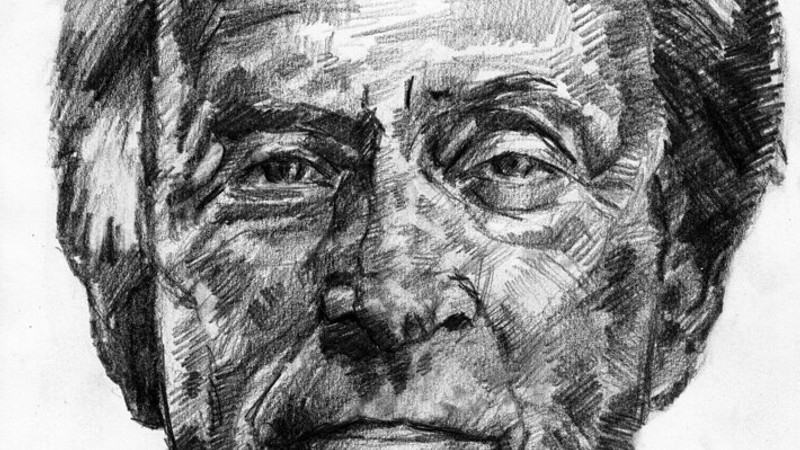
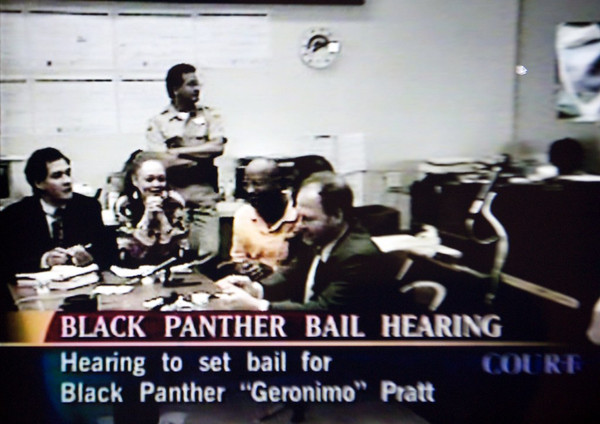
In 1970, journalist Tom Wolfe published what would become one of the most devastating satirical critiques of American liberalism: "Radical Chic," the title essay of his collection ‘Radical Chic & Mau-Mauing the Flak Catchers’. Wolfe had crashed Leonard Bernstein's Park Avenue fundraiser for the Black Panther Party—the "Panther 21" defendants who had been arrested for allegedly plotting to bomb police stations—and documented the grotesque spectacle of wealthy New York socialites drinking cocktails while pledging their support for armed revolutionaries. Far from taking the Panthers' political program seriously, Wolfe saw the evening as a collision of elite social norms with radical politics: Bernsteins in their "million-dollar chachtka" duplex, serving Roquefort morsels on "movers' trolleys" while white-gloved servants circulated among guests, even as Panthers in leather and berets lectured the guests on violent revolutionary struggle.
Wolfe coined "radical chic" to describe something distinct from genuine political conviction. It was, he captured brilliantly, the fashionable adoption of radical politics as a status marker—a way for the cultural elite to demonstrate their liberation from bourgeois constraints, their sophisticated solidarity with "the oppressed," and their credentials as enlightened progressives. The entire scene was suffused with "white guilt," that peculiar mix of genuine concern, narcissistic self-congratulation, and barely concealed anxiety that characterized wealthy liberals with minimal actual exposure to black America. The Panthers, for their part, understood the game perfectly: they showed up, collected bail money, and leveraged their revolutionary mystique to exact resources from a social stratum that needed them far more than they needed Bernstein and his circle.
Today, the dynamics Wolfe anatomized have metastasized into a new form that would have provided him limitless material. While the specific movements and contexts have changed—the Black Panthers have given way to Black Lives Matter, and campus protests have shifted from Vietnam-era activism to pro-Palestinian militancy—the underlying architecture of "radical chic" remains eerily familiar.
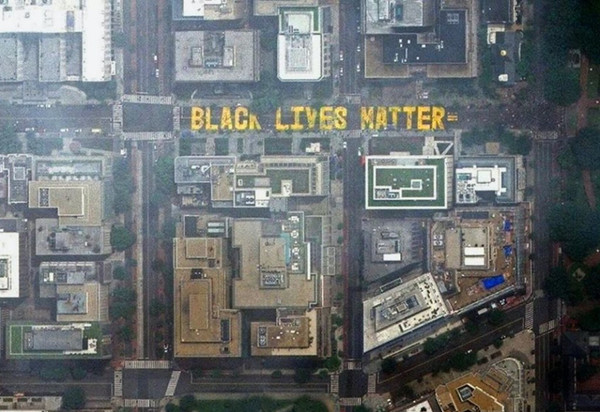
Take Black Lives Matter. Following the killing of George Floyd in 2020, American elites—including major corporations, universities, Hollywood studios, and wealthy individuals—pledged hundreds of millions of dollars to the movement. Like the Bernsteins of 1970, this was radicalism as status symbol: Instagram posts of black squares, mandatory DEI statements, and executive declarations of solidarity became public rituals of moral certification. Just as Wolfe observed the rich traders on Wall Street suddenly discovering the Panthers, hedge fund managers and tech billionaires were quick to embrace BLM, attending sensitivity trainings and funding activist organizations.
But here too the pathology became apparent. When stories emerged about the $6 million Los Angeles compound purchased by BLM's leadership, the response from the donor class was remarkable indifference. This was, as one writer noted, the radical chic dynamic at work: the donations were essentially "indulgences"—tax-deductible moral purification rites, paid so that participants could return to their comfortable lives untroubled by guilt. Whether the money actually helped Black communities was secondary to the act of giving itself.
The post-October 7 campus protests provided an even more crystalline example. At elite universities from Columbia to Harvard, students—overwhelmingly from affluent families paying $70,000+ annual tuition—donned keffiyehs overnight and transformed themselves into resolute revolutionaries. On campuses among the wealthiest in the world, students camped in "liberated zones," occupied buildings, and insistently parroted slogans like "From the river to the sea" and "By any means necessary"—language borrowed directly from violent revolutionary movements, now repurposed for consumption by privileged young people.
The convergence of taxpayer-funded academia with militant activism has reached alarming proportions in California, exemplifying a new phase of the radical chic phenomenon Tom Wolfe diagnosed decades ago. The Brandeis Center joined the AMCHA Initiative in urging investigations into the alleged misuse of California taxpayer funds to support professors' meetings with terrorists—specifically focusing on San Francisco State University Professor Rabab Abdulhadi, who has faced repeated allegations regarding the use of university resources to fund trips meeting with individuals affiliated with the Popular Front for the Liberation of Palestine (PFLP), a designated terrorist organization. SFSU has also come under scrutiny for hosting Palestinian guest speakers with alleged terrorist ties and for sponsoring a student trip to Jordan that reportedly included meetings with a convicted Hamas financier—activities the administration has "strongly refuted" as having any connection to terrorism. Meanwhile, at UC Law San Francisco, the student government allegedly used mandatory student fees and university resources to promote a "solidarity with Palestine" campaign, complete with order forms for keffiyehs to be worn during the 2026 commencement ceremony—a move that prompted the Jewish nonprofit StandWithUs to raise concerns about the use of public funds for partisan political advocacy. Perhaps most disturbingly, undercover footage from late 2025 reportedly captured university students in San Francisco expressing willingness to donate money for attacks targeting Jews, a development critics cite as evidence of dangerous radicalization on campuses where administrative neutrality has given way to what administrators tepidly acknowledge as "concerns about safety and political neutrality" among Jewish students.
What Wolfe captured so precisely was the fundamental absurdity of this pairing: people with enormous social capital and economic privilege adopting the symbols of radicalism while maintaining lives of complete comfort. The Bernsteins' "white servitors" had become the organizing committee for the encampments' catered meals—sushi, fresh fruit, and other supplies delivered by helicopter parents to sustain protesters through their occupation of their own campuses. The "radical" demands—divestment from Israel, abolition of police, elimination of student debt—all conveniently aligned with the interests and worldviews of the participants themselves.
Most striking is the moral myopia Wolfe identified, which persists today. In 1970, the Panthers were disciplined, gun-toting Marxists whose ideology included mass violence against white America; the Bernsteins' response was to ignore the content of their politics while celebrating the gestures. Similarly, when Hamas massacred 1,200 Israelis on October 7, 2023—overwhelmingly civilians, with documented rape, torture, and kidnapping—a segment of the progressive left defended or even celebrated the attacks as "decolonization" or "resistance." Student groups at elite universities issued statements merely "contextualizing" the atrocities; some framed the massacre as an avatar of liberation.
Wolfe would have recognized this immediately. The delight in donning revolutionary camouflage, in speech about "systems" and "oppression" and "resistance," coupled with a studied indifference to the content of what one is legitimizing. For the Bernsteins, the Panthers' bombs were bad, but their style was good; for today's version, Hamas's atrocities are bad, but their narrative of victimhood is good. Both share that distinctive quality of wanting to be *for* the revolution without actually living through it—of enjoying revolutionary aesthetics while remaining fundamentally committed to one's own comfort and status.
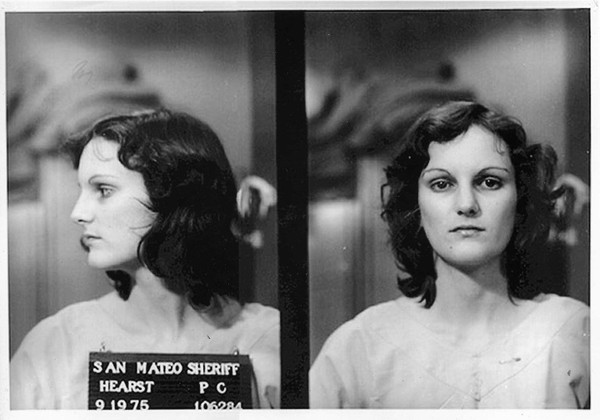
The trajectory from Wolfe’s cocktail-party revolutionaries to the present day finds perhaps its most dramatic expression in the parallel stories of future Attorney General Eric Holder and newspaper heiress Patty Hearst—two figures who occupied opposite ends of the 1970s radical experience at the precise moment Bernstein was hosting the Panthers. In May 1970, months after Wolfe’s essay appeared, Holder participated as a Columbia freshman in a five-day armed occupation of the university’s ROTC office, working with the Black Students’ Organization to seize the space and rename it the "Malcolm X student center" to protest "the general racist nature of American society." This was radical chic internalized: the son of middle-class parents from Queens appropriating the tactics of armed insurrection while pursuing an Ivy League education. Four years later, the revolutionary theater turned devastatingly real when the Symbionese Liberation Army—the same sort of militant group affluent liberals like the Bernsteins might have written checks to support from a safe distance—kidnapped Patty Hearst from her Berkeley apartment, transforming the granddaughter of William Randolph Hearst from an art history major into a machine-gun-toting "Tania" robbing banks at the SLA’s command. Wolfe’s lens captures the grotesque inversion: the Bernsteins and their circle wanted to feel revolutionary without risking anything; Hearst became the cautionary tale of what happens when the radical chic aesthetic metastasizes into genuine revolutionary violence that consumes the very class that funded and romanticized it. Holder, for his part, would eventually wear suits instead of combat gear, becoming Attorney General and tweeting in 2024 that Columbia’s campus occupiers had "legitimate concerns," completing the circle by which yesterday’s armed student radical becomes today’s institutional authority defending a new generation of campus militants.
The damage is arguably greater today. In 1970, the Bernsteins' fundraising was embarrassing but largely symbolic; it genuinely helped the Panther 21 raise bail money. The contemporary version of radical chic has metastasized into institutional capture—corporations firing employees for wrongthink, universities imposing ideological requirements on hiring and admissions, functioning censorship regimes operated through social media. The guilt-driven "white savior" approach has produced massive resource transfers to credentialled activists whose organizations often function primarily as employment schemes for the educated middle class rather than programs that benefit actual poor communities.
The institutionalization of 1970s radicalism into respectable corridors of power finds perhaps its most consequential expression in the Chicago milieu that launched Barack Obama's political career—a world where the distance between Weather Underground bombings and the Ivy League had collapsed to the span of a Hyde Park dinner party. Obama began his ascent as a community organizer in the same city where Bill Ayers and Bernardine Dohrn, erstwhile leaders of the Weather Underground responsible for bombing the Pentagon, the U.S. Capitol, and police stations across the decade Wolfe chronicled, had successfully laundered their revolutionary credentials into academic respectability as education professors. The future president and the former fugitives moved in overlapping social and professional circles: they served together on the boards of the Woods Fund and the Chicago Annenberg Challenge, attended social gatherings in their shared neighborhood, and mixed comfortably among a progressive elite that considered Ayers and Dohrn reformed idealists rather than unrepentant terrorists. Ayers himself had embodied the radical chic aesthetic that Wolfe satirized—son of the CEO of Commonwealth Edison, educated at elite schools, and never fully severed from the privileges of the class he claimed to be destroying—even as his organization's bombs were intended to spark the revolution Bernstein's guests only played at supporting. The controversy that erupted during the 2008 campaign, when Obama's opponents attempted to make this association disqualifying, missed the deeper point Wolfe had identified decades earlier: by the time Obama reached the presidency, the radical chic sensibility had so thoroughly permeated liberal institutions that serving alongside unrepentant former terrorists on philanthropic boards was considered unremarkable, even virtuous, a marker of one's commitment to social justice and redemption narratives. Dohrn and Ayers had not abandoned their politics so much as discovered that the universities, foundations, and political apparatus of Chicago's establishment were more durable vehicles for their ideology than dynamite ever was—a trajectory from the underground to the Hyde Park salon that perfectly illuminated how the revolutionary energy of the 1970s had been domesticated into the ruling class sensibility of the twenty-first century.
Supplementing this Chicago narrative, one must note the role of Iranian born Valerie Jarrett, the Hyde Park real estate executive and Democratic doyenne who served as Obama's closest advisor and gatekeeper to Chicago's interlocking black and white elites. Jarrett, whose maternal grandfather had integrated the Chicago Housing Authority and whose family moved in the rarified circles of the city’s professional class, embodied the peculiar alchemy of the radical chic sensibility: she bridged the organizer’s rhetoric of "change" with the social requirements of the Gold Coast dinner party circuit, introducing Obama to the wealthy donors and civic institutions that would fund his ascent while maintaining the affect of outsider authenticity. In Jarrett’s orbit, the distinctions between the Weather Underground’s revolutionary ambitions and the pragmatic progressive politics of the Daley machine dissolved into a single, respectable consensus—one where former bombers lectured at the University of Chicago, developers wore Che Guevara t-shirts ironically, and the candidate who promised to "transform" America measured his success by his acceptance into the very establishment he had once purported to challenge.
Wolfe's essay remains devastating because it identified something timeless about the psychology of liberal elites: their need to be seen as virtuous, their guilt about their privilege finding expression in alliances with radicals they don't actually understand, and their fundamental self-involvement masked as solidarity. The Black Panthers, for all their contradictions, were responding to genuine conditions of oppression. Black Lives Matter's original grievance—police misconduct—was real. The Israeli-Palestinian conflict is complicated and tragic. But radical chic always involves the abstracted, aestheticized, self-congratulatory engagement of elites with these phenomena—not solidarity, but social climbing; not political commitment, but Met Gala moral vanity.
Thus we arrive, full circle, at the terminus Wolfe foresaw but perhaps could not fully articulate: the transformation of his "radical chic" from absurdist social theater into the operating system of the American elite itself. Where Leonard Bernstein's guests could return to their duplexes after writing checks to the Panthers, the logic of radical chic has since consumed its own progenitors—leaving us with a former Attorney General who once occupied campus buildings with arms now defending those who occupy them in solidarity with designated terrorists; a President who launched his career in the living rooms of unrepentant bombers and the cloistered drawing rooms of Hyde Park, elevated to the highest office by a class that no longer distinguishes between the revolutionary and the respectable; and the heirs to Patty Hearst's ordeal, trapped not in a closet but in a cycle of elite guilt and militant grift that can only end, as it nearly did for Hearst herself, in a South Central Los Angeles blaze of gunfire—the SLA's last stand serving as prophecy for what happens when the socialites stop writing checks and the revolutionaries come to collect in blood. In the end, Wolfe's warning was not heeded but inverted: the Black Lives Matter leadership, having studied the Panther playbook, perfected the art of separating the guilty rich from their money with the precision of trauma surgeons, harvesting six million dollars for Los Angeles real estate while their donors—like the Bernsteins before them, like the foundations that funded Ayers, like the corporations that bent the knee in 2020—clapped themselves on the back for their courage. The useful idiots, Wolfe might have observed, have become the indispensable ones, and the revolution, having long ago ceased to threaten the penthouse, has simply moved into it—direct deposit accepted, keffiyehs provided at checkout, the white servitors now called "donor relations managers," all of it charged to the same accounts that once paid for bombs and bail.
The Bernsteins at least thought they might be funding something that would help brown and black people. Today's radical chic seems more purely performative, more disconnected from actual community needs, and more smugly certain of its righteousness. Wolfe, were he alive today, would need a larger canvas—there is so much more of it now.
Editorial comments expressed in this column are the sole opinion of the writer