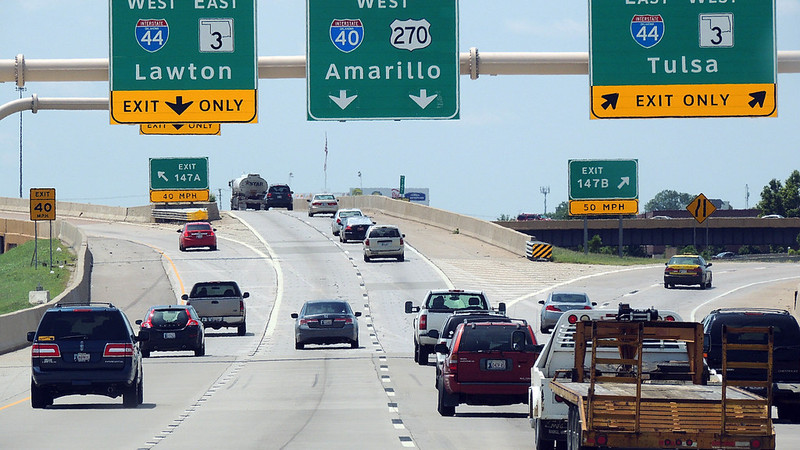
“We didn't build the interstate system to connect New York to Los Angeles because the West Coast was a priority. No, we webbed the highways so people can go to multiple places and invent ways of doing things not thought of by the persons building the roads.” Neil deGrasse Tyson
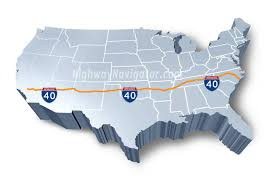
Interstate 40, stretching approximately 2,555 miles from Barstow, California to Wilmington, North Carolina (AKA "Tobacco Road"), has emerged as one of America's most dangerous highways—not just for traffic accidents, but as a documented corridor for kidnapping, human trafficking, and serial violent crime. Federal law enforcement data increasingly identifies this major trucking route as a pathway exploited by criminals to transport victims across state lines, making it a focal point for national security and public safety concerns.
Drivers travel nearly seven billion vehicle miles annually along the state’s extensive road network. Major arteries like Interstate 65, Interstate 24, and Interstate 40 account for 750 miles of critical infrastructure, serving millions of local and transcontinental travelers every year.
In Tennessee, 'the music highway' serves as the main artery connecting the state’s three largest hubs: Nashville, Memphis, and Knoxville. I-40 in West Knoxville was recently designated one of Tennessee's deadliest roads.
According to research based on data from the National Highway Traffic Safety Administration (NHTSA), the segment of I-40 running through Tennessee is officially the state’s deadliest highway. The 455-mile section recorded 437 major crashes and 517 fatalities over a 10-year study period. Nationally, Tennessee’s crash statistics on this route were second only to the notorious US-1 in Florida.
I-40 in Arizona, 'the Needles freeway' is considered one of the worst highways for truck accidents. A semi-truck accident on Interstate 40 "Mother Road" in New Mexico in early 2025 reignited concerns about the dangers of commercial truck crashes on this heavily traveled highway.
But it is not just driver accidents making it an American concern. The dangerous reputation of I-40 gained federal attention in 2004 when an analyst from the Oklahoma Bureau of Investigation detected a chilling pattern: the bodies of murdered women were being systematically dumped along the Interstate 40 corridor spanning Oklahoma, Texas, Arkansas, and Mississippi. This discovery prompted the FBI to launch its
Highway Serial Killings Initiative in 2009, a specialized program designed to track and investigate violent crimes occurring along America's highways.
According to FBI data, the initiative has identified over 500 murder victims found along or near highways across the United States over the past three decades. The database contains information on more than 200 potential suspects, with victims primarily being women living high-risk, transient lifestyles often involving substance abuse and prostitution. These victims are frequently picked up at truck stops or service stations, sexually assaulted, murdered, and dumped along highways—sometimes across multiple jurisdictions to complicate investigations.
Long-haul trucking has been identified as the number one profession of serial killers in America. This stark reality has placed increased scrutiny on the approximately 3.5 million truck drivers operating on U.S. highways. The mobile nature of the profession creates unique opportunities for criminal activity: drivers can pick up victims in one jurisdiction, commit crimes in a second, and dispose of bodies in a third—all while maintaining legitimate employment that provides both cover and means of rapid escape.
According to FBI statistics, at least 850 murders have occurred along America's highways in recent decades, with more than 200 cases remaining active and unsolved. Twenty-five long-haul truckers are currently serving prison sentences for multiple homicides. The isolation of the profession, combined with irregular schedules and limited oversight, creates conditions that can attract or aggravate sociopathic tendencies.
Former FBI Assistant Director Frank Figliuzzi, who investigated highway crimes extensively, notes: "Part cowboy, part fighter pilot, and part hermit, long-haul truckers glide along the edge of a certain seam in the fabric of our society—the seam that separates their reality from ours. Killer truckers exploit that seam."
Recent years have seen intensified law enforcement operations targeting I-40 specifically:
- Operation Guardian, a multi-agency effort conducted in September 2025, specifically targeted human trafficking and crime along I-40, resulting in multiple felony arrests and citations.
- North Carolina Enforcement Campaigns: In August 2025, law enforcement held a one-day crackdown on human trafficking along I-40 in North Carolina, recognizing the interstate as a corridor for exploitation.
- ICE Operations: In 2025, Immigration and Customs Enforcement conducted a three-day action on I-40 in Oklahoma, arresting 91 individuals operating commercial vehicles illegally.
- Federal Data Recognition: A November 2025 report confirmed that "interstates like I-40 are identified as corridors for serial offenders and human traffickers" based on FBI data.
Kidnapping along I-40 is often linked to the broader crisis of human trafficking. The interstate spans eight states—California, Arizona, New Mexico, Texas, Oklahoma, Arkansas, Tennessee, and North Carolina—creating a continuous route that traffickers exploit to move victims between major metropolitan areas while avoiding detection.
highwaynavigator.com
North Carolina, which I-40 traverses, ranks among the top 10 states for human trafficking nationally. According to the National Human Trafficking Hotline, nearly 2,700 victims have been identified in North Carolina alone over the past decade. The Charlotte area has reported a **76% spike in child trafficking cases since 2020**, with experts warning that major highways serve as the primary transportation network for these crimes.
Several factors make I-40 kidnapping and related crimes particularly difficult to address:
1. Jurisdictional Complexity: Crimes span multiple states with different laws and law enforcement agencies, creating coordination challenges.
2. Transient Victims: Many victims are marginalized individuals—runaways, those struggling with addiction, or sex workers—whose disappearances may not be immediately reported or investigated.
3. Mobile Offenders: Long-haul truckers and other mobile criminals can be hundreds of miles away before a crime is discovered.
4. Forensic Limitations: Bodies dumped in remote highway locations may decompose or be disturbed by wildlife before discovery, compromising evidence.
The I-40 corridor represents a stark example of how America's vast highway infrastructure, while essential for commerce and transportation, can be exploited by criminals for kidnapping and human trafficking. The FBI's ongoing Highway Serial Killings Initiative, combined with recent multi-agency enforcement operations, demonstrates recognition of this threat at the highest levels of law enforcement. However, the scale of the problem—spanning thousands of miles and involving mobile offenders—presents ongoing challenges. Travelers, particularly vulnerable populations, should exercise caution at highway rest stops and truck stops, while policymakers continue to grapple with balancing the economic necessity of open highways against the security risks they present.
Editorial comments expressed in this column are the sole opinion of the writer