
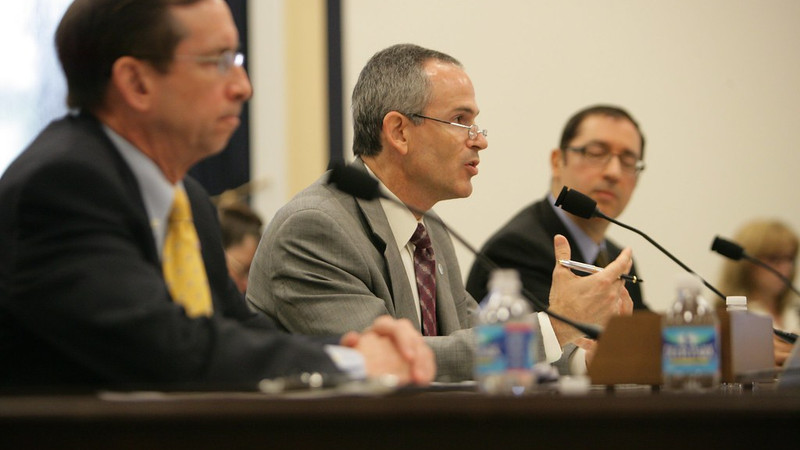
If you want to understand the priorities of the United States House of Representatives, look no further than the drinking fountain—or rather, the bottle placed suspiciously beside it. While the nation argues about debt ceilings, infrastructure, and whether cookies should be classified as a breakfast food, Congress has quietly been dropping millions of taxpayer dollars on something truly revolutionary: water that comes in plastic containers instead of pipes.
That's right. In a building connected to some of the finest municipal water infrastructure on planet Earth, our elected representatives have managed to spend over $4 million on bottled water. Not sparkling. Not infused with cucumber and a faint whisper of elderflower. Just regular H2O, in bottles, trucked in, probably with a markup that would make a stadium vendor blush.
Now, let's be fair. The Capitol is a stressful workplace. You're voting on bills you haven't read, fleeing from tourists who think you're the gift shop cashier, and occasionally sprinting through hallways to make quorum calls. Staying hydrated is important. But here's the thing: Washington, D.C. tap water is perfectly safe. The city literally pipes it in, filters it, tests it, and delivers it to virtually every room in the Capitol complex with the miracle of indoor plumbing—a technology we've apparently decided to treat like a quaint historical artifact, like powdered wigs or bipartisan cooperation.
One can only imagine the internal monologue of the procurement officer who signed that requisition form. "Yes, tap water is essentially free, but what if we made it worse for the environment and more expensive? That feels more 'on brand' for government spending." And thus, pallet after pallet of plastic-wrapped hydration arrived at the loading docks, each bottle carrying the faint taste of irony and taxpayer sweat.
The best part? This isn't even newsworthy enough to be scandalous anymore. The Capitol has been guzzling bottled water for years. Back in 2011, reports surfaced that the House dropped $860,000 ($1,276,784.91 adjusted to inflation) on bottled water in a single year. At that point, watchdog groups politely suggested that Congress might consider, you know, drinking from the faucet like the rest of us mortals. The suggestion was received with approximately the same enthusiasm as a proposal to replace the Congressional gym with a Planet Fitness.
Think about the logistics. Somewhere, a staffer is ordering bottled water by the truckload, scheduling deliveries, storing it, chilling it, and eventually recycling (hopefully) thousands of empty bottles. That's someone's actual job. We have created employment through the conscious decision to ignore a faucet. It's like paying someone to hand-deliver sunlight to a windowed room.
And let's not forget the messaging. Nothing says "we understand the struggles of everyday Americans" quite like refusing to drink the same tap water that everyone else drinks while simultaneously debating agricultural bills and water rights. "Your pipes in rural Kansas are fine, probably," says Congress, from its fortress of imported hydration. "But our throats are sensitive. We require artesian spring water bottled by elves."
The total cost to respond to, settle, and clean up the Flint water crisis exceeds $1 billion when combining infrastructure repairs, legal settlements, and government aid packages.
Major Cost Breakdown
- Class-Action Legal Settlement: A federal settlement totaling $626 million to $659 million was approved to compensate victims, with roughly 80% earmarked for children and minors exposed to the tainted water.
- Infrastructure and Pipe Replacement: Initial engineering and city estimates ranged from $55 million to upwards of $400 million just for replacing lead service lines and repairing the damaged water system, though broader infrastructure replacement estimates scaled as high as $1.5 billion.
- Federal and State Aid: The Environmental Protection Agency (EPA) allocated a $100 million grant, and state/federal emergency declarations funneled hundreds of millions more into bottled water, water filters, health programs, and reconnecting to the Detroit system.
- Legal and Prosecution Costs: The state of Michigan spent over $53 million on legal bills, criminal defense, and prosecution costs related to the disaster
Editorial comments expressed in this column are the sole opinion of the writer
