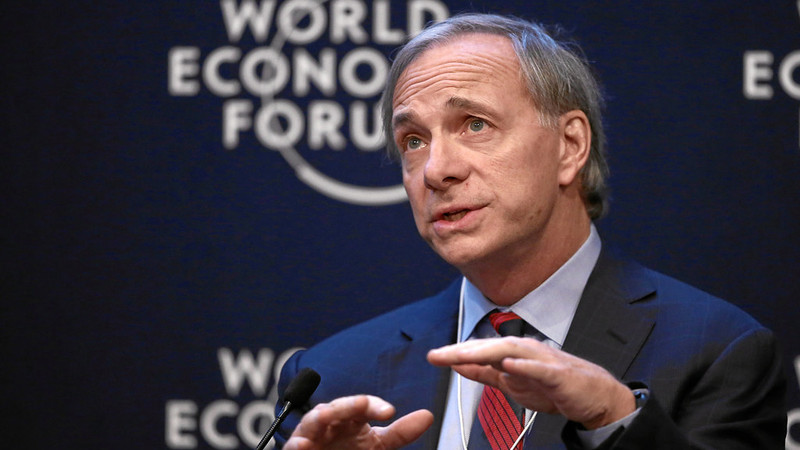
Ray Dalio, billionaire founder of Bridgewater Associates, recently shared a stark assessment of the current global situation on X, declaring that the post-1945 world order has "officially broken down." Multiple news sources and social media references indicate that Dalio's pronouncement coincided with and referenced discussions at the Munich Security Conference.
The tweet was posted mid-February 2026, shortly after the Munich Security Conference, where global leaders reportedly acknowledged the erosion of the international order established after World War II. Dalio seems to have capitalized on this moment to amplify his long-standing concerns about global structural changes.
Key Themes of Dalio's Argument
Dalio's 7,000-word message contained several key elements:
- End of the Post-1945 Order: Dalio explicitly declared the end of the international institutional framework that has governed global affairs for approximately 80 years. This system, characterized by US leadership, liberal economic principles, and multilateral cooperation, appears to Dalio to have irreparably fractured.
- Rise of "Might is Right" Mentality: Dalio emphasized that the global community is transitioning from a rules-based international order to one where military and economic power determine outcomes. This represents a significant shift from diplomatic negotiation to forceful assertion of interests.
- Triple Breakdown: Dalio identifies three concurrent breakdowns: the existing fiat monetary order, domestic political orders within countries, and the international geopolitical order. According to him, these breakdowns are mutually reinforcing and creating unprecedented uncertainty.
- Historical Parallels: Ever the student of history, Dalio likely drew parallels to previous transitions between world orders, such as the shift from British to American dominance in the early 20th century. He has previously documented how such transitions typically occur through periods of conflict and realignment.
Investment Implications
Consistent with his background as an investor, Dalio reportedly included practical advice in his tweet:
Consistent with his background as an investor, Dalio reportedly included practical advice in his tweet:
- Capital Wars Warning: Dalio suggests that rising geopolitical tensions could trigger "capital wars," potentially disrupting the free flow of global capital that markets have depended upon for decades.
- Diversification Strategy: He recommends holding gold and other tangible assets as protection against potential monetary disruptions. Dalio has long been an advocate of gold as a reserve asset during times of uncertainty.
- Geopolitical Considerations: The tweet likely emphasizes the need for investors to account more heavily for geopolitical risks in their portfolios, particularly regarding China-US relations and the potential for conflicts over Taiwan, Ukraine, and other flashpoints.
Analysis of Dalio's Perspective
Dalio's assessment reflects both his deep historical understanding and his position as a financial market participant. Several aspects of his perspective warrant consideration:
Dalio's assessment reflects both his deep historical understanding and his position as a financial market participant. Several aspects of his perspective warrant consideration:
- Self-Fulfilling Potential: By declaring the old order "officially broken down," Dalio risks contributing to the very breakdown he identifies. Market participants and policymakers might act differently based on such pronouncements from influential figures.
- American-Centric View: Dalio's analysis appears rooted in a distinctly American perspective on global affairs. The "breaking down" he describes might be better understood as a transition to a multipolar order that better reflects contemporary economic realities.
- Timing Considerations: Dramatic pronouncements about historical turning points tend to resonate most strongly during periods of heightened uncertainty. Current challenges like the Russia-Ukraine conflict, Middle East tensions, and US-China strategic competition create an environment conducive to such assessments.
Broader Implications
Beyond immediate investment advice, Dalio's tweet carries broader implications:
Beyond immediate investment advice, Dalio's tweet carries broader implications:
- Institutional Reimagining: If the post-1945 order is indeed transforming, this suggests we need to reconsider the effectiveness of international institutions like the UN, World Bank, IMF, and WTO in their current forms.
- Power Redistribution: Such a transition implies a fundamental redistribution of global power, not just between countries but also between state and non-state actors, and between governmental and commercial powers.
- Normative Framework: The erosion of shared international norms could lead to increased conflicts as different regions pursue divergent approaches to governance, economics, and human rights.
Critical Assessment
While Dalio's perspective carries significant weight given his expertise and influence, several points warrant consideration:
While Dalio's perspective carries significant weight given his expertise and influence, several points warrant consideration:
- Resilience of Existing Institutions: Despite evident challenges, many post-1945 institutions have demonstrated remarkable adaptability and enduring value. Their complete breakdown may be less imminent than Dalio suggests.
- Interdependence Reality: Global economic integration remains profound despite geopolitical tensions. This interdependence creates incentives that help prevent complete fragmentation of the international system.
- Alternative Futures: Rather than a simple breakdown, we may be witnessing a complex reconfiguration of global governance with elements of both continuity and transformation.
Conclusion
Ray Dalio's tweet represents more than mere commentary from a financial luminary—it encapsulates a growing recognition that the world is transitioning to a new phase of international relations. While his dramatic phrasing—"officially broken down"—may overstate the case, he correctly identifies a moment of significant transformation in global affairs.
The value in Dalio's assessment lies not only in its accuracy but in how it prompts necessary discussions about adapting our institutional frameworks, investment strategies, and geopolitical approaches to a changing world. Whether this transition represents a complete breakdown or a necessary evolution remains open to debate, but what's clear is that the post-1945 international order is indeed undergoing profound changes that will require thoughtful navigation from policymakers, investors, and global citizens alike.
Ray Dalio's tweet represents more than mere commentary from a financial luminary—it encapsulates a growing recognition that the world is transitioning to a new phase of international relations. While his dramatic phrasing—"officially broken down"—may overstate the case, he correctly identifies a moment of significant transformation in global affairs.
The value in Dalio's assessment lies not only in its accuracy but in how it prompts necessary discussions about adapting our institutional frameworks, investment strategies, and geopolitical approaches to a changing world. Whether this transition represents a complete breakdown or a necessary evolution remains open to debate, but what's clear is that the post-1945 international order is indeed undergoing profound changes that will require thoughtful navigation from policymakers, investors, and global citizens alike.