
"America is God's Crucible, the great Melting-Pot where all the races of Europe are melting and re-forming!" Israel Zangwill’s 1908 play, The Melting Pot
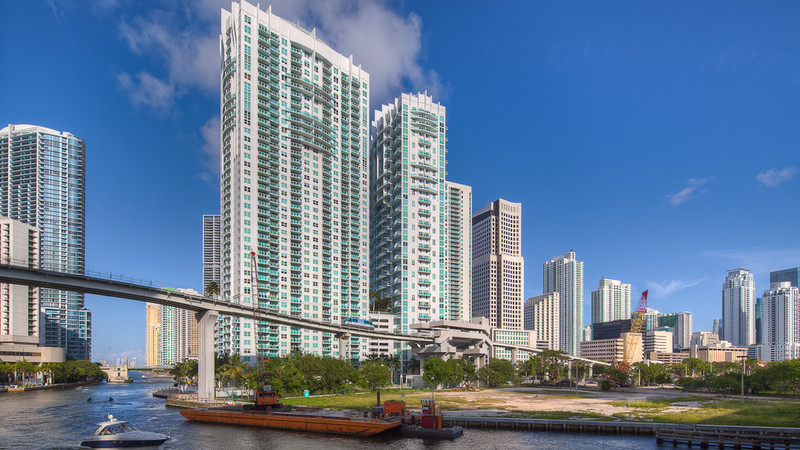
For decades, the dominant narrative in American immigration discourse—particularly among libertarian and pro-business commentators—has held that the cultural effects of large-scale immigration are fundamentally temporary. According to this classical assimilation model, immigrants arrive bearing foreign customs and languages, but within a generation or two, their descendants inevitably melt into the broader American mainstream. They learn English, adopt prevailing cultural norms, and become, in every meaningful sense, culturally indistinguishable from the native population. It is a comforting and ideologically convenient theory, but it is increasingly difficult to reconcile with demographic reality. As Jason Richwine of the Center for Immigration Studies has demonstrated, Miami-Dade County stands as perhaps the most compelling case study for why skepticism of this model is not only warranted but necessary.
The most striking evidence against the "temporary change" thesis comes from language data. According to Richwine’s analysis of Census and American Community Survey data, the share of Miami-Dade residents who speak Spanish at home has surged from 37 percent in 1980 to 67 percent in 2024. This alone is remarkable. But the truly damning statistic for the assimilation model is what has happened across generations. Among native-born residents aged 20 to 29—people who were born in the United States, often to parents or grandparents who immigrated decades ago—the share speaking Spanish at home has exploded from just 11 percent in 1980 to 49 percent today. This is not assimilation. It is the opposite: the children and grandchildren of immigrants are not abandoning the ancestral language in favor of English monolingualism. Rather, the linguistic culture of the immigrant population is being retained and even adopted by the native-born population.

Compounding this linguistic persistence is the sheer scale of Miami-Dade’s foreign-born presence. According to the Miami-Dade Beacon Council, the county’s official economic development organization, 54 percent of the county’s approximately 2.8 million residents were born outside the United States. The Beacon Council proudly notes that this makes Miami "the most international city in the U.S.," contributing to a "vibrant mix of cultures, traditions, and cuisines." While this may be marketed as an economic asset, it also represents an unprecedented demographic reality. When a majority of residents in a major American metropolitan area are foreign-born, the social and cultural dynamics that historically drove assimilation—immersion in native institutions, pressure to adopt English for daily commerce, and limited co-ethnic community infrastructure—are fundamentally altered. The melting pot requires a critical mass of established Americans into which newcomers can melt. In Miami, that solvent has become the minority.
The implications of these numbers extend far beyond language. The classical assimilation model, derived largely from the experience of European immigrants in the early twentieth century, assumed a linear trajectory: the first generation arrives, the second generation is bilingual and bicultural, and the third generation is fully assimilated into the Anglo-American mainstream. But in Miami, we are witnessing what sociologists might call "reverse assimilation," or at minimum, stalled assimilation. Rather than immigrants and their descendants converging toward pre-existing American norms, the native-born population is accommodating and, in some cases, adopting the dominant immigrant culture. When half of young native-born adults speak Spanish at home, they are not assimilating into the broader national culture; they are maintaining the culture of the arriving population.
Miami-Dade County Public Schools, the fourth-largest school district in the nation, faces acute operational and instructional challenges stemming from its extraordinarily high percentage of students who speak a language other than English at home. With nearly 70 percent of county residents speaking Spanish at home—including roughly half of native-born young adults—the district must absorb a constant influx of students ranging from recent arrivals with limited formal schooling to U.S.-born children who nonetheless enter kindergarten with minimal English proficiency. The result is intense pressure on English for Speakers of Other Languages (ESOL) and bilingual programs, chronic shortages of certified ESOL teachers, and persistent achievement gaps on state standardized tests. While dual-language programs can be a resource, they are expensive to staff and scale, and the sheer volume of foreign-language-dominant students strains the district’s ability to provide equitable access to college-preparatory curricula. In this environment, Miami’s public schools illustrate not the smooth cultural transitions imagined by classical assimilation theory, but the concrete institutional burden of integrating an overwhelmingly immigrant-origin student body without the linguistic and curricular shortcuts that traditional immigrant gateways once enjoyed.
Defenders of the temporary-change thesis might argue that Miami is an outlier—a unique case driven by geographic proximity to Latin America, persistent refugee and economic migration flows from Cuba and Venezuela, and a regional economy oriented toward hemispheric trade. But outliers are instructive. The existence of a major American city where the assimilation model has so clearly failed proves that the model is not a universal law but a contingent outcome dependent on specific demographic ratios, geographic isolation from the homeland, and limited inflows. Miami demonstrates that when migration is sufficiently large, continuous, and geographically concentrated, cultural transmission does not flow in only one direction. The idea that such change must be temporary because the 1890s European experience was temporary is ahistorical special pleading.
Furthermore, the Beacon Council’s demographic data cuts against the common argument that assimilation is merely delayed and will accelerate as immigrants establish deeper roots. If that were the case, we would expect to see Spanish-speaking rates among the native-born young adult population declining or at least plateauing as immigrant families put down roots over decades. Instead, the trend has been relentlessly upward. A generation of native-born Miamians has reached adulthood in an environment where Spanish is not a transitional immigrant language but a permanent feature of civic and domestic life. Public schools, government services, media markets, and commercial transactions all operate in a bilingual or Spanish-dominant context. This is not a transitional state en route to English monolingualism; it is the creation of a durable bicultural region within the United States.
There is, of course, a legitimate debate over whether Miami’s cultural transformation is economically beneficial or socially desirable. That is a separate question from whether the change is temporary—and the latter question can now be answered with considerable empirical confidence. The plain fact is that after more than half a century of large-scale Hispanic immigration to South Florida, the cultural influence has not faded with each successive generation. It has deepened. The native-born youth of Miami-Dade are more likely to speak Spanish at home today than their counterparts were in 1980. A county where the majority of residents were born abroad shows no sign of converging with national linguistic or cultural norms.
Miami’s case validates the skepticism that Jason Richwine and others have expressed toward the claim that immigration-driven cultural change is merely a passing phase. The data from the U.S. Census, the American Community Survey, and the Miami-Dade Beacon Council all point to the same conclusion: Miami-Dade has become, and is likely to remain, a culturally distinct zone within the United States where the language and customs of the immigrant population have achieved lasting dominance. Those who insist that today's immigrants will simply melt into an unchanged American mainstream must confront the reality that in one of the nation’s largest metropolitan areas, the melting pot has not operated as theorized. Cultural change on this scale, sustained across multiple generations, is not temporary. It is the new normal.
Editorial comments expressed in this column are the sole opinion of the writer
Miami-Dade County School Budget Overview & Highlights
- Total Budget: $7.4 billion for FY 2025–26, reflecting a tight fiscal approach due to anticipated enrollment declines.
- Overall Budget: The total district budget is $7.4 billion, representing a decrease of approximately $100 million from previous cycles driven by drops in student enrollment.
- Operations Allocation: Approximately $4.4 billion is dedicated directly to school operations.
- Charter Schools: Charter schools account for over $1 billion of the district's overall budget.
- Key Investments: Includes a 4% increase in funding for students with disabilities and sustained support for arts, music, and foreign language offerings.
- Bilingual & Language Programs: The district continues support for foreign language and dual-language/bilingual instruction frameworks, which cover specialized programs like bilingual education supported by both local operational funds and specific federal grants (such as assistance for English language learners).
- Allocation of Funds: Roughly 76.2% of the total operational budget is dedicated directly to classrooms, teaching, and direct student services.
- Fiscal Pressures: District officials have noted upcoming structural adjustments and funding watchpoints regarding federal grants supporting migrant and bilingual education programs amid an enrollment drop down to roughly 313,000 students.
