
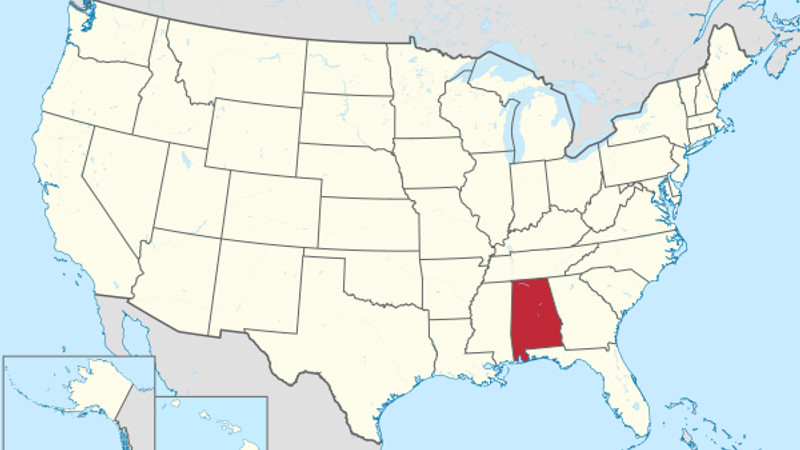
Emily Jones — a candidate for the Alabama State Board of Education, District 8, and a vocal parental rights advocate — argues that even in one of America's most conservative states, bureaucratic maneuvers can undermine hard-won parental protections. She warns that if such subversion succeeds in Alabama, which boasts a Republican supermajority and some of the nation's strongest parental rights laws, then no state can be considered a reliable refuge for families seeking to shield their children from ideological overreach in education and mental health.
Alabama's laws include bans on gender-transition procedures for minors, curriculum transparency requirements, legal definitions of male and female, protections for girls' sports, and a distinctive mandate requiring prior parental opt-in before schools provide any mental health services — including discussions of suicide, bullying, or other sensitive psychological topics. These measures reflect a deliberate effort to prioritize parental authority over state or school intervention in children's upbringing, mental health, and physical well-being.
The central controversy revolves around a new parental consent law effective October 1, 2025. It requires explicit written parental permission for schools to offer mental health-related services or discussions. However, Jones accuses the Alabama State Department of Education (ALSDE) of creating a deliberate "footnote loophole" in the required opt-in forms. This footnote exempts "instruction, advisement, and occasional interventions" from the opt-in requirements, claiming these are routine duties of school counselors and educators.
According to Jones, this interpretation guts the statute's intent. It potentially allows school personnel — who are not licensed physicians or therapists — to engage minors in psychologically significant conversations about trauma, suicidal ideation, bullying, or gender identity without any parental notification or consent. Jones describes this as a calculated bypass: "Agencies should not be allowed to bury statutes in footnotes, reinterpret laws by memo, or use therapeutic language to bypass parental authority. These are not technical disagreements.
"She frames the issue as part of a larger pattern where schools blur the line between education and health care, often embedding DEI-driven or "gender ideology" content into counseling frameworks. For instance, Alabama's guidance encourages students to "identify individual differences" and "describe and respect differences among individuals" — language the author sees as a vehicle for introducing controversial values without oversight.
Jones invokes constitutional backing, noting that the U.S. Supreme Court has repeatedly affirmed parents' fundamental right to direct the upbringing of their children. She specifically references the decision in Mahmoud v. Taylor, which held that schools imposing ideologically loaded services or content without notice or opt-out options burden parental rights and religious liberty. Such end-runs around consent laws, she argues, invite serious legal and civil rights challenges.
Her critique extends nationwide, asserting that similar tactics are spreading. Examples include:
Illinois mandating mental health screenings without opt-in provisions,
Mississippi rolling out a statewide youth wellness platform,
Tennessee placing mental health clinicians in every public school with substantial funding,
Ohio expanding school-based health centers that integrate mental health treatment on campus.
These initiatives, in her view, normalize "state-sponsored emotional profiling" and erode the boundary between education and medical/psychological intervention. Parents, she insists, hold the primary authority over decisions affecting their children's mental and physical health — not government agencies or school bureaucrats.
She contrasts this with the COVID-era playbook, where mandates were imposed first and justifications provided later. She sees the current approach as "the same playbook, new label," repackaged under terms like "social-emotional learning" or "student wellness.
Jones delivers a stark warning: "If this can happen in Alabama — arguably the most pro-parental-rights state in the country — then no state is safe." Parents who relocated from blue states to red ones like Alabama did so to escape ideological interference, but "paperwork tricks" and administrative reinterpretations threaten to make the "red-state refuge" a myth. Strong laws alone are insufficient; rigorous enforcement is essential. She calls for legal pushback against these "unconstitutional" maneuvers and urges parents to demand both robust legislation and accountability from education agencies.
Editorial comments expressed in this column are the sole opinion of the writer.
