

“As Secretary of Health and Human Services, my message is clear: EAT REAL FOOD.” -Secretary Kennedy
"Thank you @POTUS, @SecKennedy, and @SecRollins for emphasizing real, healthy food for Americans. We must MAKE AMERICA HEALTHY AGAIN!" Sen. Tommy Tuberville (R-AL)
"Thank you @POTUS, @SecKennedy, and @SecRollins for emphasizing real, healthy food for Americans. We must MAKE AMERICA HEALTHY AGAIN!" Sen. Tommy Tuberville (R-AL)
The most striking change in U.S. dietary guidance is visual: the food pyramid has been literally turned upside down. The original 1992 food pyramid and its 2011 successor, MyPlate, placed grains at the base as the foundation of a healthy diet, with protein and fats occupying smaller sections at the top. The new 2025-2030 Dietary Guidelines invert this hierarchy entirely. Now, proteins (including red meat, steak), full-fat dairy (whole milk, cheese, butter), vegetables, and healthy fats occupy the widest portions at the top of the pyramid, while whole grains have been relegated to the smallest section at the bottom. The USDA and HHS, under Secretary Robert F. Kennedy Jr., describe this change as a return to "real food" and a departure from decades of what they call "corrupted" nutritional science.
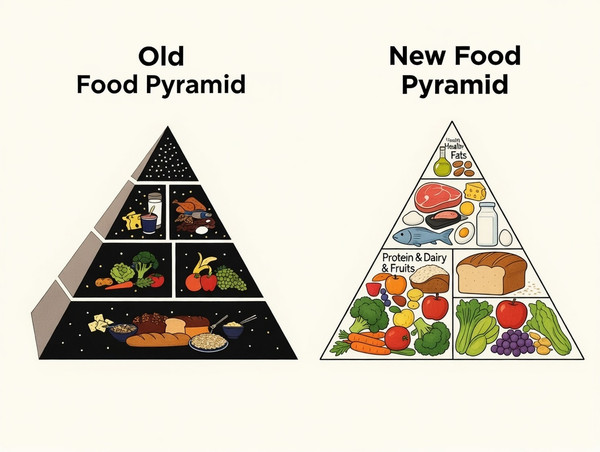
The written guidelines reveal significant philosophical shifts. Where previous editions emphasized limiting saturated fats, the new guidance ends what Kennedy calls "the war on saturated fats," encouraging Americans to cook with butter and beef tallow. While the text still technically recommends limiting saturated fat to 10% of calories, the visual pyramid and messaging emphasize protein and full-fat dairy consumption at every meal. The guidelines also place new emphasis on reducing processed foods and added sugars, while elevating animal-based proteins. This represents a sharp departure from MyPlate, which used a plate graphic showing roughly equal quarters for fruits, vegetables, grains, and protein without prioritizing one over another.
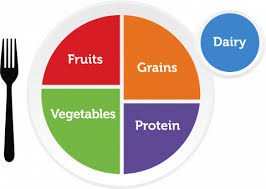
source: myplate.org
The clear financial beneficiaries are America's beef and dairy producers. The National Cattlemen's Beef Association and International Dairy Foods Association have celebrated the guidelines, which legitimize consuming red meat and full-fat dairy products daily. With protein and dairy given prime placement, these industries stand to capture increased market share in federal feeding programs—including school lunches, military meals, and SNAP benefits—which must align with the Dietary Guidelines. The full-fat dairy recommendation particularly benefits struggling dairy operations, as whole milk commands premium prices over skim. Butter and beef tallow producers also gain as cooking oils shift away from vegetable-based alternatives.
Grain producers face the most significant losses. For decades, the guidelines positioned bread, pasta, and cereals as dietary foundations—driving billions in federal purchases and consumer demand. Relegating grains to the pyramid's tip threatens this status. Processed food manufacturers also lose ground, as the guidelines explicitly target their products with "healthy" versus "unhealthy" distinctions. The plant-based meat sector, which had gained momentum under previous guidance encouraging reduced meat consumption, faces a challenging regulatory environment. Additionally, vegetable oil producers (soybean, canola) stand to lose market share as butter and animal fats regain favor.
Critics note that four of the nine expert panelists who drafted the guidelines had financial ties to the beef and dairy industries, raising questions about scientific objectivity. Environmental groups also oppose the increased meat emphasis given livestock's climate impact. Regardless, the economic ripple effects will be substantial: federal programs feeding nearly 30 million Americans will now prioritize protein procurement, while grain-based food companies must rebrand or reformulate to remain competitive in a changed nutritional landscape.
*The US government released its first food pyramid in 1992. USDA, archived in public domain at Wikipedia
**Health and Human Services Secretary Robert F. Kennedy Jr. said the US is ending a "war" on protein and saturated fat.realfood.gov
