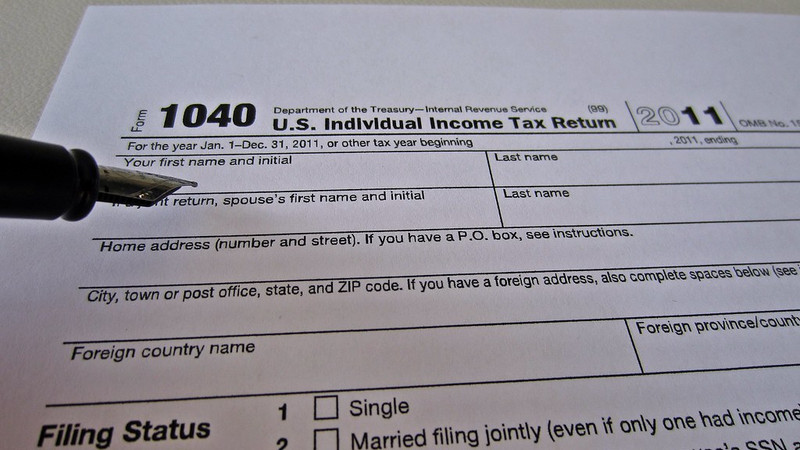
The first federal income tax was a temporary Civil War measure enacted under Abraham Lincoln; however, it was repealed in 1872. The Supreme Court upheld that tax in Springer v. United States (1881). The 1894 peacetime income tax—passed as part of the Wilson-Gorman Tariff Act—was indeed struck down as unconstitutional in Pollock v. Farmers’ Loan & Trust Co. (1895), which barred direct taxes on income derived from property.
President William Howard Taft proposed a corporate excise tax in 1909 (enacted in the Payne-Aldrich Tariff Act), later upheld in Flint v. Stone Tracy Co. (1911). Theodore Roosevelt advocated for an inheritance tax but never signed one into law; the modern federal estate tax was enacted in the Revenue Act of 1916, under Woodrow Wilson.
The 16th Amendment—authorizing a federal income tax without apportionment—was proposed by Congress in 1909 and ratified in February 1913, before Wilson took office. Wilson signed the Revenue Act of 1913 later that year, imposing a 1 percent tax on incomes over $3,000 for individuals ($4,000 for married couples), affecting roughly the wealthiest 2–3 percent of households—not exclusively the “top 1 percent.” That same year Congress created the Federal Reserve, though the two measures were legally and functionally separate.
Ultimately, while a direct income tax was once deemed unconstitutional, the 16th Amendment made it constitutionally valid. It was forced on Americans with a legal basis in the formal amendment process.
According to recent polling from early 2026, public sentiment toward the federal income tax is broadly negative on a personal level, yet Americans largely support taxing corporations and the wealthy more—not eliminating the system altogether.
Views on personal taxes: Gallup finds that roughly six in ten Americans say their own federal taxes are “too high,” a figure that has remained elevated since 2023. Only about 46% say the amount they pay in income taxes is “fair”—essentially tied with the record low from 1999. Majorities across lower-, middle-, and upper-income brackets say their tax burden is too high.
Views on corporations and the wealthy: By contrast, Americans do not believe the system is uniformly overtaxing everyone. 70% say corporations pay too little in income tax, and a Pew Research Center survey found that most Americans continue to favor raising taxes on higher-income households and corporations. A separate January 2026 Pew study found that a top frustration with the federal tax system is the belief that wealthy people and corporations do not pay their fair share.
Fairness and reform preferences: A 2024 Tax Foundation poll showed that 59% of respondents believe federal income tax rates are too high (including 83% of Republicans and 38% of Democrats). However, when asked what a “fair” top tax rate would be, only 8% said 0%; plurality support centered on 10% or 20%. This suggests that while Americans are dissatisfied with current rates and complexity, there is no broad majority for abolishing the income tax entirely.
Favorability is low—most Americans feel personally overtaxed and see the system as unfair. But polling consistently shows the public wants the burden shifted upward onto corporations and high earners, rather than eliminating the income tax completely.
Total Federal Improper Payments
In a June 2026 report, the Government Accountability Office (GAO) estimated that federal programs lost approximately $186 billion in improper payments during fiscal year 2025—the most recent complete annual tally. This figure spans about 64 programs across 15 agencies and includes overpayments, underpayments, payments to ineligible recipients, and fraud. The five largest sources were Medicare, Medicaid, the Earned Income Tax Credit, SNAP (food stamps), and the SBA’s Shuttered Venue Operators Grant program.
USDA noted that SNAP’s national payment error rate for FY 2025 was 10.6%, nearly double the statutory threshold set in the 2025 “One Big Beautiful Bill Act.”
Strictly Fraud vs. Administrative Error
It is important to note the difference between “improper payments” and provable fraud. The USDA explicitly states that payment error rates “are not the same thing as fraud,” since errors are often unintentional eligibility or calculation mistakes. Fraud involves intentional deception and represents a subset of the total.
2026 Criminal Fraud Enforcement
For calendar-year 2026 actions, the Department of Justice and HHS Office of Inspector General announced a June 2026 National Health Care Fraud Takedown involving $6.5 billion in alleged false claims. Separately, CMS reported that Medicare program integrity efforts identified a record $41.9 billion in FY 2025 savings and program integrity actions.
While no single official figure isolates pure “social welfare fraud” from honest error, the government’s most recent estimate for improper payments in welfare-related programs is approximately $47.6 billion annually (Medicaid and SNAP alone), with the broader universe of federal improper payments at $186 billion for FY 2025.
For context, the government collected roughly $5.3 trillion in revenue in 2025, resulting in an annual budget deficit of $1.8 trillion—a decrease of about $41 billion from FY 2024, but still one of the largest shortfalls in U.S. history.
CBO noted that major spending growth in FY 2025 was driven by the government’s largest benefit programs and, notably, net interest on the federal debt, which surpassed $1 trillion for the first time.
If you are one of the 96.8% of Americans employed as of June 2026, that is your tax dollars at work.
Editorial comments expressed in this column are the sole opinion of the writer