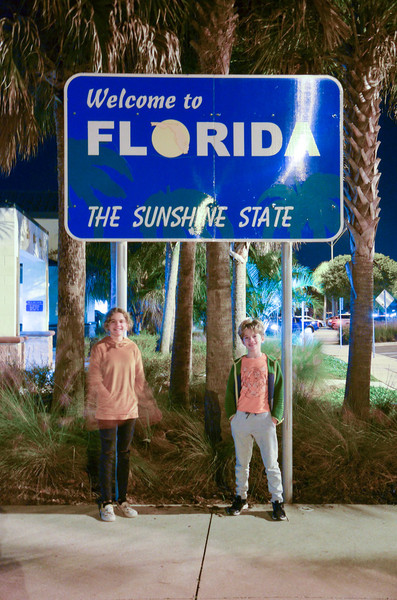
There is only one state in America with more people leaving than Florida, and that’s California. Every year, according to USAFacts and census-based migration information, about 500,000 people exit the Sunshine State annually.
The headlines, state conservatives, and Fox News praise Florida as the bastion of capitalism, freedom, and conservative values. This positive messaging has proven highly effective, transforming Florida into the number one destination for people escaping the deep blue states of New York, New Jersey, and others.
That successful sales pitch has brought in many new residents, resulting in positive net migration numbers for the state. However, as it turns out, this trend is not entirely positive for existing Floridians. What is emerging in its place is a micro-socialist society that threatens the state’s long-term health and character.
The financially well-heeled arrivals from the North have driven up real estate prices across the board. At the same time, political decisions and other factors have made property and auto insurance unaffordable for many ordinary residents. Consequently, the young middle class is packing up U-Hauls and heading to more affordable destinations such as Alabama, North Carolina, Georgia, and Texas.
The vacuum left behind will ultimately leave the state with three primary financial classes: the wealthy, those who serve them in various service roles, and those dependent on government help and social benefits. The shrinking middle class in Florida should be a major concern for the residents who remain in the state.
There is no indication that the drastic rise in living costs will slow down anytime soon. In fact, Miami’s cost of living has just passed New York City for the first time ever. This development is particularly ironic given Florida’s reputation as a more affordable alternative to coastal cities in the Northeast.
Since 2020, home prices have increased 30-50%, while home insurance prices have nearly tripled. Importantly, this insurance crisis is not entirely due to storms and hurricanes. Florida has about 7% of the nation’s population and only 9% of the property insurance claims. Despite this, loopholes in the laws have allowed for 79% of property insurance lawsuits in the nation to originate in the state.

Even more concerning, 40% of the billions paid out by insurance companies for claims have ended up in the bank accounts of attorneys rather than helping homeowners recover from losses.
With the increase in property values, property taxes have increased 20-30%. A typical home in Tampa that rented for $1,800 a month in 2000 now costs $3,200 a month. When housing expenses rise above 30% of household income, it is considered unaffordable, and Florida has many cities in that category or worse. This affordability crisis is forcing difficult decisions on families who once saw Florida as an ideal place to raise children and build a future. Florida’s success is causing its long-term demise.
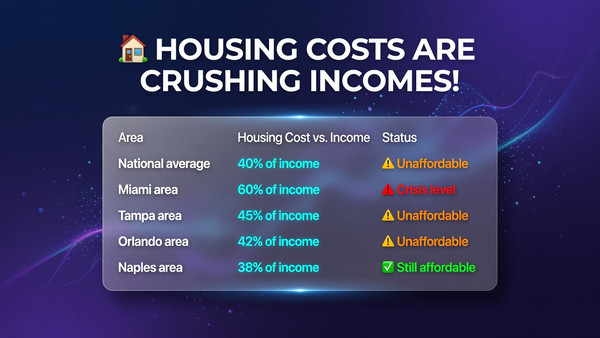
At the height of the COVID-19 pandemic, Florida’s net migration was plus 170,000; that number has lowered to 64,000 in 2024. While retirees continue to flock to the Sunshine State, the young professionals are creating an exodus. Florida’s future middle class is disappearing, and that spells trouble for the state as a whole.
Without a vibrant middle class to support local economies, pay taxes, and contribute to community life, the state risks becoming less dynamic and more polarized. A state dependent on tourism and retirees with no middle class and only those who serve the wealthy elite and those who depend on government social assistance sounds more like socialism than thriving capitalism.
Eventually, as older residents pass away, the state will be dependent on the same levels of wealthy elites to keep the state financially humming. This shift could lead to policies that favor the rich even more, further entrenching the divisions.
The influx of wealth without corresponding support for the middle class may erode the quality of life that drew people here in the first place. It is time for Floridians and policymakers to recognize these trends and work toward solutions that preserve the state’s appeal for all income levels, not just the affluent.
Years from now, the very things that have made Florida attractive for potential residents could ultimately be what destroys the state of beautiful beaches, sunshine, and storms.
Editorial comments expressed in this column are the sole opinion of the writer