
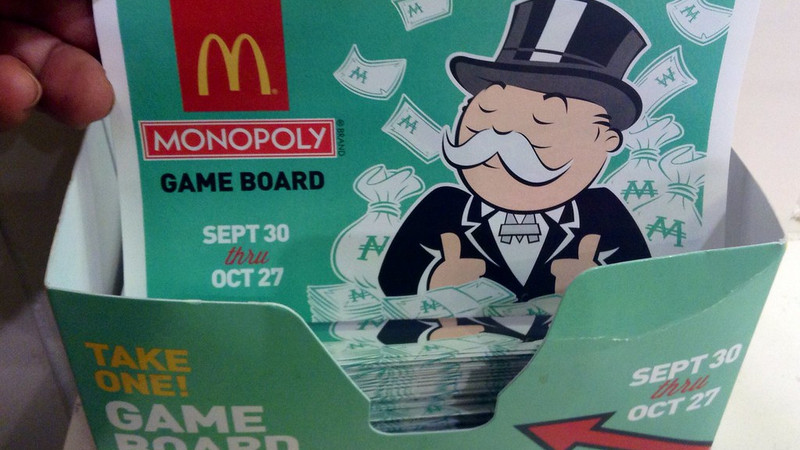
For twelve years, one of America's most beloved fast-food promotions was compromised by an inside job that ultimately robbed legitimate customers of over $24 million in prizes. The McDonald's Monopoly game, launched in 1987 as a marketing juggernaut promising prizes up to $1 million, was systematically rigged by the very man hired to protect its integrity—Jerome P. Jacobson, a former police officer and security chief at promotion handler Simon Marketing.
McDonald's Monopoly required customers to collect game pieces attached to food packaging, matching property sets to win cash and vehicles. By law, McDonald's could not administer the contest internally; instead, third-party vendor Simon Marketing generated and distributed game pieces. Jacobson, known as "Uncle Jerry," served as director of security with access to winning tickets during transit.
Beginning in 1989, Jacobson exploited a critical supply chain error—a vendor had mistakenly sent him a sheet of tamper-proof seals used to secure winning ticket cases. This single oversight enabled a decade-long deception. Jacobson would intercept prize shipments at airports, retreat to bathroom stalls, break the security seals, extract high-value winning pieces, reseal the cases using the duplicate seals, and allow the compromised shipments to continue to McDonald's locations nationwide.
Initially, Jacobson distributed winning pieces to trusted family members, including his stepbrother and nephew. However, the operation rapidly expanded into an organized criminal enterprise. Jacobson began selling winning pieces to outsiders in exchange for a percentage of the claimed prizes. His client list eventually included organized crime figures, strip club owners, and members of the Colombo crime family. The geographical clustering of major winners—nearly all residing within 25 miles of Jacobson's residence—would later prove instrumental in exposing the scheme.
Notably, Jacobson reportedly sent a $1 million winning piece anonymously to St. Jude Children's Hospital, which McDonald's honored through a structured 20-year payout. One family connected to Jacobson's network fraudulently claimed three separate $1 million prizes plus a luxury vehicle.
The scheme collapsed in 2000 following an anonymous FBI tip identifying "Uncle Jerry" as the architect of the fraud. Federal investigators partnered with McDonald's to conduct a final "sting" operation: they wiretapped Jacobson's communications, identified the next designated $1 million "winner" before the claim was filed, and dispatched undercover agents posing as a McDonald's film crew to document the fake winner's fabricated story of discovering the ticket.
Jacobson was arrested during an early morning raid three weeks later. The trial commenced on September 10, 2001, only to be immediately overshadowed by the terrorist attacks of September 11, 2001. The case, which represented one of corporate America's most significant fraud scandals, received minimal public attention as national focus shifted to the tragedy.
Over fifty individuals faced conviction. Despite orchestrating the $24 million fraud spanning twelve years, Jacobson received a sentence of just 37 months—three years and one month—making him the only defendant to serve more than one year of incarceration.
The McDonald's Monopoly scandal represents a critical case study in internal security failures and supply chain vulnerabilities. For more than a decade, millions of customers participated in a contest where the winning pieces had already been diverted and promised to fraudsters before ever reaching restaurant locations. The scheme's duration underscores how a single compromised individual, combined with inadequate oversight protocols, can undermine even the most high-profile corporate promotions.
