
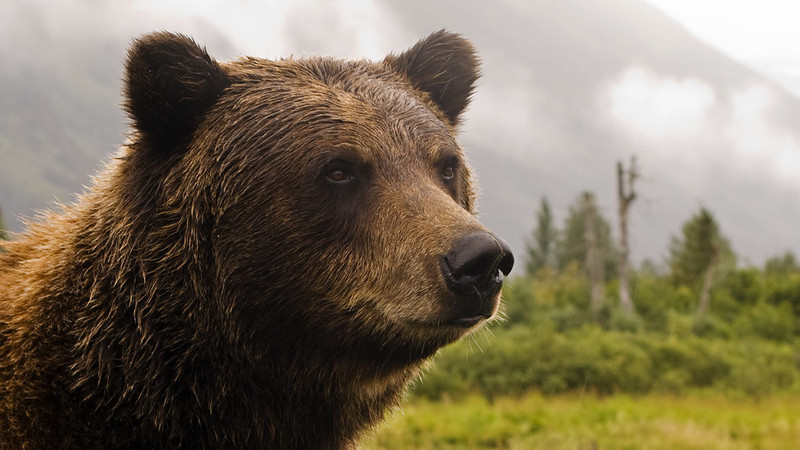
A rancher near Choteau, Montana, caught video of six grizzlies strolling across his calving lot behind his barn late Monday, and said there were as many as seven bears on his property that night.
The next morning, rancher Neal Collins said agents from Montana Fish, Wildlife & Parks hazed as many as 10 grizzlies out of patches of brush across the road from his place.
Collins said no people or livestock were attacked by the bears on his place, and FWP used non-lethal “cracker” shotgun shells to scare off the bears.
A ‘Herd’ Of Grizzlies
Sparky Wallace, a friend of Collins who also lives near Choteau, somewhat humorously described the group of grizzlies as a “herd.”
A group of bears is actually called a "sleuth." Or sometimes, an older term, a “sloth” is used to describe a gathering of bears.
He told Cowboy State Daily he and some of his neighbors have had encounters with multiple bears, as the number of grizzlies out on the prairie has steadily increased.
Chad White, a bear management specialist with Montana FWP, said the bears on Collins’ property were probably a “couple of family groups that have been hanging out in the area.”
Meaning, they were likely two related adult females such as “a mother and daughter” and their cubs, White said.
The Choteau area has been busy with bear activity this spring and summer. The bears wander from the Rocky Mountain Front onto the prairie along the Teton River, which flows past Choteau.
The bears might be feeding on green vegetation and other natural food sources, then taking shelter in brush patches.
“It may be that he (Collins) has the natural shelter for day bedding and they were traveling around the area,” White said.
White said the FWP bear manager responding to Collins’ call told him as many as 10 grizzlies fled once the hazing stared.
FWP personnel fired cracker shells into the brush where the bears were holed up. Cracker shells fire a small explosive charge with a delayed fuse, designed to explode in the air and ward off predators such as bears and wolves.
“The six or seven bears in the family groups ran off in one direction, and two or three more ran off in another direction,” he said.
It’s not known where the other two or three bears might have come from, White added.
