
Dear President Adams,
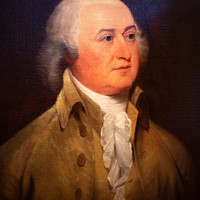
Two hundred and fifty-one years ago—June 10, 1775—you stood in Philadelphia and proposed something that, in hindsight, feels almost mathematically impossible. You suggested that the men surrounding Boston, nearly all of them New England militia who had elected their own officers and probably already had strong opinions about where Johnny from Concord should stand in the firing line, should be rechristened not as Massachusetts men or Connecticut volunteers, but as a Continental Army. And then, as if that wasn’t sufficiently outrageous, you recommended that a Virginian with land, a statuesque jawline, and a reputation for dignity should command them.
Mr. Adams, we are grateful. Deeply, absurdly, embarrassingly grateful. And we are also, if you will permit a bluntness you once prized, a little bit embarrassed by what we have done with the country you made possible.
The punchline, sir, is that it worked. Washington actually managed to get men from twelve different colonies to stop calling each other “Yankee” and “Southron” long enough to starve through a winter at Valley Forge. He convinced them that their shared discomfort was a kind of covenant. You stitched a union together in a room without air conditioning, Twitter, or Wi-Fi, and you did it by appealing to an idea rather than a demographic poll.
We are the instant militia now, Mr. Adams, and oh, how you would despise the irony. Your Minutemen grabbed their flintlocks and ran toward actual danger. Our modern minutemen grab their phones and run toward the nearest online skirmish, armed with memes and CAPS LOCK. We boast of our "battle stations" from ergonomically designed desk chairs, electing ourselves captains of comment sections, self-anointed generals of grievance. It is, we must confess, far easier to lay siege to a Facebook thread than to a city. The British redcoats only had to face frostbite and musketry; our poor, exhausted moderators must face the full fury of a Wednesday morning after a cable news segment.
You proposed unity under a Virginian because you knew the British would not take a rebellion seriously if it looked like a regional spat. Today, we have taken your lesson and performed it in reverse: we have made regional spats our national religion. The coastal elites look at the heartland and see a sepia-toned mystery novel; the heartland looks at the coast and sees a dizzying foreign film without subtitles. We have our own local militias still, though they go by names like “subreddit.” We have fortified our ideological Boston and laid siege to each other across algorithmic lines, each side convinced the other is the lobsterback.
But here is where the gratitude seeps through the mockery, Mr. Adams, because your legacy insists on being heard. When the floodwaters rise, we still become continentals. When the storm wipes out the power grid, the line between Alabama and Massachusetts collapses in the time it takes for a bucket brigade to form. We still send our sons and daughters to serve under a single flag, and they still come home transformed by the discovery that the kid from Fresno and the kid from Philly share the same blisters. Your Continental Army did not erase our differences; it proved we could march with them.
You proposed an army of the continent because you knew that an idea required muscle. You gave us the muscle, and we have spent the centuries arguing about which gym it belongs in. But the skeleton holds. The union, battered and bewildered as it is in this digital age of perpetual performance, still stands. We are still capable, on our best days, of looking past the township for the sake of the country.
We may be a people who now require seventy-two-hour news cycles to process what you processed in a single afternoon of debate. We may be a union that argues about everything from coffee orders to what a women is. But every now and then, when it truly matters, we still manage to remember what you knew on that June morning in 1775: that the only way to survive is together, under one general idea, facing the same enemy, shivering in the same cold, and trusting that the continent is larger than the colony.
You gave us the Continental Army. We promise we are still learning how to be continentals.
With enduring gratitude,
Your Heirs in the Twenty-First Century
Editorial comments expressed in this column are the sole opinion of the writer
