
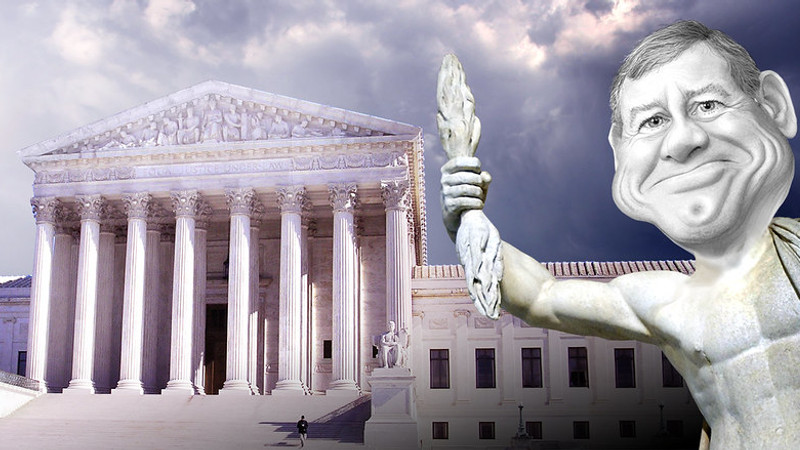
In April 2026, a significant judicial ethics controversy erupted when investigative journalist Christopher Armitage filed a 142-page disbarment complaint against Chief Justice John Roberts with the District of Columbia Bar. The allegation is that Chief Justice Roberts mischaracterized over $20 million in household income from law firms appearing before the Supreme Court over a sixteen-year period.
The allegations center on Roberts's wife, Jane Sullivan Roberts, who worked as a legal recruiter at Major, Lindsey & Africa between 2007 and 2014. According to internal whistleblower documents released by Kendal Price, she earned $10.3 million in commissions from elite law firms during that period, with additional income earned in subsequent years. The complaint contends that Chief Justice Roberts systematically mislabeled his wife's commission-based income as "salary" on federal financial disclosure forms, thereby obscuring the source of the payments. Furthermore, the filing alleges Roberts concealed his wife's equity stake in her employer for three consecutive years and failed to recuse himself from over five hundred cases argued by law firms that had paid his household millions in commissions.
The report's analysis approaches these explosive claims through a fact-critical lens, examining the evidentiary basis of the allegations against the verifiable public record. The article likely scrutinizes the financial disclosure forms, the statutory requirements for judicial reporting, and the legal distinction between commission income and salary reporting. It may also examine whether Roberts's actions violated specific federal ethics statutes or merely reflected interpretive ambiguities in disclosure requirements.
The complaint further alleges that Roberts personally held stock in at least three parties before the Court without recusing himself and that he architected the Supreme Court's first ethics code in a manner designed to be unenforceable. These claims, if substantiated, represent not merely technical reporting failures but potential systemic corruption undermining the integrity of the nation's highest court.
The disbarment filing has generated considerable public debate and media coverage, with outlets like Snopes and various legal commentators weighing in. Some commentators have characterized the allegations as exposing the hidden relationship between Supreme Court justices and the legal industry's financial ecosystem. Roberts defenders, however, may argue that judicial spouses' employment and income reporting exists in a gray area of ethics law that has never been fully clarified by Congress or judicial oversight bodies.
In an environment where partisan narratives can obscure factual accuracy the report signals an intent to privilege empirical evidence over political sensationalism, examining whether the documented record supports the grave conclusions being drawn by Roberts's critics. This approach is particularly valuable given the stakes: if the Chief Justice of the United States engaged in systematic financial deception while failing to recuse from cases involving paying parties, it would constitute one of the most serious judicial ethics breaches in modern American history.
Christopher Armitage's report therefore operates at the intersection of investigative journalism, legal analysis, and institutional accountability, demanding that serious accusations be matched by equally serious evidence.
