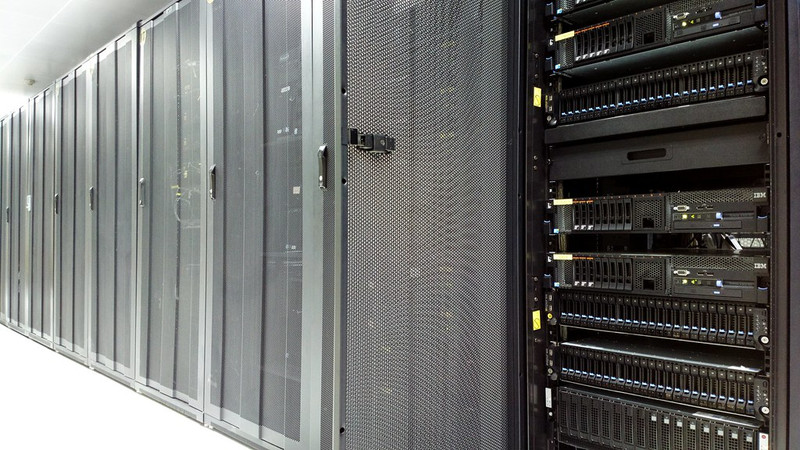
In early 2026, the Iranian Revolutionary Guard Corps launched a series of unprecedented strikes against American data centers in the Middle East, targeting Amazon Web Services facilities in Bahrain and an Oracle data center in Dubai. Iran justified these attacks by claiming that these facilities hosted AI systems used by the U.S. military for intelligence analysis and war simulations. For the first time, hyperscale cloud infrastructure—previously considered civilian technology—had become explicit military targets in a regional conflict.
These attacks mark a dangerous evolution in warfare. Data centers, the backbone of the digital economy, are increasingly being recognized as dual-use infrastructure with strategic military value. As the U.S. and its Middle Eastern partners rush to build AI capabilities, they have inadvertently created high-value targets within missile range of adversarial states. The vulnerability of these facilities demonstrates how the physical infrastructure supporting artificial intelligence has become inextricably linked to national security.
Yet as policymakers grapple with these geopolitical threats abroad, an equally complex challenge is emerging at home. Across America, local communities are mounting their own resistance against data center expansion—not with missiles, but with zoning laws, protests, and regulatory opposition. The irony is striking; while Iran attacks data centers for being too close to military operations, American communities are fighting them for being too close to homes, schools, and environmental resources.
Noise pollution compounds the tension. Cooling systems and server fans generate constant industrial hums that disrupt wildlife, alter animal behaviors, and disturb human sleep patterns. In Chandler, Arizona, the city council unanimously rejected a proposed AI data center in late 2025 due largely to noise concerns raised by nearby residents.
Perhaps most ironically, some communities are now opposing data centers precisely because of the military targeting risks revealed by Iran's attacks. Facilities located near military bases—previously seen as secure locations—are now viewed by some residents as potential magnets for foreign strikes or sabotage operations. National security assets have become neighborhood liabilities.
The convergence of these pressures creates a precarious moment for American AI infrastructure. The nation is simultaneously racing to expand data center capacity to compete globally while facing opposition from the very communities expected to host them. As Iran demonstrated, data centers are no longer invisible pieces of internet infrastructure; they are contested sites of geopolitical and environmental conflict. Whether they can survive foreign missiles abroad and local opposition at home remains an open question—and one that will shape the future of artificial intelligence development.
Data Center Footprint:
- Average data center: Around 100,000–150,000 square feet (about 2–3 acres)
- Hyperscale data centers: About 435,000 square feet (10 acres) or larger
- Latest trend (2025): New AI-focused data centers average about **613,000 square feet**—nearly 14 acres per facility
- The buildings themselves are typically massive warehouse-style structures, 2–3 stories high, packed with server racks
- Hyperscale data centers: About 435,000 square feet (10 acres) or larger
- Latest trend (2025): New AI-focused data centers average about **613,000 square feet**—nearly 14 acres per facility
- The buildings themselves are typically massive warehouse-style structures, 2–3 stories high, packed with server racks
Military Base Footprint:
- White Sands Missile Range (NM): The largest U.S. military installation at approximately **3.2 million acres** (~139 billion square feet)
- Joint Base Lewis-McChord (WA): 414,000 acres (~18 billion square feet)
- Fort Bliss (TX): ~1.1 million acres (~48 billion square feet)
- Fort Hood (TX): ~214,968 acres (~9.4 billion square feet)
- Even "smaller" major bases like Fort Bragg are 160,000+ acres (~7 billion square feet)
A single typical Army division installation covers roughly 15,000–40,000 acres—equivalent to about 150–400 average data centers just in land area.- Joint Base Lewis-McChord (WA): 414,000 acres (~18 billion square feet)
- Fort Bliss (TX): ~1.1 million acres (~48 billion square feet)
- Fort Hood (TX): ~214,968 acres (~9.4 billion square feet)
- Even "smaller" major bases like Fort Bragg are 160,000+ acres (~7 billion square feet)
To put it another way: The largest military bases are tens of thousands of times larger than data centers. You could fit the entire data center campus for a major tech company inside many military bases and still have room for live-fire training ranges, airstrips, and maneuver areas.
This massive difference explains why data centers often seek locations near military bases for perceived security advantages, while occupying a fraction of the physical footprint.
Undersea internet cables face multiple serious threats that have escalated significantly in recent years:
The Baltic Sea has become "ground zero" for undersea cable targeting. Since 2022, approximately 10 cables have been severed in this region alone, including seven incidents between November 2024 and January 2025. The tactics include:
- Anchor dragging: Ships deliberately dragging anchors to snag cables and pipelines
- Suspicious vessel activity: Russia- and China-linked ships operating under opaque ownership structures near cable routes
- Direct attacks: The Nord Stream pipelines were sabotaged in September 2022, and other energy pipelines connecting Estonia-Finland have been damaged
- Suspicious vessel activity: Russia- and China-linked ships operating under opaque ownership structures near cable routes
- Direct attacks: The Nord Stream pipelines were sabotaged in September 2022, and other energy pipelines connecting Estonia-Finland have been damaged
Multiple nations are implicated in cable threats:
- Russia: Repeatedly named as a possible offender based on ship movements and anchor trails in the Baltic
- China: Increasing activity around Taiwanese cables—five separate cable damage incidents occurred near Taiwan in 2024-2025
- Iran: Iranian state-linked media has explicitly warned of potential attacks on undersea cables in the Persian Gulf, signaling a shift from targeting oil infrastructure to "the invisible" digital backbone
- China: Increasing activity around Taiwanese cables—five separate cable damage incidents occurred near Taiwan in 2024-2025
- Iran: Iranian state-linked media has explicitly warned of potential attacks on undersea cables in the Persian Gulf, signaling a shift from targeting oil infrastructure to "the invisible" digital backbone
These cables support approximately $9 trillion worth of trade daily. Key strategic concerns include:
1. The "Shadow Fleet": Aging, poorly maintained tankers and cargo ships operating under flags of convenience that can damage infrastructure while maintaining plausible deniability
2. Limited repair capacity: There are very few dedicated cable repair ships globally. For example, when five of Vietnam's undersea cables were damaged simultaneously in February 2023, repairs took until November 2023 to complete due to vessel shortages
3. Choke points: Critical bottlenecks like the Red Sea, Strait of Malacca, and Mediterranean are vulnerable to concentrated attacks
2. Limited repair capacity: There are very few dedicated cable repair ships globally. For example, when five of Vietnam's undersea cables were damaged simultaneously in February 2023, repairs took until November 2023 to complete due to vessel shortages
3. Choke points: Critical bottlenecks like the Red Sea, Strait of Malacca, and Mediterranean are vulnerable to concentrated attacks
While accidents cause most day-to-day interruptions, deliberate attacks are growing harder to attribute and prevent. In deeper waters, sabotage requires sophisticated submarines or specialized equipment, but in shallow coastal areas (where many cables lie), simple anchor dragging can cause massive disruption with minimal sophistication.
When cables are cut, nations lose significant data transmission capacity. Vietnam lost 75% of its data capacity during the 2023 cable outages. A coordinated multi-cable attack could isolate entire regions from the global internet.
The threat is so serious that the U.S. established the Cable Security Fleet in 2020 with dedicated cable repair ships, and NATO has increased naval patrols in the Baltic Sea specifically to protect this infrastructure.
Editorial comments expressed in this column are the sole opinion of the writer