
"A bank is a place that will lend you money if you can prove that you don't need it." Bob Hope
Two decades ago, a little-known Senate candidate named Maria Cantwell was playing a high-stakes game of financial catch-up. After pouring millions of her own money—and bank loans—into her 2000 race for the U.S. Senate, the Washington Democrat spent the early months of 2001 scrambling to retire a mountain of campaign debt while navigating federal disclosure rules and a Federal Election Commission chastising her for tardy reporting. Back then, the system made recovering large personal loans a slog; post-election fundraising could only do so much, and the risk of never getting reimbursed was real.
Today, that risk has been erased by the Supreme Court.
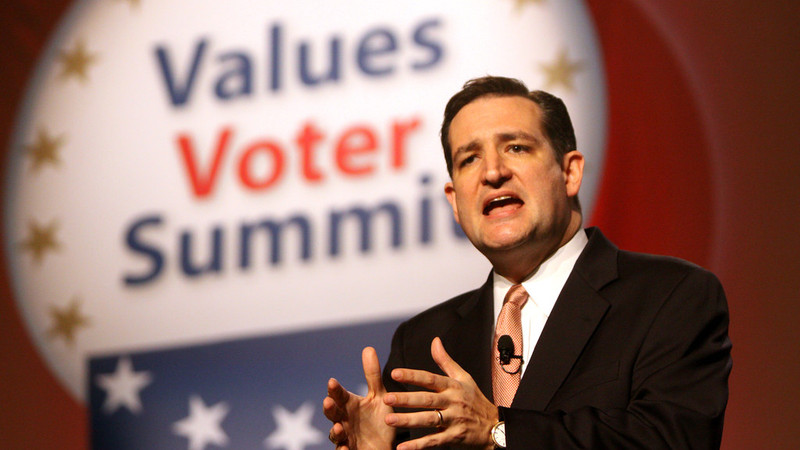
In May 2022, the Court ruled in 'Federal Election Commission v. Ted Cruz for Senate' that a key provision of the Bipartisan Campaign Reform Act was unconstitutional. Section 304 had capped at $250,000 the amount of post-election contributions that campaigns could use to repay a candidate’s personal loans. The Court, in a 6-3 decision, held that the limit burdened core political speech under the First Amendment. Within weeks, the cap was gone—and so was a decades-old speed bump for self-funding candidates.
The contrast between Cantwell’s experience and the post-Cruz landscape is stark. In 2001, Cantwell had relied on a mix of personal wealth and secured bank lines of credit, including one tied to her home, to finance a long-shot bid that ultimately unseated Republican Sen. Slade Gorton. While candidates could lend their campaigns unlimited sums, getting that money back was another matter. The $250,000 post-election repayment cap, combined with strict reporting windows, meant candidates often forgave loans or ate the losses. Cantwell’s early debt-retirement fundraising was constrained by her pledge to avoid PAC money, leaving her dependent on individual donors working within contribution limits.
Under the new rules ushered in by 'Cruz', a candidate can now loan a campaign millions, lose the election—or win—and still solicit unlimited post-election donations to replenish their personal bank account. The change effectively turns a candidate’s wallet into a temporary bridge, repaid later by donors who now know the money can go straight back to the candidate.
The practical effects are already visible. After the ruling, Texas Congressman Vicente Gonzalez moved to reinstate nearly $1.4 million in previously forgiven loans, hoping to recoup money that had been blocked by the old cap. Other candidates have similarly dusted off old debts for reimbursement.
Determining the single largest campaign reimbursement in history is difficult; no central database tracks every repayment, and many wealthy candidates have historically chosen not to seek their money back. President Donald Trump, for instance, forgave an estimated $47 million to $50 million in 2016 campaign loans, converting them into contributions rather than wading through repayment logistics. Before 'Cruz', such forgiveness was common. Now, candidates have every incentive to treat those sums as loans rather than donations.
Critics warn the ruling invites corruption. Justice Elena Kagan, in dissent, noted that post-election contributions repaying a candidate’s personal loan look a lot like personal gifts—creating an avenue for donors to funnel money directly into an officeholder’s pocket after the votes are counted. Supporters counter that restricting a candidate’s ability to finance their own speech is the real constitutional injury.
Either way, the system Cantwell navigated in 2001—one where self-funding carried real financial peril—has given way to a new era. In the post-Cruz environment, the candidate who writes the check knows, with near certainty, that campaign donors can cash it. One more reason to repeal the Seventeenth Amendment, in my opinion.
Editorial comments expressed in this column are the sole opinion of the writer
