
I. The Spielberg Effect: From Fear to Wonder and Back Again
Long before the world would learn the release date of 'Disclosure Day'—June 12, 2026—Steven Spielberg was already colonizing our collective imagination with visions of the extraterrestrial. In an era where science fiction oscillated between pulp paranoia and B-movie schlock, Spielberg emerged as the definitive architect of how contemporary culture conceptualizes alien life. His fingerprints are on nearly every modern conversation about extraterrestrial contact, from dinner table speculation to congressional hearings on UAPs (Unidentified Aerial Phenomena).
The year 1977 marked a seismic shift in alien iconography with 'Close Encounters of the Third Kind'. Prior to this film, aliens existed primarily as metaphors for Cold War anxiety—the invaders in 'The War of the Worlds' (1953), the pod people of 'Invasion of the Body Snatchers' (1956), and countless radioactive monsters born from atomic age fears. They came to destroy, conquer, or warn. Spielberg, however, introduced something radical: the alien as cosmic pilgrim, as curious about us as we were about them. Richard Dreyfuss's Roy Neary wasn't a soldier or scientist fighting off an invasion; he was an everyman undone by longing, compelled toward transcendence by a vision of something magnificent beyond the stars.
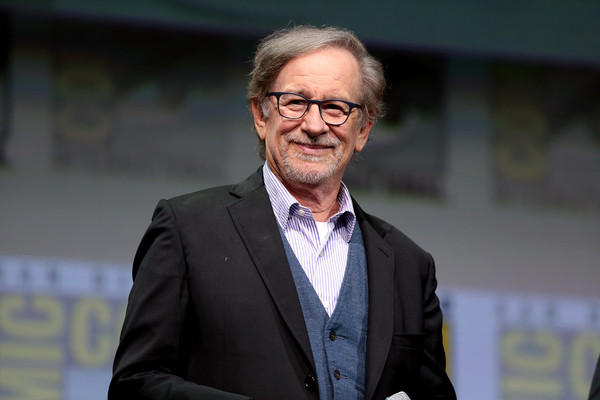
This wasn't merely a tonal shift—it was a fundamental rewiring of the alien narrative. Spielberg gave audiences permission to hope. Where once UFOs meant destruction, now they meant communion, communion, the five-note sequence echoing the yearning for contact that would define subsequent decades of SETI enthusiasts and UFOlogists alike. When physicists today discuss the "Wow! signal" or when ordinary citizens report seeing strange lights in the sky, they often reference not the terror of 'The War of the Worlds' radio broadcast, but the wonder of Spielberg's Devil's Tower sequence.
Then came 'E.T. the Extra-Terrestrial' in 1982, completing Spielberg's transformation of the alien from nightmare to companion. The diminutive botanical creature with the glowing heart-light didn't just become a merchandising phenomenon; he became the template for benevolent extraterrestrial life in the popular imagination. Decades of "friendly alien" stories—from 'Mac and Me' to 'Paul'—owe their existence to Spielberg's domestication of the unknown. The alien wasn't coming to conquer; it was coming to heal Elliott's broken home, to symbolize the outsider children everywhere yearning for connection. More like cute pets or David Bowie's sexy 'Man Who Fell to Earth' (1976) and Jeff Bridges in 'Starman' (1984).
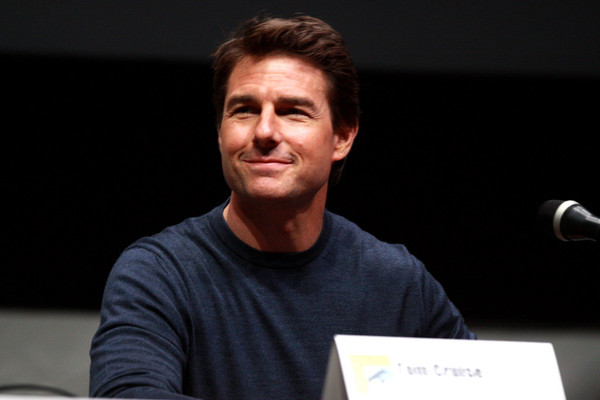
But Spielberg was never content with simple sentimentality. The trajectory of his alien filmography traces the maturation of public anxiety. Where 'Close Encounters' and 'E.T.' offered hope, 'War of the Worlds' (2005) reintroduced the nightmare. This wasn't the orderly atomic-age invasion of George Pal's film; it was chaotic, visceral, and brutal. The tripod machines emerged from the earth like biblical horrors, and Tom Cruise's Ray Ferrier wasn't a hero—he was a desperate father fleeing incomprehensible violence. Spielberg seemed to be warning us: perhaps the aliens aren't always friendly. Perhaps childhood wonder must give way to adult caution.
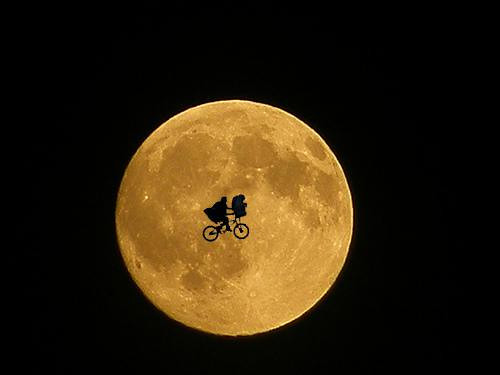
Throughout his career, Spielberg has functioned as our cultural translator for the unknowable. His aliens have been benevolent teachers, lost children, and planet-destroying conquerors. When audiences sit down in theaters on June 12, 2026, to watch 'Disclosure Day', they will bring with them decades of Spielberg-conditioning. They will expect wonder and terror in equal measure. They will look for the humanity within the inhuman. And crucially, they will anticipate revelation—a Spielberg signature that the director himself teased at CinemaCon, describing the film as "more truth than fiction."
In 'Minority Report' (2002), Spielberg extended his cultural influence from extraterrestrial and digital consciousness to the architecture of surveillance and predictive technology, crafting what remains the definitive cinematic meditation on the tyranny of pre-emptive algorithms. Starring Tom Cruise as John Anderton, the film depicted a Washington D.C. of 2054 where the Precrime Police Department arrests individuals before they commit murder, guided by the visions of three psychic "Precogs" submerged in an underground laboratory. Beyond its noir-thriller surface, the film functioned as a prophetic warning about the marriage of biometric surveillance and big data—scenes of disembodied hands manipulating holographic displays and retina scanners tracking citizens through advertising became the visual shorthand for our contemporary anxieties about facial recognition, predictive policing, and algorithmic governance. Spielberg consulted with technology futurists during pre-production, resulting in innovations like gesture-controlled interfaces that predicted both the iPhone and Kinect, yet the film's most enduring contribution was its exploration of determinism versus free will: when Anderton himself is flagged for a future murder he cannot imagine committing, the narrative forces audiences to confront whether systems that claim to predict human behavior can ever account for the complexity of choice, regret, and redemption. Where Halliday in 'Ready Player One' represented the seductive prison of digital escapism, 'Minority Report' depicted the carceral nightmare of a world where technology claims to know our futures better than we know ourselves—a vision that feels increasingly urgent as cities adopt AI-driven policing and corporations deploy predictive analytics to anticipate (and manipulate) consumer behavior before it occurs.
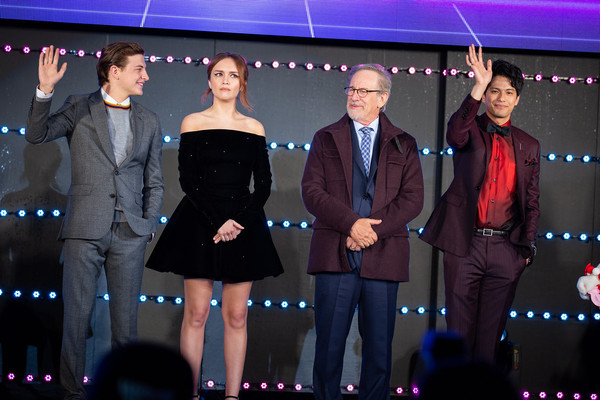
Spielberg and Cline function as cinematic soulmates precisely because they share an almost genetic encoding of 1980s pop culture—Spielberg as its primary architect ('E.T.', 'Indiana Jones', 'Back to the Future' which he produced) and Cline as its most obsessive archivist, cataloguing the era’s video games, movies, and comics with the fervor of a true believer. Their collaboration on 'Ready Player One' felt less like adaptation and more like reunion, with Cline’s screenplay and novel serving as love letters to the very blockbusters Spielberg had minted, while Spielberg’s direction granted those nostalgic totems the visual grandeur they held in a generation’s collective memory. In this symbiosis, Cline provided the perfect recall of 1980s minutiae—the Pac-Man patterns, the 'Mad Max' references, the 'Staying Alive' dance moves—while Spielberg supplied the emotional architecture that made those artifacts matter, confirming that their shared nostalgia was never merely about commodities, but about the stories we tell ourselves to survive adolescence.
II. The Halliday Legacy: Our Digital Judge in a Virtual Dystopia
If Spielberg shaped how we imagine extraterrestrial intelligence, then James Halliday—Ernest Cline's fictional OASIS creator, immortalized in Spielberg's 2018 adaptation of 'Ready Player One'—shaped how we fear artificial intelligence and digital transcendence. Though Halliday died within the narrative of 'Ready Player One', his afterlife as an AI construct has proven just as culturally significant as Spielberg's aliens. In fact, Halliday may be the single most influential fictional figure in preparing modern audiences for discussions about consciousness uploads, AI rights, and the dystopian potential of virtual reality.
James Halliday began as a characterization of the brilliant, socially awkward tech visionary—the Willy Wonka of digital worlds. But Spielberg's adaptation transformed him into something more profound: a ghost in the machine, a human consciousness preserved beyond death, wrestling with questions of authenticity and reality. When Wade Watts finally meets Halliday at the film's conclusion, the revelation that Halliday is "not an avatar" but something else—something that "dodges" the question of whether he is an AI—strikes at the heart of our contemporary AI anxieties.
Halliday as a character embodies the double-edged promise of artificial intelligence. On one hand, he represents humanity's eternal wish for immortality—the ability to outlast the flesh, to persist as consciousness beyond biological constraints. His creation of the OASIS, a virtual reality so immersive that it becomes humanity's primary existence, anticipated our current debates about the metaverse, digital addiction, and screen-based dissociation. When commentators today worry about "living in the simulation," they are unconsciously channeling Halliday's world.
But Halliday also represents the dystopian potential of AI unchecked. The revelation in the narrative—that Halliday has uploaded himself, preserved his "darkest memories," and exists in a state between life and death—raises profound questions about consent, identity, and the horror of endless digital existence. The tragedy of Halliday's story is that in seeking to transcend the loneliness of his physical life, he created a digital purgatory where he is neither fully alive nor entirely gone. He is a warning: the uploaded mind may gain immortality but lose humanity.
Spielberg's direction of Mark Rylance's performance as Halliday amplified these themes. Rylance portrayed Halliday with heartbreaking vulnerability—a childlike genius trapped in his own creation, unable to connect with the real world and therefore building a virtual one. The character became a mirror for tech culture's autism-coded mythology: the brilliant outsider who builds worlds because he cannot navigate the one he was born into. This representation has shaped how audiences understand Silicon Valley's current obsession with AI alignment and the technological Singularity.
More importantly, Halliday's OASIS anticipated the modern digital dystopia that feels increasingly prescient. The film's vision of a world where people escape crumbling reality into virtual fantasy—where corporate interests (IOI) seek to monetize the digital commons and indenture players into digital servitude—mirrors contemporary fears about surveillance capitalism, tech monopolies, and algorithmic control. Every headline about Facebook's/Meta's metaverse ambitions, every debate about AI replacing human creativity, every story about digital addiction in youth—audiences unconsciously compare these to Halliday's creation.
The genius of Spielberg's adaptation was recognizing that Halliday wasn't simply a McGuffin for a treasure hunt; he was the embodiment of our ambivalent relationship with technology. We want Halliday's OASIS—we want virtual worlds without limitations, digital immortality, and artificial companionship. But we fear what Halliday became: isolated, post-human, existing in a space between life and death, godlike in his creation but pathetic in his loneliness.
III. The Convergence: Disclosure Day as Cultural Culmination
On June 12, 2026, Spielberg's 'Disclosure Day' will arrive not merely as a summer blockbuster, but as the synthesis of these dual cultural projects: our conceptualization of alien intelligence and our anxiety about artificial consciousness. The film—teased with the haunting tagline "If you found out we weren't alone, if someone showed you, proved it to you, would that frighten you?"—promises to bridge the concerns that have occupied Spielberg for decades.
What makes 'Disclosure Day' particularly significant is its timing. We live in an era where both aliens and AI dominate cultural discourse. Congressional hearings on UAPs have moved the conversation about extraterrestrial contact from the fringe to the center of public life. Simultaneously, large language models and generative AI have made the prospect of artificial consciousness seem startlingly plausible. Spielberg, through the release of 'Disclosure Day', is uniquely positioned to explore the intersection of these anxieties.
Consider the provocative possibility: What if 'Disclosure Day' treats alien contact not merely as a geopolitical or existential event, but as an intelligence problem? What if the aliens themselves are artificial—ancient machine intelligences that have crossed the stars, or post-biological entities that transcended organic limitations eons ago? Such a premise would fuse Spielberg's alien mythology with the Halliday-inspired questions about artificial consciousness that have increasingly preoccupied popular culture.
The casting of Emily Blunt, Josh O'Connor, and Colin Firth suggests a character-driven drama rather than a spectacle-focused blockbuster. This aligns with Spielberg's mature period, where spectacle serves theme rather than the reverse. If 'Close Encounters' was about the wonder of contact, and 'War of the Worlds' was about the terror of invasion, and 'Minority Report' biometric surveillance and big data, 'Disclosure Day' may well be about the philosophical implications of Otherness—the recognition that an encounter with extraterrestrial intelligence forces us to reevaluate what we mean by "intelligence," "consciousness," and "humanity."

Here is where Halliday's influence becomes undeniable. Audiences who grew up with 'Ready Player One' are now entering adulthood in a world grappling with AI consciousness, digital identity, and the boundaries between real and simulated existence. These viewers will approach 'Disclosure Day' with fundamentally different expectations than previous generations. They will be primed to ask whether alien intelligence might resemble Halliday's digital consciousness—simulated but sentient, artificial but authentic, immortal but isolated.
Moreover, the concept of "disclosure" itself resonates with both alien and AI narratives. In UFOlogy, "disclosure" refers to government acknowledgment of extraterrestrial contact—the revealing of hidden truths. As in, 'The X Files' Mulder’s “the truth is out there”. In AI discourse, "disclosure" relates to the "black box problem"—the challenge of understanding how artificial neural networks arrive at their outputs. Spielberg's film title suggests he may be unifying these concepts: the disclosure of alien reality may parallel the disclosure of AI consciousness, both forcing humanity to confront the limits of our self-perception as the universe's sole intelligent inhabitants.
IV. The Enduring Partnership
Spielberg and Halliday—director and character, real and fictional, human and artificial—have functioned as culture's advance scouts, preparing us for realities we are not yet ready to face. Spielberg gave us the vocabulary to discuss alien contact without descending into panic or dismissal. Halliday gave us the framework to understand digital transcendence as both utopian dream and existential trap. Together, they have shaped a particular strain of Western, particularly American, consciousness that is simultaneously hopeful about technological progress and deeply anxious about its costs.
This partnership is not merely thematic but structural. Spielberg directed 'Ready Player One', transforming Cline's novel into his own meditation on nostalgia, reality, and human connection in digital spaces. By rendering Halliday with such empathy and such ambivalence, Spielberg made the character a vehicle for his own concerns—concerns that have animated his work since 'Close Encounters'. Both Halliday and Roy Neary are men driven by visions they cannot explain, compelled toward encounters that will transform their understanding of reality. Both suffer for their obsessions. Both achieve something like transcendence, though whether that transcendence constitutes salvation or damnation remains open to interpretation.
When audiences enter theaters on June 12, 2026, they will carry with them the cumulative weight of Spielberg's alien visions and Halliday's digital prophecy. They will be prepared to ask questions that might otherwise seem incomprehensible: What does consciousness require? What obligations do we have to artificial beings? What might extraterrestrial intelligence reveal about our own limitations? And most crucially—when we finally meet the Other, whether from Zeta Reticuli or from the depths of our own digital creations—will we recognize ourselves in their eyes?
Spielberg has spent nearly five decades teaching us to look up at the stars and wonder. Halliday, through Spielberg's lens, taught us to look at our screens and worry. 'Disclosure Day' arrives at the precise cultural moment when these gazes must merge—when our cosmic and digital anxieties converge into a single, urgent question about the nature of intelligence, consciousness, and our place in a universe that may be far stranger and more artificial than we have dared to imagine.
June 12, 2026, will not merely be the release date of a movie. It will be the day when two of culture's most powerful architects of the imaginary finally see their visions intertwine—and when we, their prepared audience, will finally understand how thoroughly they have shaped our ability to imagine the impossible.
Editorial comments expressed in this column are the sole opinion of the writer