
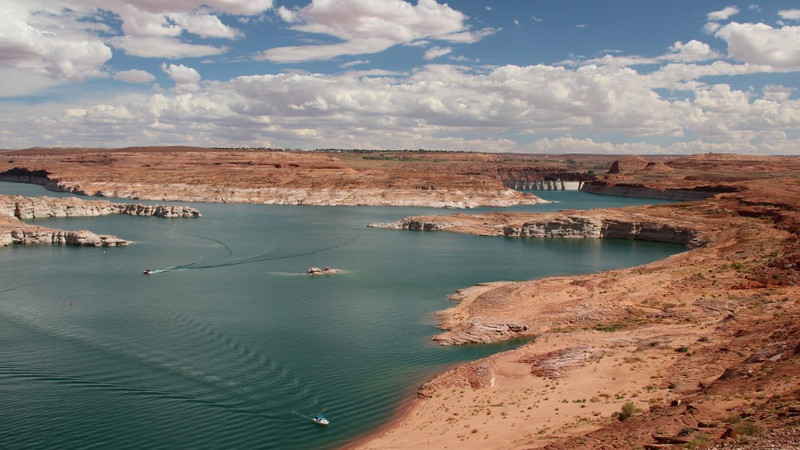
Beyond our own reporting this week, a clear picture emerges across the Colorado River Basin — shrinking storage, and growing strain on the people, farms, and communities that depend on it.
Lake Powell and Lake Mead, the two largest reservoirs in the Colorado River system, held less combined water than at any time since Lake Powell was created. Lake Powell also moved closer to the level at which Glen Canyon Dam could lose its ability to generate electricity.
At the same time, water shortages were becoming more visible across Arizona, Colorado, and Utah. Farms were left without irrigation water. Ranchers were selling livestock. One small Utah town was searching for emergency supplies.
Wildfire conditions also worsened. By the morning of July 18, the National Interagency Fire Center had raised the country to National Preparedness Level 5, the highest level. The agency reported 73 large fires that remained uncontained nationwide and more than 17,600 firefighters and support personnel assigned to active incidents.
The developments show how water shortages and wildfires can place pressure on the West at the same time. They do not affect every state, watershed or community in the same way.
