

President George Washington's 1796 Farewell Address issued stern warnings against "permanent alliances" and the dangers of foreign entanglements, counseling the young republic to avoid becoming "a slave to its animosity or to its affection" toward other nations. Nearly 230 years later, these words invite inevitable comparison to President Donald Trump's "America First" foreign policy. While superficial similarities exist between Washington's non-interventionist philosophy and Trump's skepticism toward NATO and multilateral commitments, a careful analysis suggests Washington would view his successor's approach with profound concern rather than approval.
The parallels are undeniable. Washington cautioned against allowing alliances to drag the nation into conflicts contrary to its interests, a sentiment that echoes Trump's criticism of NATO members' insufficient defense spending and his broader questioning of automatic treaty obligations. Both leaders emphasized placing American interests above international commitments, and both viewed foreign relations through a pragmatic rather than idealistic lens. In this narrow sense, Trump could be seen as channeling a form of Washingtonian realism.
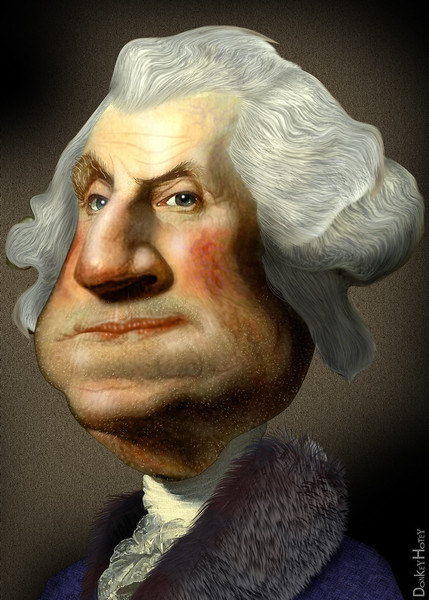
However, Washington's doctrine was one of *balanced* neutrality, not selective favoritism. His famous warning cut both ways: he cautioned equally against "habitual hatred" *and* "habitual fondness" for foreign powers, arguing that either passion could "lead it astray from its duty and its interest." Washington advocated for commercial relations with all nations while avoiding "passionate attachments" that create "imaginary common interests." Here, Trump's approach diverges sharply. Where Washington counseled emotional detachment and rational calculation, Trump's foreign policy has been characterized by personal relationships with authoritarian leaders—particularly Vladimir Putin—and antagonism toward traditional democratic allies. This appears to embody precisely the "passionate attachment" Washington warned against, substituting one form of foreign influence for another.
Furthermore, Washington distinguished between permanent alliances and temporary, strategic cooperation based on concrete shared interests. His Farewell Address did not advocate isolationism but rather independent judgment free from permanent encumbrances. Trump's tendency to weaken standing institutional alliances while pursuing personal diplomacy with strongmen arguably undermines the very stability Washington sought to establish. Recent analyses from Harvard's Carr Center suggest Washington would view such governance as betraying the moral foundation of his address: that power is a public trust requiring deliberation rather than impulse.
The Ukraine conflict illustrates this tension. While Washington might have been wary of reflexively defending Ukraine, he would likely have been equally troubled by the Trump administration's 2025-2026 concessions to Russia, which critics argue aligned the United States with an aggressor state against a sovereign nation. Such alignment—with its potential to "betray [America] into a participation in the quarrels and wars of [another] without adequate inducement or justification"—represents precisely the abandonment of independent judgment Washington feared.
Jet fuel costs are even more grim, surging 60% to 90% since January 2026. Prices rose from roughly $2.11 per gallon in early January to over $3.40–$4.56 today, depending on the airport. This "grim" surge is primarily attributed to geopolitical tensions and the outbreak of conflict involving the U.S., Israel, and Iran in late February 2026, which disrupted global oil supplies through the Strait of Hormuz.
Airlines, many of which had stopped hedging fuel costs, are passing these expenses to consumers through higher airfares and fuel surcharges, particularly for summer travel.
Ultimately, Washington sought a foreign policy guided by reason, proportion, and true national interest, free from the "slavery" of foreign passions. While he might have appreciated Trump's willingness to question outdated alliance structures, he would likely have recoiled at the replacement of one emotional dependency with another. True Washingtonian neutrality requires not merely rejecting Atlantic alliances, but avoiding the "imaginary common interests" that come from personal or political attachment to any foreign power—a standard that remains challenging for any presidency to meet.
Editorial comments expressed in this column are the sole opinion of the writer
