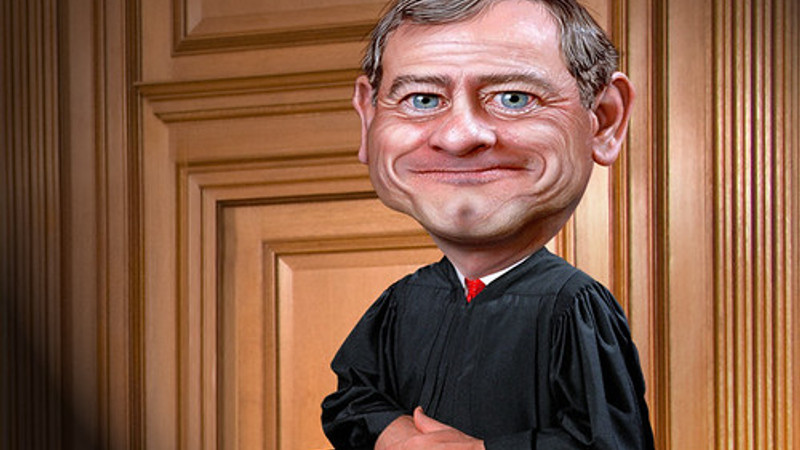
“We do not have Obama judges or Trump judges, Bush judges or Clinton judges. All judges are doing their level best to do equal right to those appearing before them.” Chief Justice John Roberts
Daniel Horowitz's latest column for The Blaze, "The Next Big Supreme Court Shift Might Not Be Abortion or Guns" , arrives at a time when the conservative legal movement is undergoing a fascinating transformation. While most Americans fixate on the Supreme Court's expected rulings on abortion restrictions and gun rights, Horowitz argues that a potentially more consequential shift is looming on the horizon—one that concerns the administrative state, executive authority, and the delicate balance between the three branches of government.Horowitz, host of the "Conservative Review" podcast and a senior editor at Blaze Media, has built his reputation on exposing what he terms "judicial supremacy"—the tendency of federal courts to arrogate power that constitutionally belongs to the elected branches. His March 16 piece extends this analysis to emerging tensions between the Roberts Court and the Trump administration's second-term agenda, particularly regarding executive power over tariffs, immigration enforcement, and regulatory authority.
The article's central thesis is refreshingly contrarian: while conservative activists have celebrated the Court's 6-3 conservative majority for decisions overturning Roe v. Wade and expanding Second Amendment protections, Horowitz warns that this same majority may prove hostile to Trump's attempts to drain the administrative swamp. The 2024 Loper Bright decision, which overturned Chevron deference and theoretically limited agency power, created an ironic tension. Horowitz suggests the same textualist philosophy that empowers judges to override regulators might also embolden them to second-guess presidential authority over foreign trade and national security.
Horowitz's analysis of the Court's recent behavior shows characteristic sharpness. He notes the "unusual patience" with which the justices have handled cases challenging Trump's tariff policies, suggesting the Court may be contemplating a power grab disguised as constitutional interpretation. His concern isn't merely procedural—it's about democratic accountability. When unelected judges can block elected presidents from enforcing laws duly passed by Congress, Horowitz argues, we risk substituting "judicial oligarchy" for constitutional government.
The piece excels when connecting these technical legal questions to the frustrations ordinary Americans feel toward Washington dysfunction. Horowitz effectively channels the populist suspicion that courts have become merely another obstacle to governance, not its impartial referee. His warning that conservatives celebrating recent rulings might soon find themselves on the receiving end of judicial activism feels particularly prescient given the current political moment.
The writing itself is vintage Horowitz: punchy, provocative, and unapologetically polemical. He moves briskly between statutory analysis and partisan critique, assuming his conservative audience shares his underlying premises about legitimate governmental authority. Readers wanting passionate advocacy for presidential power against judicial encroachment will find much to appreciate.
If Horowitz is correct, the coming Supreme Court term may reveal tensions within the conservative coalition that have simmered beneath the surface for years. The alliance between originalist judges and populist politicians has always been more tactical than philosophical. As the Court confronts questions about executive authority over the administrative state, we may witness the first real fracture in that coalition. Whether Horowitz's fears materialize or not, his column serves as an important reminder that the judiciary's role in American governance remains as contested today as it was during the New Deal era.
Editorial comments expressed in this column are the sole opinion of the writer