

The Infamous Anecdote: Documented Reality vs. Contested Attribution
The quote attributed to President Lyndon B. Johnson—"I'll have those [n-words] voting Democratic for the next two hundred years"—has circulated widely in political discourse for decades. According to investigative journalist Ronald Kessler's 1995 book ‘Inside the White House’, this remark originated from Air Force One steward Robert MacMillan, who claimed Johnson uttered these words during a conversation with two governors aboard the presidential aircraft following the signing of the Civil Rights Act of 1964.
The anecdote's historical veracity remains deeply contested. Fact-checkers at Snopes have categorized the quote as unverified, noting that while MacMillan provided numerous salacious details about Johnson's personal behavior—including his habit of walking around nude in front of staff—the sole witness to the alleged remark lacks corroboration. Luci Baines Johnson, the president's daughter, explicitly denied another claim by MacMillan involving offensive language, raising questions about the steward's credibility. Nevertheless, Snopes acknowledged that such language "wouldn't have been entirely out of character for LBJ," given his well-documented history of using racial slurs and coarse political calculations.
What is historically certain is Johnson's political pessimism regarding civil rights legislation. His famous remark to aide Bill Moyers on the night he signed the Civil Rights Act—that "we just delivered the South to the Republican party for a long time to come"—is extensively documented and reveals the president's awareness that supporting civil rights would trigger a seismic political realignment that would fracture the Democratic Party's century-long dominance in the South.
The Box 13 Scandal: Foundation of a Political Career
To understand Johnson's relationship with electoral systems, one must examine the Box 13 scandal of 1948—a genuine electoral fraud that launched his national political career. In the 1948 Democratic Senate primary runoff, Johnson trailed former Texas Governor Coke Stevenson by 854 votes with 99 percent of precincts counted. Then, in a manner reminiscent of a dramatic screenplay or Seattle elections this decade, Precinct 13 in Jim Wells County reported exactly 200 additional votes for Johnson, awarding him an 87-vote victory.
The circumstances were extraordinarily suspicious. Those 200 votes appeared in alphabetical order, all recorded by the same handwriting. LBJ reportedly told his aide John Connally, "I want to know right now, did we steal this election or not?" The answer was yes: an investigation subsequently confirmed that Johnson had conspired with George Parr, the Democratic political boss of South Texas known as "the Duke of Duval County," to manufacture votes in the final hours of the count. Parr famously told election officials, "Keep those polls open until we get the results we need."
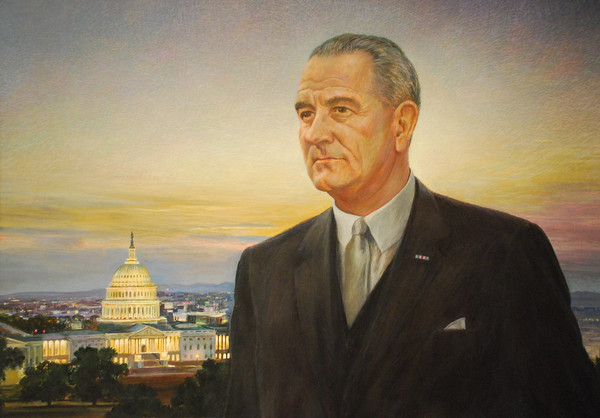
Following his narrow and controversial 1948 election victory, Lyndon Johnson transformed himself from "Landslide Lyndon" into perhaps the most effective Senate Majority Leader in American history, earning him the enduring epithet "Master of the Senate." When Democrats regained control of the Senate in 1955, Johnson seized the Majority Leader's position—a role his predecessor had described as herding cats—and reimagined it into an engine of legislative power through an unprecedented combination of procedural cunning, psychological manipulation, and tireless coalition-building. He mastered the Senate's labyrinthine rules to an extent no modern leader has matched, strategically deploying the filibuster and cloture while manipulating the committee system through his control of the Democratic Steering Committee. Johnson's legendary "treatment"—a combination of physical intimidation, flattery, and exhaustive bargaining delivered through inches-away face-to-face encounters—allowed him to break deadlock and forge compromise on civil rights legislation, public housing, and atomic energy, even as his heartbreaking 1957 and 1960 civil rights bills were watered down to appease Southern segregationists.
By wielding the power of federal patronage, controlling the legislative calendar with surgical precision, and cultivating intimate knowledge of each senator's ambitions and vulnerabilities, Johnson achieved what Robert Caro would later chronicle as his masterpiece: transforming a deliberative body designed for obstruction into an instrument capable of purposeful governance, all while positioning himself for the presidency he had coveted since his first Washington days as a congressional secretary in the 1930s.
From Controlled Machines to Contested Narratives
The connection between historical Democratic machine politics in minority precincts and Box 13 requires careful historical parsing. Urban Democratic political machines—most notably in Chicago under the Daley family and in Detroit—did exercise extraordinary influence over predominantly black precincts throughout the mid-twentieth century.
Chicago's electoral history offers instructive examples. A 1982 federal grand jury investigation documented systematic vote fraud in Chicago, where the Democratic machine maintained tight control over predominantly black South Side precincts through precinct captains who provided services in exchange for votes. The investigation revealed how election judges in majority-black precincts were pressured to inflate Democratic vote totals while suppressing Republican support. Richard Daley Sr.'s machine famously delivered massive margins for Democratic presidential candidates from Kennedy through Humphrey.
The critical distinction between these historical practices and modern critiques concerns methodology. The urban machines of the mid-twentieth century relied on in-person manipulation—ballot stuffing, repeat voting, and manipulated counting—within physical polling locations. Drop boxes, introduced more recently, operate under different procedural frameworks with varying levels of bipartisan observation and chain-of-custody documentation.
The Voting Rights Act and Political Realignment
The Voting Rights Act of 1965, and its attempted codification in the **‘John Lewis Voting Rights Advancement Act’ of 2025 (see below) named after civil rights activist John Lewis, fundamentally transformed American democracy and party alignments. By eliminating literacy tests, poll taxes, and other Jim Crow restrictions while authorizing federal examiners to register voters in discriminatory counties, the VRA enfranchised millions of African Americans who had been systematically excluded from electoral participation.
The immediate electoral impacts were dramatic. A quarter-million new black voters registered in 1965 alone. By 1968, black turnout in Mississippi skyrocketed from 6.7 percent to over 60 percent. This enfranchisement simultaneously achieved Johnson's prediction (civic inclusion for black Americans) and the historical inverse of MacMillan's attributed remark—rather than simple Democratic loyalty, newly enfranchised black voters demonstrated diverse preferences, though they did trend Democratic.
The Republican Party's subsequent *"Southern Strategy" (see inset) represented the political transformation Johnson anticipated. As black voters increasingly supported Democrats, white Southern conservatives migrated to the GOP, eventually making the South a Republican stronghold—a realignment that took approximately 40 years to complete.
The nexus between LBJ, the Box 13 scandal, and the politics of black voting requires nuanced historical analysis. Johnson's proven willingness to engage in electoral fraud in 1948, combined with his documented use of racial slurs and crude political calculations, creates a portrait of a politician who viewed voting systems as instruments of power to be manipulated. The contested "200 years" quotation aligns with this documented character, even if its specific provenance remains unconfirmed.
What emerged from the Voting Rights Act was not a monolithic Democratic voting bloc controlled through fraud, but rather the legitimate political incorporation of millions of citizens long denied fundamental rights. The transformation of the Solid South from Democratic—achieved partly through fraud and suppression—to genuinely competitive and now predominantly Republican, demonstrates that electoral systems evolve alongside the demographic and ideological preferences they channel.
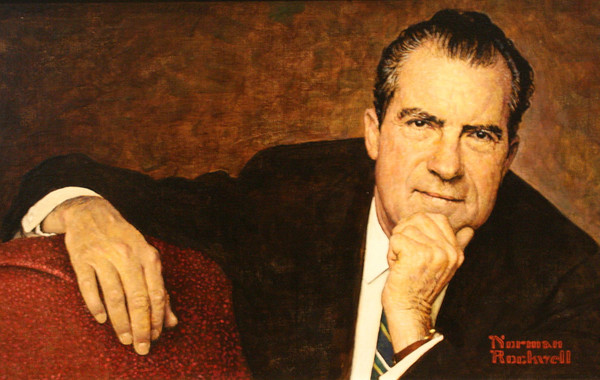
*The “Southern Strategy” was the Republican Party's calculated effort to dismantle the Democratic "Solid South"—a century-old political alignment born of Reconstruction-era racial animosity—and transform white Southern voters into the GOP's electoral base. Though Richard Nixon did not originate this realignment (elements appeared in Barry Goldwater's 1964 campaign), he refined it into a durable governing coalition through coded racial appeals, cultural conservatism, and strategic policy positioning that exploited the fractures LBJ had anticipated when signing civil rights legislation.
The Architecture of the Strategy
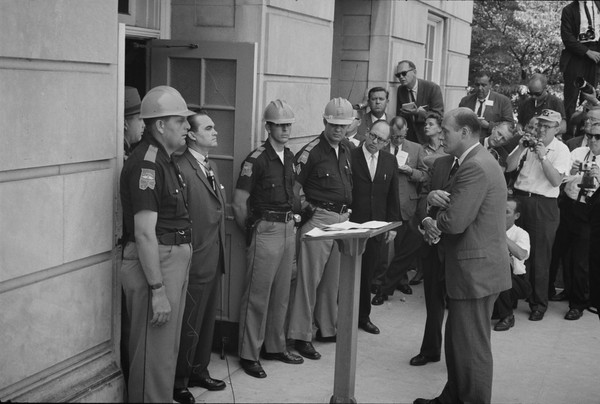
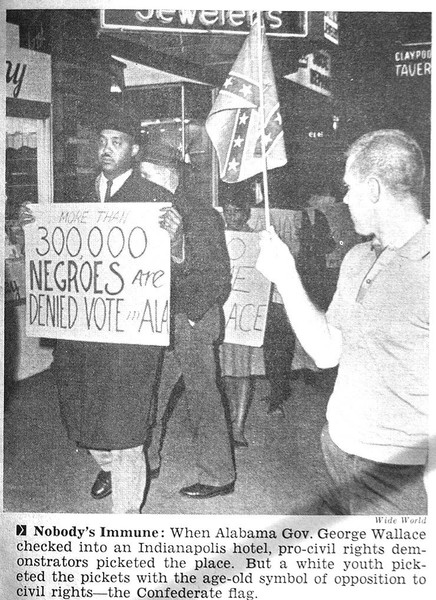
Nixon's approach, masterminded by strategist Kevin Phillips in 1968 and executed through surrogate campaigns and targeted rhetoric, relied on what Phillips termed "positive polarization"—deliberately alienating black voters to consolidate white support. Rather than explicit segregationist rhetoric (which Alabama Governor George Wallace employed in his independent 1968 bid), Nixon utilized "dog whistles": appeals to "states' rights," "law and order," opposition to forced busing for school integration, and criticism of the Supreme Court's activist decisions. His 1968 campaign presented the South with what Wallace could not—a viable vehicle for expressing racial and cultural grievances within the two-party system.
Factors Enabling Success
The Collapse of the Jim Crow Consensus: The Civil Rights Act of 1964 and Voting Rights Act of 1965 bifurcated the Democratic Party's traditional coalition. As millions of African Americans entered the electorate and the Democratic Party embraced their cause, white Southern Democrats—who had prioritized segregation over economic populism for generations—found themselves politically homeless. The 1964 Republican National Convention, where Goldwater delegates rejected a civil rights platform plank and the Arizona senator carried five Deep South states against the Texan Johnson, demonstrated that another political home existed.
The Wallace Interlude as Market Research: George Wallace's 1968 presidential campaign, winning 46 electoral votes across the Deep South with explicitly white-supremacist appeals, proved the viability of racialized politics while establishing the ceiling of third-party segregationist politics. Nixon's strategists recognized that Wallace had demonstrated demand; their task was to supply it through the two-party structure. By 1972, Wallace had been shot, and Nixon successfully absorbed his constituency through calculated cultural positioning.
The Weakness of Democratic Machinery: As the Voting Rights Act enfranchised black voters, urban Democratic machines that had previously controlled black precincts through patronage lost their monopoly on mobilization. Simultaneously, national Democratic candidates championing civil rights alienated white Southern county-party organizations, leaving local infrastructure vulnerable to Republican infiltration.
Court-Packing Promises: Nixon's 1968 pledge to nominate Supreme Court justices who would exercise "judicial restraint"—interpreted across the South as opposition to school integration, fair housing enforcement, and criminal justice reform—offered white voters a mechanism for resisting federal civil rights mandates without resorting to Wallace's overt defiance.
The strategy's success manifested in the 1972 electoral map, where Nixon carried every Southern state and achieved the Republican breakthrough that had eluded Goldwater. By 1980, Ronald Reagan would launch his campaign in Philadelphia, Mississippi—site of the 1964 civil rights workers' murders—with an explicit "states' rights" address, confirming the transformation of the South into the GOP's regional stronghold that has persisted for over fifty years.
**A note on The John Lewis Voting Rights Advancement Act, introduced in 2021 and championed by Democrats through the 117th and 118th Congresses, represented a legislative response to the Supreme Court's dismantling of the Voting Rights Act's preclearance regime in ‘Shelby County v. Holder’. The bill, which passed the House but languished in the Senate for five years—blocked repeatedly by Republican filibusters—sought to establish a new coverage formula for federal preclearance and, controversially, to codify standards for drawing majority-minority congressional districts that critics argued would effectively mandate racial gerrymandering as a matter of federal law.
Its provisions would have required states to draw districts specifically configured to ensure minority communities could elect "candidates of their choice," a standard that opponents argue transformed race into the predominant factor in redistricting, privileging demographic sorting over traditional criteria like geographic compactness and respect for municipal boundaries.
The Act's supporters viewed these provisions as necessary protections against vote dilution; its detractors saw them as institutionalizing the very practice—drawing lines based primarily on race—that the Fourteenth and Fifteenth Amendments prohibit. On April 29, 2026, the Supreme Court effectively extinguished this legislative approach in ‘Louisiana v. Callais’, ruling 6-3 that Louisiana's creation of a second majority-Black congressional district constituted unconstitutional racial gerrymandering. The Court's majority, reversing the logic that had governed redistricting since ‘Thornburg v. Gingles’ (1986), held that intentional efforts to create majority-minority districts violate the Fifteenth Amendment when race predominates over traditional districting principles—a decision that rendered the John Lewis Act's core provisions constitutionally untenable while completing the jurisprudential transformation from ‘Allen v. Milligan’'s (2023) tentative preservation of minority representation to a new regime where states may now invoke "partisan" considerations to justify maps that minimize minority electoral influence, provided they do not explicitly acknowledge race as the motivating factor.
