
In June 2025, former Biden White House aide Neera Tanden delivered explosive testimony before the House Oversight Committee that raised serious questions about who was actually running the executive branch during Joe Biden's presidency. Her sworn statements, later detailed in a widely shared Twitter thread (threadreaderapp.com/thread/1937682260968505444), revealed that official documents and presidential pardons were routinely signed by autopen—without clear confirmation that President Biden himself had approved them.
Tanden, who served as White House Staff Secretary before becoming Director of the Domestic Policy Council in May 2023, admitted under oath that she was "authorized to direct autopen signatures" but was "unaware of who gave final approval" for their use. This stunning admission came as part of the committee's investigation into allegations that Biden suffered from mental and physical decline while in office, and that his inner circle actively worked to conceal this condition from the American public.
According to her testimony, Tanden would send decision memos requesting autopen authorization to members of the President's "inner circle," but had no visibility into what occurred between sending the memo and receiving it back with approval. She could not confirm whether Biden himself had actually reviewed or authorized the documents being signed in his name. This procedure applied not only to routine paperwork but also to presidential pardons—raising constitutional questions about the validity of clemency decisions made during this period.
The testimony became possible after the Trump White House lifted any executive privilege protections that might have shielded Tanden, explicitly stating she must provide "unrestricted testimony" regarding Biden's mental acuity. Committee Chairman James Comer brought in Tanden as the first witness in a series of closed-door interviews with Biden's senior staff to determine "who was really running the show" during the Biden presidency.
Tanden's account was particularly noteworthy given her minimal direct interaction with the President despite her substantial authority over official signatures. She claimed the autopen approval process was "inherited from previous administrations," though she provided no evidence that prior administrations operated with such opacity regarding who authorized mechanical signatures on presidential documents.
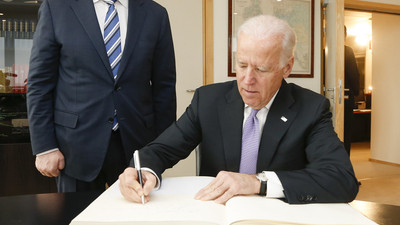
The revelations sparked intense debate about constitutional requirements for presidential action, the validity of documents signed by autopen without confirmed presidential approval, and whether the Biden administration had effectively operated as a "shadow presidency" where unelected aides made decisions without proper authorization. Legal scholars and political observers noted that while autopen use has precedent, the lack of clear confirmation that the President himself approved each document presented unprecedented constitutional questions about the legitimacy of executive actions taken during this period.
