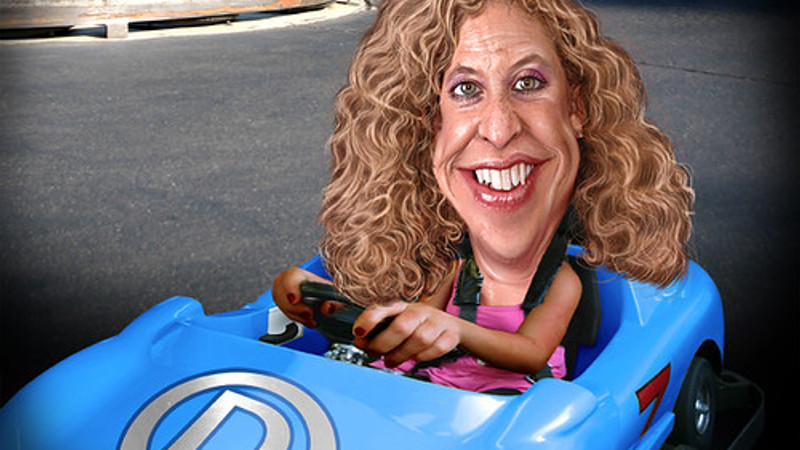
“How many people just realized that Dems had as many as 20 extra seats based on years of unconstitutional race-based gerrymandering?” White House Deputy Chief of Staff Stephen Miller tweeted
“It was clear that, regardless of party, white Democrats were not voting for black candidates, whether they were Democrats or not. We know that there is such a significant chasm between how black and white voters vote in Louisiana that there is no question that even if there is some correlation between race and party, that race is the driving factor.” NAACP lawyer Janai Nelson
It takes a special kind of political talent to spend three decades building a brand as the fiercest champion of the marginalized, only to have the marginalized turn around and tell you to get your own district. Such is the exquisite, almost poetic irony now engulfing Debbie Wasserman Schultz, who finds herself cast as the oppressor in the very narrative she spent her entire career writing.
For years, Wasserman Schultz was the Democratic Party’s human exclamation point on matters of equity, representation, and “lifting up voices that have been silenced.” She didn’t just support the underprivileged; she virtually trademarked them. As DNC chair, a congresswoman, and professional podium-thumper, she built her career on the gospel of identity politics—the sacred creed that who you are demographically matters more than what you actually do, and that representation is not just desirable but existential.
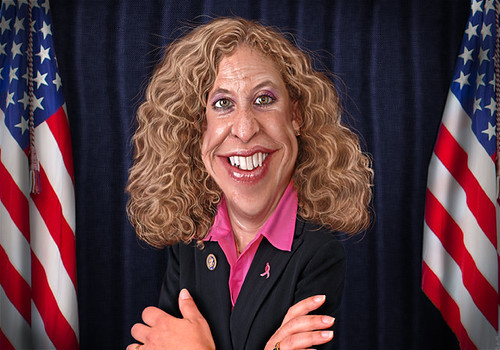
And now? Those same Democrats are looking her in her DWS-blue eyes and saying: ‘Yes, Debbie. Representation matters. Now beat it.’

Because here comes the boomerang, whistling back through the Florida humidity with enough force to straighten the curls on her head. After Florida Republicans redrew the congressional map and effectively vaporized her old seat—a maneuver that happens to be perfectly legal and exactly what both parties do when they hold the pen—Debbie did what any self-respecting career politician would do: she found a lifeboat. That lifeboat happens to be Florida’s newly drawn 20th Congressional District, where black residents make up half the Democratic primary electorate. The district was explicitly drawn, as everyone admits, to be a black-performing seat. It is, in the parlance of the identity politics she helped enshrine, “a district that belongs to the community.”
But Debbie, ever the pragmatist, had a ready refrain: “It’s a new district; there is no incumbent.” Ah, yes. The linguistic equivalent of coughing loudly during someone else’s eulogy to remind everyone you’re still in the room. No incumbent! Just a demographic design. Just a carefully crafted opportunity for a specific community to elect one of their own—which, last time anyone checked, was the entire philosophical underpinning of modern Democratic coalition politics. Debbie didn’t build that machine, but she sure oiled it. She rode it. She fundraised off it. She sent out enough breathless emails about “our diverse party” to deforest a biome.
And now the machine has politely informed her that she is not, in fact, part of the diversity in question.
The Democratic Black Caucus of Florida responded with a statement so dripping with her own prior rhetoric it reads like plagiarism by revenge: “At a time when aggressive redistricting has already weakened minority voting strength across Florida, the preservation of black political representation is not optional. It is essential.” You can practically hear the italics they didn’t even need to include. Ten of Florida’s fifteen elected DNC members—the very infrastructure Debbie once commanded—condemned her. The Congressional Black Caucus watched in stony silence. Her own party’s apparatus, the one she greased and praised and weaponized against Republicans for years, has collectively cleared its throat and pointed to the exit.
Debbie’s response? “Democrats do not need to be focused on internal politics.”
Oh, Debbie. Deb. That is the beautiful, delicious, buttery croissant of irony right there. The woman who turned internal Democratic politics into a blood sport—who fixed debates, rigged committees, and treated the DNC like a personal fiefdom to anoint Hillary Clinton—now wants everyone to stop focusing on internal politics? The moment it’s her résumé being fed into the woodchipper of identity-based allocation, suddenly we’re all one big tent and shouldn’t squabble. How convenient. How white girl privileged, one might even say, if one were inclined to use the academic vocabulary she spent years promoting.

This is the comeuppance that writes itself. Debbie Wasserman Schultz is discovering, in real time and in front of the entire political press corps, that the identity-politics Moral Universe she helped construct has no exceptions clause for well-meaning white ladies from Weston with a long history of attending the right fundraisers. She spent decades helping to perfect a system where demographic boxes matter more than individual records, where “lived experience” is a credential and “allyship” is a currency that can depreciate overnight. She never stopped to consider that the system she built might someday audit her account and find insufficient funds.
There is no incumbent, she protests. But there is an intended beneficiary. The district was drawn for a purpose. And that purpose, according to the rules she endorsed, is not Debbie. It’s the representation she championed. It’s the voices she demanded be heard. It’s the marginalized community she swore to elevate.
They’ve been elevated. They see her. And they’d like their seat.
This is the great comic cycle of modern progressive politics: the white female Jewish liberal from New York City who weaponizes identity as a bludgeon against conservatives, only to realize it’s a boomerang with their name on it. Debbie didn’t get boxed out by Republicans—she got boxed out by the very coalition she curated, nurtured, and pandered to. They’re using her own logic, her own language, her own unassailable neo-progressive buzzwords against her, and there is no defense because she outlawed defenses years ago. How do you argue against “representation matters” when you’re the one who embroidered it on the party pillows?
So here’s to Debbie Wasserman Schultz, the patron saint of pandering, now martyred on the altar she built herself. May she wander the political wilderness of Broward County, clutching her “Fighting for Us” yard signs, whispering into the humid Florida air: “But I was an ally.”
Yes, Debbie. Yes you were. And as every good activist eventually explains to every well-meaning ally: sometimes the most helpful thing you can do is step aside.
The knives are carbon neutral. The blocking is equitable. The backstab is diverse, inclusive, and—worst of all—entirely fair by the rules you wrote.
You finally made history, Debbie. They just didn’t save you a seat.
And if Debbie’s former colleagues are watching through their fingers, they ought to be taking notes—because the assembly line she helped construct hasn’t finished its shift.
Let this serve as a flashing yellow light to every Jewish Democrat currently occupying a “diverse” district while preaching the gospel of equitable representation. Chuck Schumer, who built a career on strategic emoting and demographic triangulation. Adam Schiff, who prosecuted Trump with theatrical zeal but never thought to cross-examine the ideology his own base was busy radicalizing. Dan Goldman, who parachuted into Congress on a golden chute woven from progressive platitudes. Bernie Sanders. They all made the same quiet calculation: that by baptizing themselves in the rhetoric of identity, they’d earn permanent immunity from its application.
They assumed the crocodile would eat them last.

Debbie and Steve Cohen just proved otherwise. The same rules of demographic allocation—of representational arithmetic, of ‘step aside and make room’—that they have championed, or at minimum politely applauded, are now binding precedents. Districts get redrawn. Coalitions evolve. And when the community they purport to champion looks up and asks why a wealthy white guy from the suburbs is occupying a seat “drawn for” someone else, no amount of past allyship will serve as a get-out-of-primary-free card.
The boomerang doesn’t check your voting record. It doesn’t care how many times you tweeted “Black Lives Matter” or cried for George Floyd or co-sponsored the latest equity bill. It simply returns to the sender. Right now, Schumer, Schiff, Goldman, and the whole kneeling crew of progressive Jewish pols who thought they were piloting this movement are about to discover they were just passengers—passengers whose stop is coming up fast, and the constituency they spent decades empowering is already eyeing their seat.
You cannot outrun the identity politics you perfected. You can only hope the district lines don’t move before you retire. Good luck, gentlemen. Debbie saved you a seat in the minority—figuratively, and very soon, literally.
Editorial comments expressed in this column are the sole opinion of the writer