
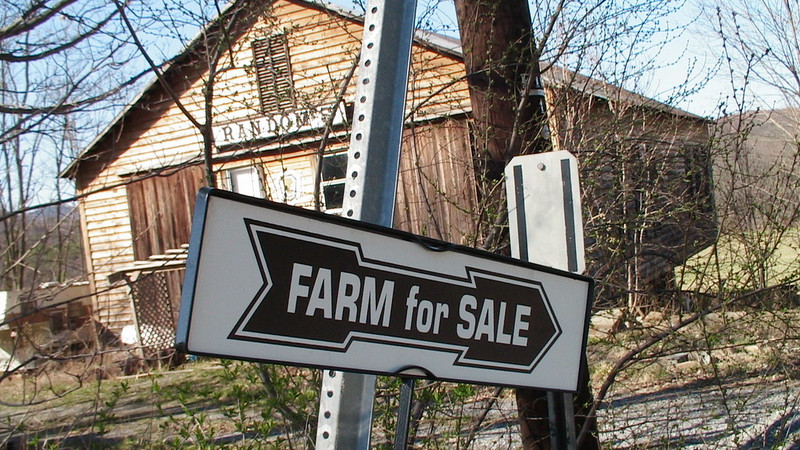
North Carolinians love the phrase - Murphy to Manteo - to describe their beloved state that spans the Coastal Plain, Piedmont, and Mountain physiographic regions and all the associated ecosystems. North Carolina is blessed with a broad range of agricultural growing environments and it grows major row crops like corn, wheat, and soybeans as well as hundreds of horticultural crops including vegetables, fruits, berries, and landscape plants on 5,947,713 acres in its 100 counties from Cherokee to Currituck!
But by 2040, that acreage will be reduced to 4,269,613, a loss of 1,678,100 acres, if estimates for "runaway sprawl" are correct in a recent report by American Farmland Trust (AFT), Farms Under Threat 2040. In fact, North Carolina is ranked Number One across the nation for farmland loss to low density residential development.
The report also shares information on the location and quality of agricultural land, the threats posed by development, and policies that can help protect farmland and ranchland. This first-of-its-kind assessment was created by American Farmland Trust and Conservation Science Partners to empower farmers, citizens, and policymakers to protect the agricultural land base. We invite you to explore the information presented here and then take action by advocating for farms and farmers in your county or region. The following map shows where AFT projects the highest rate of farmland loss in NC in the next two decades.
North Carolina estimates for farmland loss are ranked 2nd in the whole United States, just behind Texas. Loss is estimated to be close to 1.2 million acres under the 'Business as Usual' development scenario. The reports shares how that can be reduced by the 'Better Built Cities' development scenario.