
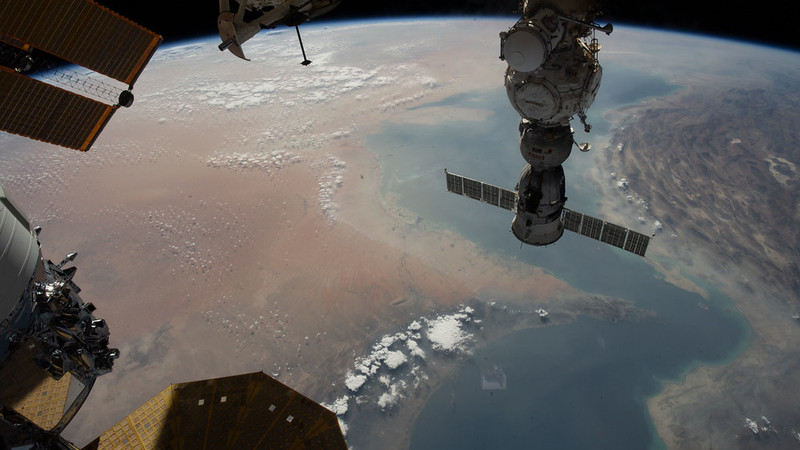
Miad Maleki, Senior Fellow at the Foundation for Defense of Democracies (FDD) and former Associate Director at the U.S. Treasury's Office of Foreign Assets Control (OFAC), provided a detailed economic analysis of the U.S. naval blockade of the Strait of Hormuz and its catastrophic effects on Iran's economy. As a former Treasury official who spearheaded sanctions campaigns against Iran, Maleki brings authoritative insight into how maritime enforcement compounds economic pressure on the Islamic Republic.
Maleki calculates that U.S. naval operations cost Iran approximately “$435 million per day” in total economic damage—a figure broken down into $276 million in lost exports and $159 million in disrupted imports. This translates to roughly $13 billion per month. Over 90% of Iran's $109.7 billion in annual trade transits through the Persian Gulf, making the southern shipping routes its economic lifeline.
Oil and gas represent Iran's primary revenue source. Kharg Island, which handles “92% of Iran's crude exports”, sits deep inside the Gulf with no viable alternative routes. Each day of the blockade eliminates approximately $139 million in oil revenue—revenue that cannot be recovered once lost. Unlike goods sitting in warehouses, Maleki notes that unproduced oil represents permanent economic loss.
With limited onshore storage capacity (estimated at 42-50 million barrels) and approximately 60% already utilized before the blockade began, Iran faces an imminent crisis. The remaining 13 million barrels of free capacity at Kharg Island will reach maximum saturation within weeks, forcing production shutdowns at oil wells that have already suffered from decades of sanctions-induced neglect. Maleki warns that these wells will not simply "snap back" after months of dormancy—they require extensive maintenance and investment to restart.
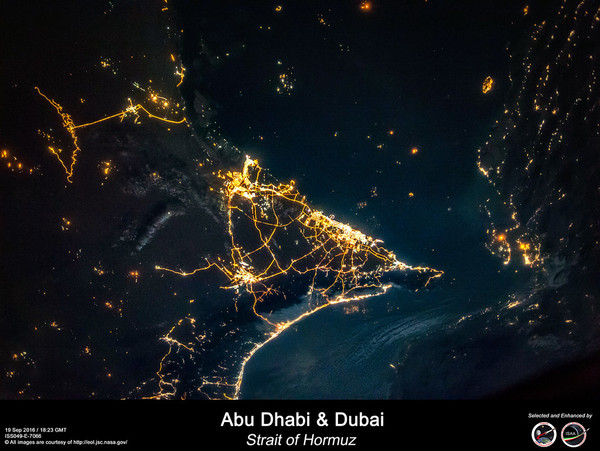
Even before considering direct oil exports, Iran exports $19.7 billion in petrochemicals annually (approximately $54 million per day). Virtually all of this passes through southern Gulf ports including Assaluyeh, Imam Khomeini, and Bandar Abbas. A naval blockade zeros out this trade overnight.
Maleki's analysis predicts rapid currency devaluation. Before military conflict erupted, the Iranian rial traded at approximately 90,000 per U.S. dollar. As the blockade tightens, Maleki foresees the rial potentially reaching **one million per dollar**—an eleven-fold devaluation that would render savings worthless and trigger hyperinflation.
Maleki demonstrates that for Iran, the Strait of Hormuz represents not a weapon against adversaries but a fatal vulnerability. With no viable overland alternatives to move this volume of trade and a heavy reliance on southern shipping lanes for both import and export, the Iranian economy faces rapid collapse under sustained maritime pressure. The analysis suggests that the blockade achieves economically what would otherwise require massive military bombardment—crippling the regime's financial capacity without dropping a single bomb.
