
The 1960s marked a tumultuous era in American higher education, particularly in California, where the convergence of civil rights activism, anti-Vietnam War sentiment, and countercultural movements transformed university campuses into hotbeds of protest. This period set the stage for Ronald Reagan's rise to the governorship and his subsequent public rebukes of college administrators, whom he accused of fostering chaos by tolerating disruptive demonstrations. To understand the history leading to these confrontations, one must trace the evolution of campus unrest from the early 1960s through Reagan's early tenure as governor from 1967 to 1975, focusing on key figures like Clark Kerr, Glenn S. Dumke, Roger W. Heyns, and Earl F. Cheit, and their respective institutions.
California's public higher education system had expanded dramatically after World War II, fueled by the GI Bill and population growth. In 1960, the state's Master Plan for Higher Education, spearheaded by Clark Kerr—then president of the University of California (UC) system—created a tiered structure: elite research-oriented UC campuses, practical California State Colleges (now California State University, or CSU), and accessible community colleges. Kerr, an economist and former UC Berkeley chancellor, envisioned universities as "multiversities" balancing research, teaching, and public service while upholding academic freedom. However, this progressive framework clashed with escalating social tensions.
The spark ignited at UC Berkeley in the fall of 1964 with the Free Speech Movement (FSM). University rules prohibited political advocacy on campus, a policy rooted in fears of communist influence during the McCarthy era. When administrators banned tables for civil rights groups, students like Mario Savio mobilized, leading to sit-ins and arrests. Kerr, as UC president overseeing all nine UC campuses (including Berkeley, UCLA, and others), initially supported Chancellor Edward Strong's enforcement but later negotiated concessions, lifting the ban after a massive Sproul Hall occupation.
Kerr's approach stemmed from a commitment to free expression as a core academic value; he believed suppressing dissent would violate constitutional principles and alienate faculty. Critics, however, saw this as weakness, allowing "anarchy" to flourish. The FSM inspired nationwide protests, amplifying anti-war voices as U.S. involvement in Vietnam deepened.
By 1965-1966, demonstrations intensified. At UC Berkeley, students protested military recruiters and the draft, often clashing with police. Similar unrest hit CSU campuses like San Francisco State College (now San Francisco State University), where ethnic studies demands fueled strikes. Administrators like Kerr and Glenn S. Dumke—chancellor of the entire CSU system, encompassing 19 campuses including San Francisco State, San Jose State, and Long Beach State—prioritized dialogue over force. Dumke, a conservative educator, opposed radicalism but avoided heavy-handed crackdowns, fearing escalation and legal backlash under First Amendment protections. Heyns, who became UC Berkeley chancellor in 1965, inherited the FSM's aftermath and similarly emphasized negotiation, viewing protests as legitimate expressions of youthful idealism amid societal upheaval.
These leaders allowed "chaos"—as Reagan later termed it—because they adhered to principles of academic freedom, believing universities should foster debate rather than stifle it. Many faculty sympathized with anti-war causes, and abrupt suppression risked lawsuits or further radicalization.
Enter Ronald Reagan. A former actor and Screen Actors Guild president, Reagan entered politics as a conservative Republican, capitalizing on public backlash against 1960s liberalism. In his 1966 gubernatorial campaign against incumbent Democrat Pat Brown, Reagan targeted campus unrest as a symbol of moral decay. He lambasted UC Berkeley as a haven for "beatniks, radicals, and filthy speech advocates," blaming administrators for a "leadership gap" that enabled riots over free speech.
Reagan promised to "clean up the mess at Berkeley," proposing a faculty code of conduct to enforce "decency" and appointing ex-CIA director John McCone to probe alleged communist influences and sexual misconduct on campuses.
His rhetoric resonated with voters weary of protests, taxes, and cultural shifts; he won decisively in November 1966.
Sworn in on January 2, 1967, Reagan wasted no time. As an ex officio member of the UC Board of Regents, he pushed for budget cuts and tuition fees—previously absent in California's free public higher education model—to deter "agitators."
His first major rebuke came on January 20, 1967, when the Regents voted 14-8 to fire Clark Kerr. Reagan had lobbied Regents, arguing Kerr's leniency toward protesters exemplified failed leadership. Kerr's dismissal shocked academia; he had expanded UC into a world-class system but was scapegoated for not quelling unrest firmly enough.
Protests erupted across UC campuses, unifying students and faculty against Reagan. Kerr later reflected that his firing stemmed from political pressures, not performance, highlighting how administrators' tolerance for dissent made them targets.
Reagan's criticisms extended beyond Kerr. In a June 1967 letter to Glenn Dumke, Reagan berated the tolerance of "neurotics" and "trash" on campuses under the "excuse of academic freedom." He urged Dumke to impose family-like conduct rules, promising full backing, while decrying profane language and activism unbecoming of educational settings.
Dumke, at the helm of the CSU system, had faced strikes at San Francisco State over black studies programs; his reluctance to expel protesters stemmed from efforts to integrate diverse student bodies and avoid violence, but Reagan viewed it as capitulation.
Tensions peaked in 1968-1969 amid nationwide anti-war fervor. At San Francisco State, a five-month strike (November 1968-March 1969) demanded ethnic studies; Dumke negotiated settlements but faced Reagan's ire for not deploying police sooner. Meanwhile, at UC Berkeley, the People's Park saga unfolded. In April 1969, activists transformed a university-owned vacant lot into a community park, symbolizing anti-establishment defiance. Chancellor Roger Heyns and Vice Chancellor Earl Cheit announced plans to fence the site for a soccer field, notifying supporters but proceeding amid opposition.
Heyns, a psychologist committed to liberal education, allowed initial occupation to de-escalate, believing dialogue could resolve it peacefully—mirroring Kerr's philosophy. Cheit, focused on campus planning, prioritized development but underestimated backlash.
On May 15, 1969—"Bloody Thursday"—police cleared the park, sparking riots. Reagan, deeming the protests intolerable, declared a state of emergency and deployed 2,700 National Guard troops, who used tear gas and buckshot, killing one bystander and injuring hundreds.
In public statements, Reagan rebuked Heyns and Cheit for tolerating the "takeover," comparing radicals to Nazi brownshirts and rejecting "appeasement."
He famously quipped, "If it takes a bloodbath, let's get it over with. No more appeasement," underscoring his view that administrators' permissiveness invited violence.
Heyns and Cheit defended their actions as measured, arguing suppression would infringe on rights, but Reagan's narrative portrayed them as enablers of chaos.
These rebukes reflected broader ideological clashes: administrators like Kerr, Dumke, Heyns, and Cheit prioritized intellectual liberty and reform amid a transformative era, allowing protests to prevent greater alienation. Reagan, channeling conservative populism, saw this as moral laxity eroding authority. His actions radicalized more students, yet boosted his national profile, paving the way for his presidency.
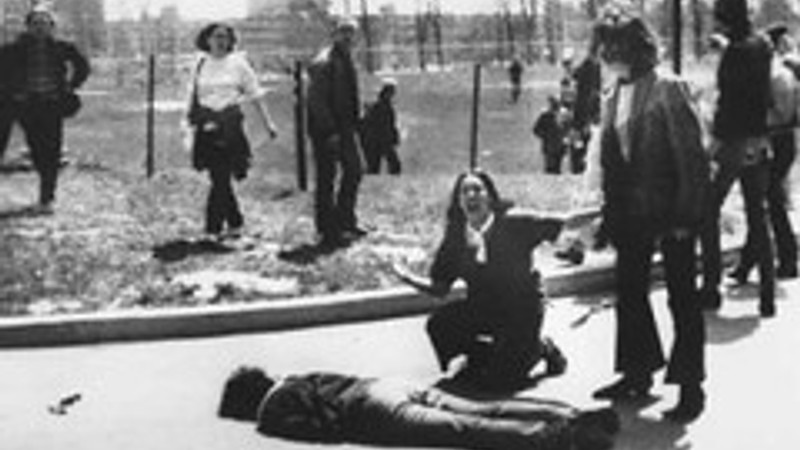
By 1970, campus unrest waned with Vietnam's de-escalation, but the scars lingered, reshaping California's higher education from a beacon of accessibility to one strained by politics and fees. On May 4, 1970, members of the Ohio National Guard fired into a crowd of Kent State University demonstrators, killing four and wounding nine Kent State students. The event triggered a nationwide student strike that forced hundreds of colleges and universities to close. H. R. Haldeman, a top aide to President Richard Nixon, suggests the shootings had a direct impact on national politics. Reagan's portrayal as enablers of chaos was proven correct and ended only when 9 students were wounded and 4, Allison Krause, 19, Jeffrey Miller, 20, and Sandra Lee Scheuer, 20, died on the scene, while William Schroeder, 19, was pronounced dead at Robinson Memorial Hospital in nearby Ravenna shortly afterward.
Editorial comments expressed in this column are the sole opinion of the writer.
