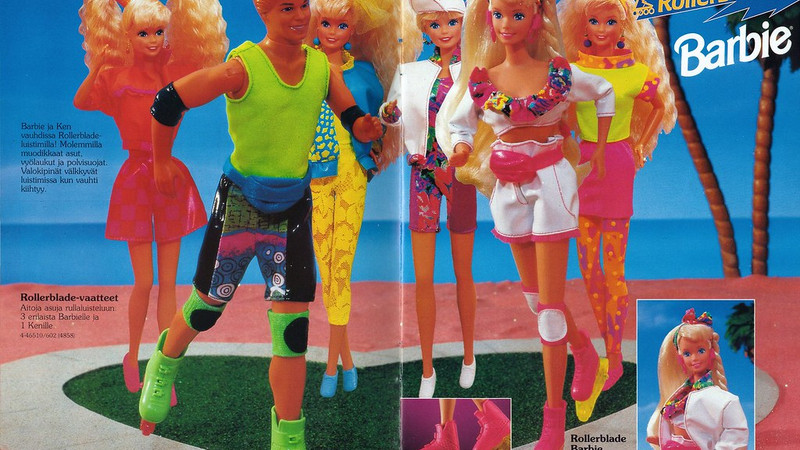
Since her debut in 1959, Barbie has been a cultural lightning rod and a billion-dollar business for Mattel Inc. Created by Ruth Handler, the doll embodied mid-century American femininity: tall, slim, blonde, with proportions that sparked immediate backlash for promoting unrealistic body standards—measurements translating to a real-world 39-18-33 figure, far from average.
Critics, including feminists and parents, argued she fostered body image issues in young girls, with studies showing exposure to original Barbie lowered self-esteem and heightened desires for thinner bodies.
Mattel's response? Incremental evolution to mirror societal shifts, turning criticism into commercial opportunity.
By the 1980s, diversity crept in. While early friends like Christie (1968) introduced Black representation, official Black and Latina Barbies arrived in 1980, expanding the line beyond Eurocentric ideals.
The 1990s and 2000s saw further tweaks amid growing scrutiny over body positivity. Sales slumped in the early 2010s as competitors like Bratz gained ground, prompting a radical overhaul. In 2016, Mattel unveiled "Fashionistas" with tall, petite, and curvy body types—marking Barbie's first major physique diversification in decades.
This move, lauded for inclusivity, boosted revenue; Mattel's Barbie sales rebounded 14% that year, proving representation sells.
Yet detractors claimed it normalized unhealthy bodies, diluting the doll's aspirational essence while still falling short on true morphological variety.
Fast-forward to the 2020s, and Barbie's inclusivity push extended to disabilities. Dolls with prosthetics, vitiligo, hearing aids, and Down syndrome (2023) joined the lineup, reflecting broader neurodiversity and accessibility trends.
The Barbie movie (2023) was a massive box office success, grossing over $1.4 billion worldwide, making it the highest-grossing film of the year and giving the toy a new lease on life.
Now, in January 2026, Mattel has launched its first autistic Barbie, developed over 18 months with the Autistic Self Advocacy Network (ASAN).
Features include jointed limbs for stimming, a sidelong gaze to avoid eye contact, noise-canceling headphones, a fidget spinner, and a tablet with communication apps—all in a sensory-friendly outfit.
Mattel frames it as celebrating "autonomy and inclusion," aligning with a surge in autism diagnoses (now 1 in 31 U.S. children, per CDC).
From a business lens, this mirrors the body-type pivot: addressing criticism to tap new markets. Autism awareness is booming, and partnerships like ASAN lend authenticity, potentially driving sales amid Mattel's ongoing recovery. However, parallels to body normalization raise red flags. Just as curvy Barbie was accused of glossing over health issues, critics like Dr. Peter McCullough argue the autistic doll reframes a "neuropsychiatric illness"—possibly linked to vaccines—as benign "neurodiversity," dulling urgency for causes and cures.
Community backlash, including from affected families, calls it profit-driven complacency, ignoring severe symptoms like seizures in 30% of cases.
Barbie's history shows adaptation fuels longevity—over 1 billion dolls sold worldwide. Yet normalizing conditions, whether body types or autism, walks a tightrope: empowering representation versus ethical oversight. As Mattel bets on inclusivity, the real test is whether it sparks dialogue or deflection in a $7 billion toy industry.
Editorial comments expressed in this column are the sole opinion of the writer